



The kickoff of the 2026 World Cup is approaching, and while the 48 national teams are warming up for the biggest tournament ever across the USA, Canada, and Mexico, a similarly intense game is being played on the sidelines. It’s the endless duel between the two giants of sportswear: Nike and adidas.
With a potential audience approaching 5 billion viewers, this World Cup is not just a sporting event, but the most important marketing and textile engineering laboratory of the decade.
The checkerboard of market share: the intersection of geopolitics and business
If on the field goals count, in the business of soccer victory is measured in technical sponsorships. Looking ahead to 2026, a clear-cut duel is emerging: adidas consolidates its institutional hegemony by linking up with 13 national teams (including Argentina, Germany, and Italy) and focusing on the blazon of traditional markets (Europe, France and England in the lead, and South America). Nike responds with 11 teams, but focuses its strategy on the field factor, controlling host countries such as the U.S. and Canada.
The American brand’s goal is to intercept the explosive growth of “soccer” in North America by transforming the technical uniform into an urban lifestyle object. It is a very high-risk challenge: with contracts exceeding 50 million euros a year for the top federations, brands are aiming for a slice of the global jersey market, estimated at $11.7 billion by the end of the competition.
Kit engineering: the new frontier of performance
Modern uniforms are true wonders of micro-engineering, designed to neutralize the extreme climate of North America.
Nike relies on Aero-FIT technology with 3D ventilation channels that activate dynamically with movement, supported by Niobe yarn that prevents water and sweat absorption.
Adidas responds with the HEAT.RDY system, based on thermal mapping that localizes perspiration at critical points. Stylistic innovation merges with functional innovation thanks to Jacquard frames, which integrate logos directly into the fabric to eliminate any unnecessary friction.
Dueling tech at the feet of champions: speed and precision
If the national teams are the theater, the boots are the absolute stars of 2026. At the heart of it all is speed, declined in two different philosophies.
On the one hand, the Nike Mercurial (Mbappé, Vinícius Jr) focuses on raw power: the Air Zoom unit acts as a hi-tech spring, while the Gripknit provides total control in scorching accelerations.
On the other, theadidas F50 (Messi, Yamal, Dembelè) pursues the myth of lightness: the Fibertouch structure and Sprintframe 360 plate turn every dribble into an exercise in extreme agility. It is a tactical challenge as well as a technical one: explosive propulsion versus millimeter sensitivity.
Personalization 2.0: where design meets Italian technology
In 2026, the game uniform evolves into a piece of haute sports tailoring. Adidas redefines aesthetics with a dual font system-modern for the “Home,” retro-3D for the “Away”-and laser-welded “Match Detail” details that make each jersey a unique object.
But innovation doesn’t stop at the surface: underneath the socks beats a technological heart made in Italy. Excellencies such as Campari Carbon and GL Sport lead the global market for custom shin guards. By 3D scanning the shinbone and using materials such as carbon and Kevlar, these digital artisans create ballistic shields weighing as little as 20 grams. It is the perfect synthesis of elegant detail and extreme sample protection.
The value of the kit: the price of “Pro” excellence
Dressing like the giants of modern soccer is not just a style choice, but an investment in high sports engineering. Wearing a full Authentic kit-the same technological armor that takes the field-requires a significant financial commitment, mirroring the research and materials used:
-Official T-shirt (personalized with patch and font): € 180.00 – € 200.00
-Speed shoes (top-of-the-line models): €260.00 – €280.00
-Custom Carbon Pads: €200.00 – €400.00
-Accessories(Shorts and socks): €70.00 – €85.00
-TOTAL INVESTMENT: € 710.00 – € 965.00
While the “Replica” line provides an affordable option for the masses, the elite kit positions itself as the state of the art in the industry.
The real game of 2026 will not end with the final whistle at New York’s MetLife Stadium: the challenge will shift to the marketplace, where Nike and adidas will vie to see who can turn pure innovation into a global object of desire better than the other.
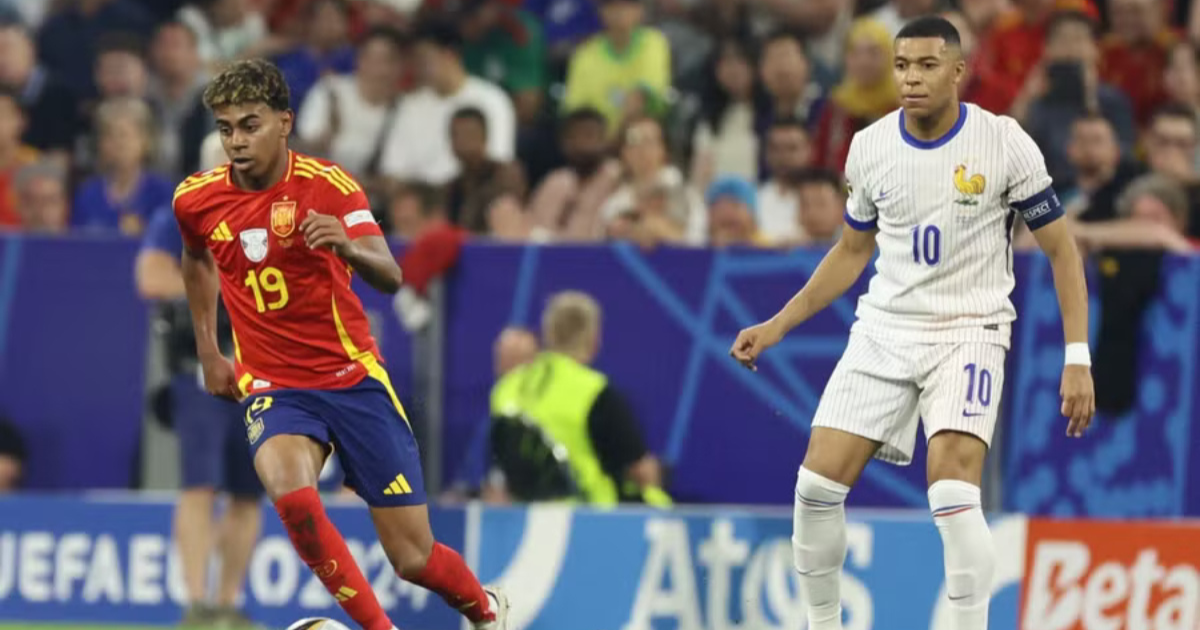
World Cup 2026, it’s still Nike vs adidas: costs, strategies and expected results
The kickoff of the 2026 World Cup is approaching, and while the 48 national teams are warming up for the biggest tournament ever across the USA, Canada, and Mexico, a similarly intense game is being played on the sidelines. It’s the endless duel between the two giants of sportswear: Nike and adidas. With a potential audience approaching 5 billion viewers, this World Cup is not just a sporting event, but the most important marketing and textile engineering laboratory of the decade. The