




In elite football, player health management is no longer just a clinical concern—it is a critical financial strategy. With increasingly congested international fixtures and high-intensity match schedules, the economic toll of injuries directly impacts club balance sheets. Maximizing on-pitch performance while minimizing player downtime has become one of the most pressing operational challenges in modern sports management.
The Sport Science revolution: biometrics, wearables, and prevention
Protecting a club’s human capital is undergoing a fundamental shift, powered by the convergence of technology, data analytics, and sports medicine. The reactive care models of the past have given way to a fully predictive, highly personalized approach.
Using advanced hardware, wearable sensors, and high-precision tracking systems, coaching and medical staffs can monitor workload, fatigue levels, and biometric parameters in real time. Integrated biomedical software turns raw physical data into actionable insights, helping identify muscle and joint strain before injuries occur, thereby optimizing both prevention protocols and rehabilitation timelines.
In this high-stakes ecosystem, tech providers and startups engineering scientifically validated tools have become vital strategic partners for sustainable athletic and financial success.
Celebrating excellence in sports medicine and performance
Recognizing technologies that place athlete welfare and physical performance at the heart of sports innovation is a central commitment of the Social Football Summit. This category is dedicated to innovations that optimize athletic performance, prevent injuries, and improve player health through hardware, wearables, and biomedical monitoring software.
At the SFS Awards 2026, an international panel of industry experts will evaluate market-ready technologies based on scientific validity, operational usability for technical staff, and proven efficacy in mitigating injury risks.
Technology providers, wearable manufacturers, and biomedical software developers defining the future of sport science are invited to present their solutions directly to key decision-makers across global football. To review eligibility criteria, read the full guidelines, and submit your application, visit the official website.

SFS Awards: Best Football Tech Performance & Health Solution
In elite football, player health management is no longer just a clinical concern—it is a critical financial strategy. With increasingly congested international fixtures and high-intensity match schedules, the economic toll of injuries directly impacts club balance sheets. Maximizing on-pitch performance while minimizing player downtime has become one of the most pressing operational challenges in modern sports management. The Sport Science revolution: biometrics, wearables, and prevention Protecting a club's human capital is undergoing a fundamental shift, powered by the convergence of technology, data
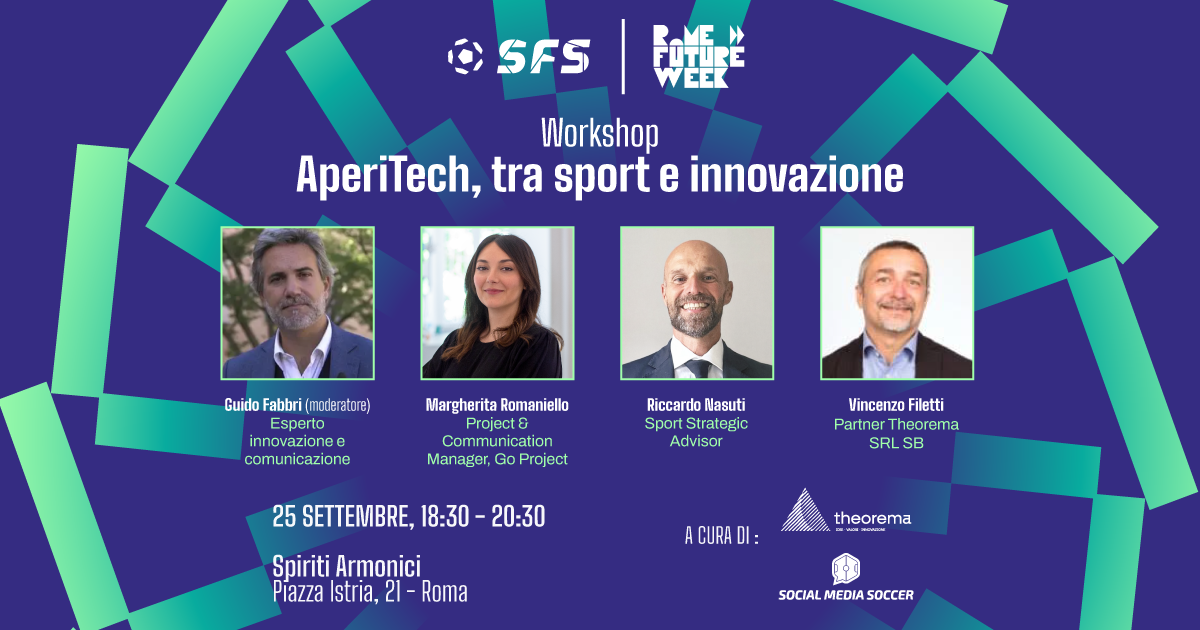
SFS and Rome Future Week: The Evolution of Sport Tech at an Innovation-Focused Aperitif
The convergence of technology, new skills, and the football industry returns to the spotlight during Rome Future Week. On September 25, 2026, the capital will host “AperiTech, between sport and innovation”, a format promoted by SFS ExtraTime in collaboration with Theorema and Social Media Soccer, designed to examine the transformation dynamics reshaping the SportTech sector. The event will take place in Rome at Spiriti Armonici, located in Piazza Istria 21, from 6:30 PM to 8:30 PM, offering a dynamic and
Udinese Leads the Way in Europe: Matchdays Become a Sustainability Benchmark with UEFA Manual
Sustainability in modern football is rapidly evolving from mere statements of intent into a core strategic pillar of club operations. Against the backdrop of a profound industry transformation, Udinese Calcio achieves a new international benchmark by launching the “Play for Sustainability – All on the Pitch for the Planet” initiative. Debuting at Bluenergy Stadium and Applying the UEFA Manual The key appointment is set for Saturday, September 19, 2026, when Udinese hosts Cagliari in Serie A. On this occasion, the Friulian club

SFS Awards: Best Football Tech Entertainment Solution
Today, football matches are no longer played purely within the ninety minutes of regular time, but in the ability to capture the attention of an increasingly fragmented audience. In a saturated media landscape—where competition comes from video games, streaming platforms, and social media—passive match viewing is an outdated format. The primary challenge for clubs, leagues, and broadcasters has become singular: transforming the casual supporter into an engaged and essential user within the brand's ecosystem. Beyond the screen: how technology is redefining

SFS Awards: Best Football Tech AI Solution
There was a time when strategic decisions in football—whether signing a player, managing workloads, or optimizing revenue streams—relied almost exclusively on empirical experience and gut instinct. Today, that model has evolved. The arrival of Artificial Intelligence in the football industry marks the definitive transition toward a data-driven approach, turning raw data into a high-value strategic asset. This is not about replacing the human element, but empowering it. Clubs, federations, media companies, and startups are integrating machine learning models and predictive algorithms
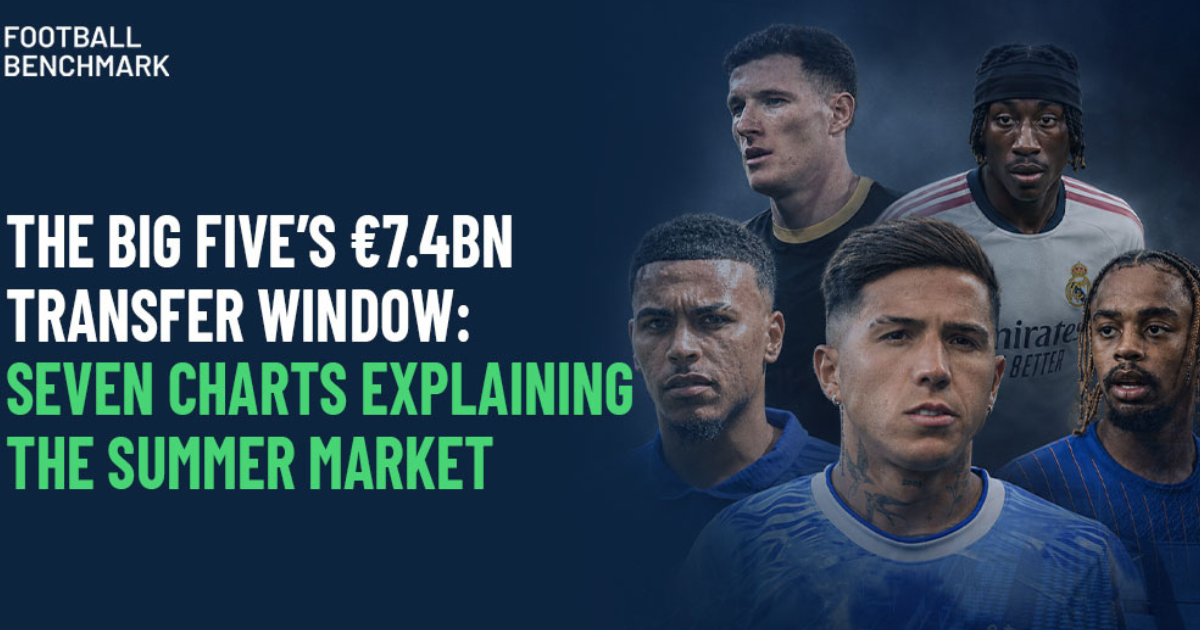
The Big Five’s €7.4bn transfer window: Seven charts explaining the summer market
Article written by Football Benchmark The 2026 summer transfer window was eventful, drawing attention across the industry as a succession of high-profile moves and nine-figure fees dominated the headlines. In this article, Football Benchmark takes a deep dive into the completed window to examine where the money was spent, where it came from, and the trends emerging across the market. Among the key findings, our analysis reveals the scale of the Premier League’s dominance, the continued importance of Ligue 1 as

Football Governance and Liability: SFS and Deloitte Legal Present the SFS Snack in Bari
The Italian football ecosystem is facing a critical phase of evolution, driven by an increasingly urgent need for management transparency, regulatory compliance, and a strong ethical commitment to safeguarding individuals. On Friday, September 18, 2026, the Nexthub Deloitte in Bari will host the SFS Snack, a national conference titled “Governance and Liability in Football: Law, Management, and Safeguarding,” organized by Social Football Summit in collaboration with Deloitte Legal. The event serves as an executive platform for dialogue between political and sports

SFS 26: the countdown begins, sales now open for Official Passes
The build-up to SFS 26 is officially underway. Following the conclusion of the promotional phase, the premier gathering for the global football industry is getting ready to reopen its doors at the Allianz Stadium in Turin on November 10–11, 2026. The event continues to grow as the ultimate hub for anyone aiming to understand, experience, and work within the sports and business ecosystems—from established executives and global brands to emerging professionals, students, and enthusiasts eager to explore what drives modern
SquadAssist: How Data and AI Are Redefining Transfer Market Strategies
In modern football, building the right squad is the single most critical factor for a club’s success. However, transfer decisions remain a complex challenge, where intuition must be carefully balanced against rising costs and financial risks. For today’s decision-makers, the main issue is no longer a lack of data, but an overload of information: hundreds of "interesting" KPIs that often create noise rather than clarity. Enter SquadAssist, the startup bringing a concrete, predictive, data-driven approach to scouting dynamics and financial squad
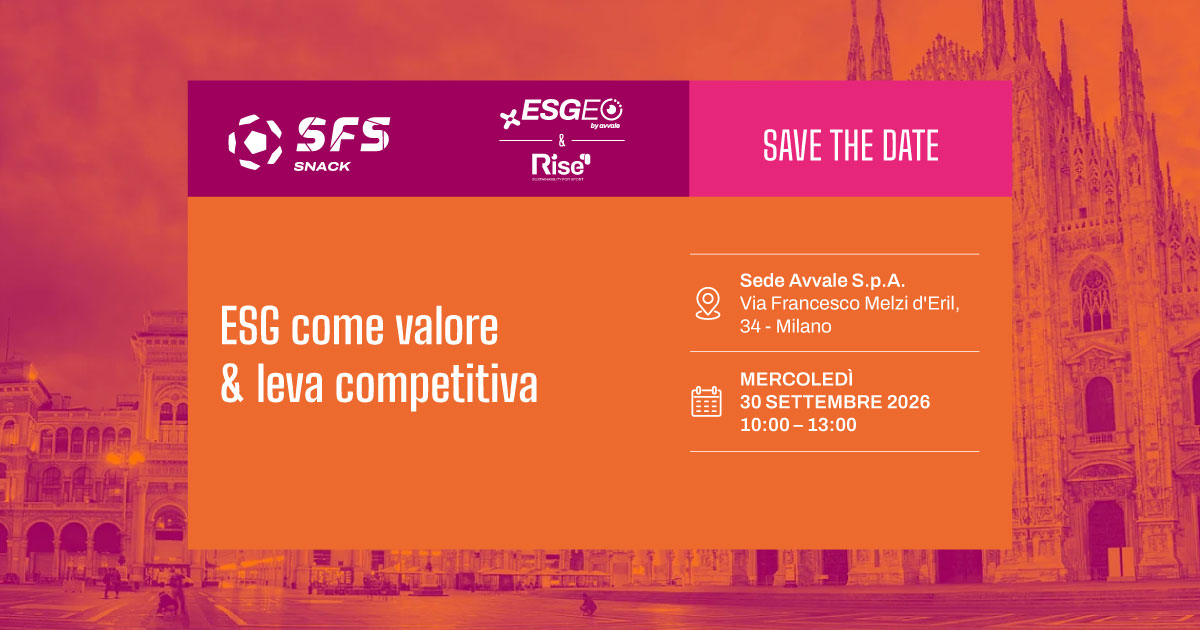
SFS Snack arrives in Milan: ESG, brand value, and new competitive strategies for sports
SFS Snack arrives in Milan with a new and exclusive event dedicated to the strategic role of ESG criteria in the football and sports industry. Created in collaboration with ESGeo and RISE, the event will mark the first of three touchpoints for the new season, officially kicking off the Road to SFS26. The Snack will take place on September 30, 2026, from 10:00 AM to 1:00 PM, at the Avvale Group headquarters in Milan. Through two thematic sessions, interactive discussions,