




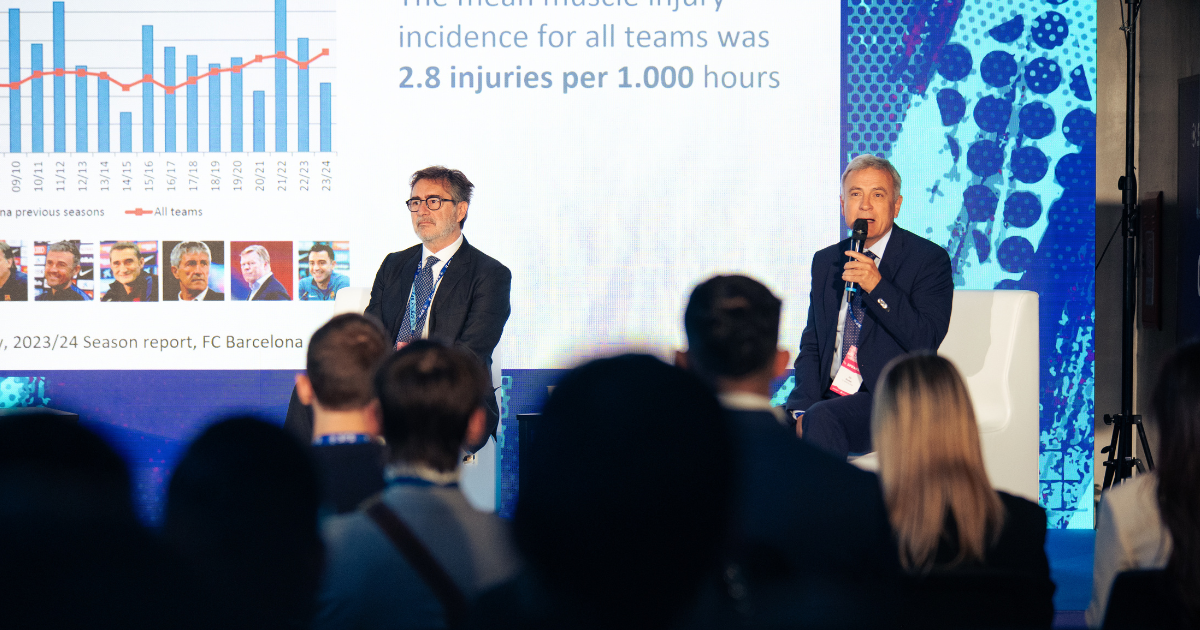
Sports medicine opened Day 2 on the Global Stage at SFS 25 with a high-level panel featuring Fabrizio Tencone, Sports Medicine Physician at the Isokinetic Medical Group, and Gil Rodas, MD, PhD, Head of Sport Medicine and the Medical Area at FC Barcelona, moderated by Carolina Tha.
Injuries remain one of the biggest and most persistent challenges in sports. Tencone presented a long-term study carried out by Isokinetic: “Eight years ago, we expected injuries to increase significantly. Today’s data shows that the rise is real, but smaller than originally predicted.”
Using a dedicated chart, Tencone highlighted three key points about major injuries:
- an athlete is not guaranteed to return to their previous level after an injury;
- injuries come at a very high financial cost for clubs;
- teams with fewer injuries tend to perform better.
This, he explained, is why sports medicine must be treated as a strategic priority. Gil Rodas brought in FC Barcelona’s perspective: “Injuries don’t happen because of the doctors. They mostly happen because of the training loads and methods chosen by coaches. Data shows that in certain seasons, depending on the way teams work, muscle injuries increase significantly.”
To address this issue, Barcelona is developing digital player avatars—advanced tools designed to predict potential injuries and personalize training loads for each athlete. The core of modern sports medicine is prevention. Tencone clarified what recent research has revealed:
“We used to think that reducing training loads would reduce injuries. That’s not true. You need to train harder, but also train smarter. And players don’t always move perfectly. Biomechanical errors must be studied and corrected, because they are often the root cause of injuries.”
Despite scientific progress, injuries continue to rise. According to Rodas, there are two main reasons: “Players compete with much higher intensity and density than in the past. Playing every three days causes micro muscle injuries that, without at least 72 hours of recovery, worsen over time.”
Rodas closed with a message for the future: “If we want to enjoy the talent of top players, we need to take care of them in every possible way.”
Injury Prevention in Sports: Isokinetic and FC Barcelona Share Insights at SFS 25
Sports medicine opened Day 2 on the Global Stage at SFS 25 with a high-level panel featuring Fabrizio Tencone, Sports Medicine Physician at the Isokinetic Medical Group, and Gil Rodas, MD, PhD, Head of Sport Medicine and the Medical Area at FC Barcelona, moderated by Carolina Tha. Injuries remain one of the biggest and most persistent challenges in sports. Tencone presented a long-term study carried out by Isokinetic: “Eight years ago, we expected injuries to increase significantly. Today’s data shows that

FIFA, Gai: “The upcoming World Cup? The greatest event ever organized on earth”
The SFS 25 Football Stage GoProject hosted the meeting “SFS 25 interview: A. Alciato interviews Romy Gai,” an interview conducted by Prime Video journalist Alessandro Alciato with Romy Gai, Chief Business Officer of FIFA, who began the meeting by talking about the FIFA Club World Cup and the agreement with DAZN, the sole broadcaster of the competition. The idea arose from the need to give the World Cup the visibility necessary to be recognized as an “elite” event. The aim
Impact Sport Lab is Born: The Laboratory That Measures and Multiplies the Impact of Sport
The Impact Sport Lab debuts at SFS 25. It is the new project by Ecoevents – a benefit corporation and Legambiente partner – created to concretely integrate sustainability into sport and offer clubs, leagues, federations, and sponsoring companies professional tools to generate social, environmental, and cultural value. Sport holds an extraordinary power: it speaks to millions of people, influences behaviors, and builds communities. Impact Sport Lab is born to transform this force into real impact, making sustainability a measurable, daily
Football and Antitrust: “No more monopoly of FIFA and UEFA on the organization of competitions”
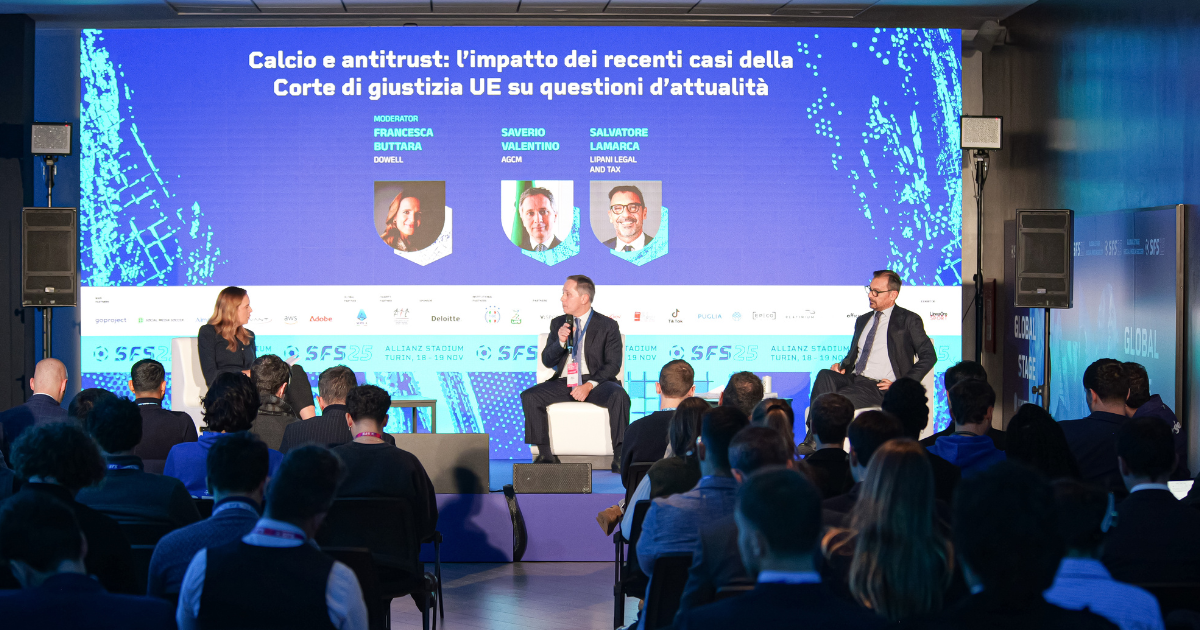
The Global Stage Social Media Soccer hosted the meeting “Football and Antitrust: The impact of recent EU Court of Justice cases on current issues.” The protagonists were Saverio Valentino (Member of the Board AGCM) and Salvatore Lamarca (Antitrust Lawyer and Author of the book “Sport and European Law”), moderated by Francesca Buttara (Founder DOWELL). We are facing a profound transition, a new era following the rulings of the European Court that place football within the market, a sector that must comply with principles
SFS AWARDS 2025: THE TRIUMPH OF EXCELLENCE AT THE OGR IN TURIN FOR ANINDUSTRY IN CONSTANTEVOLUTION
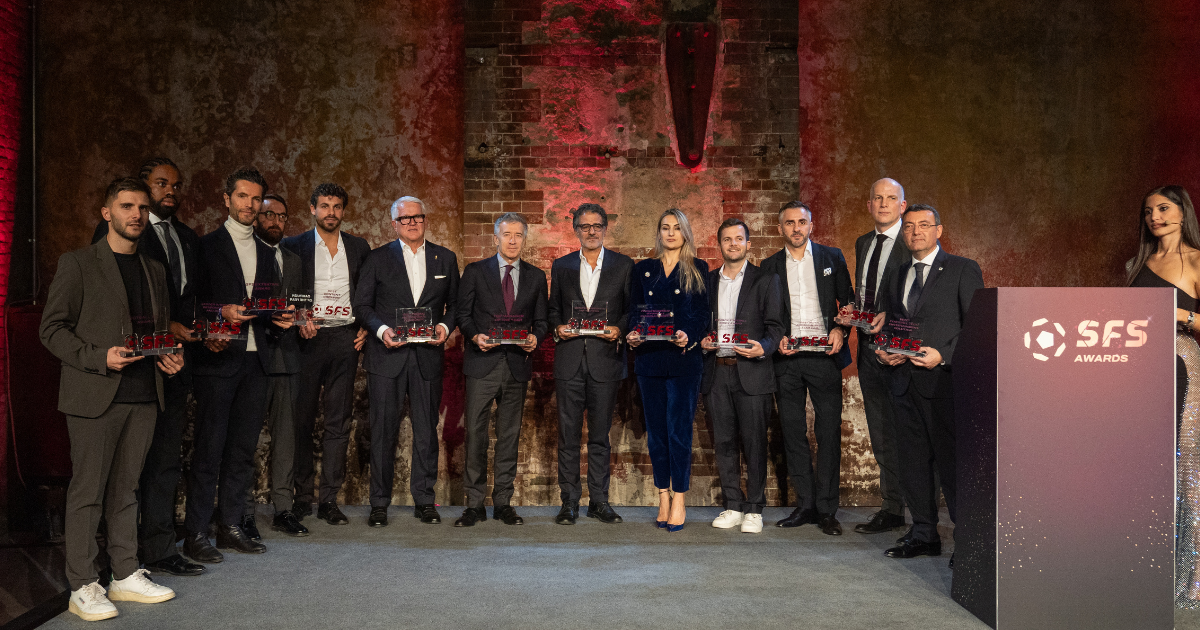
The 2025 edition of the SFS Awards concluded at the OGR in Turin, an event that celebrated excellence in the football industry. The evening, hosted by Anna Maria Baccaro, was enhanced by the presence of SFS partners. The setting of the OGR made the occasion even more memorable, and the event represented a unique opportunity to highlight the winning synergy between sport, innovation, social impact, and business. One of the most emotional moments of the Awards was the tribute dedicated to the memory
Mattia Perin’s Mental Investment Redefines Talent in Football
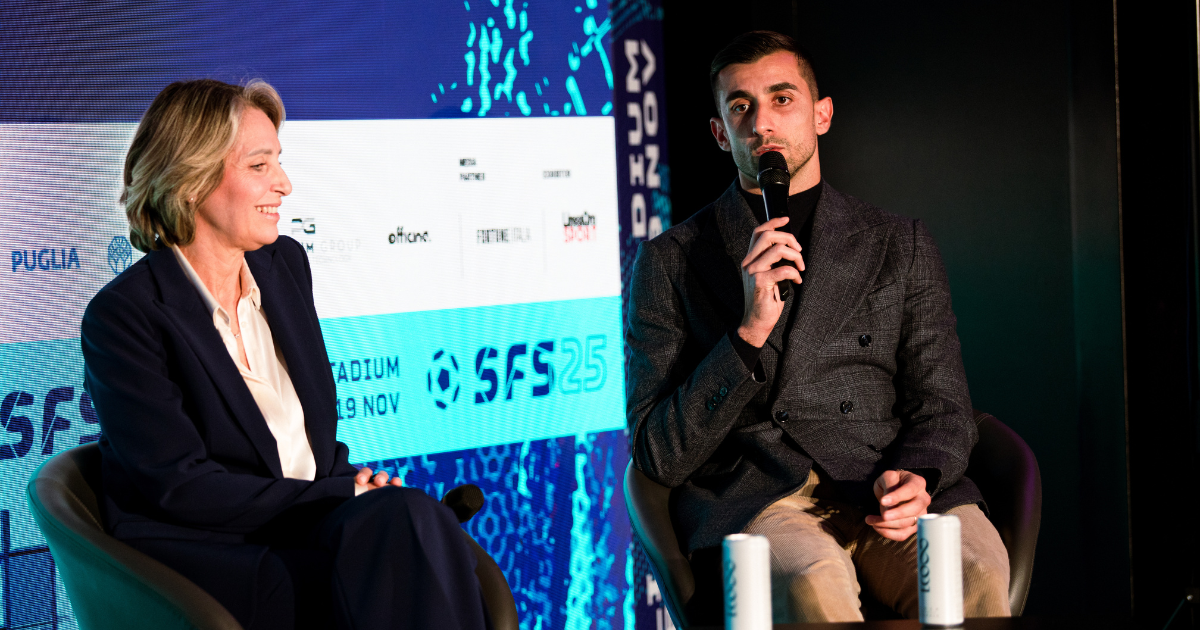
The panel "Is Football Really Prioritizing Players’ Mental Health?", moderated by Riccardo Nasuti (Digital Manager SFS 25), focused on the crucial topic of athlete mental health. The conversation between Juventus goalkeeper Mattia Perin and his personal psychologist, Nicoletta Romanazzi, offered a frank perspective on the internal work required for high performance, highlighting how cultural resistance is finally beginning to fade. The personal story and freedom from external judgments Mattia Perin shared his experience, revealing that he had wanted to quit playing after
Data Wars in Football: How Data, Ethics and Personalization Are Shaping the Future of Fan Engagement
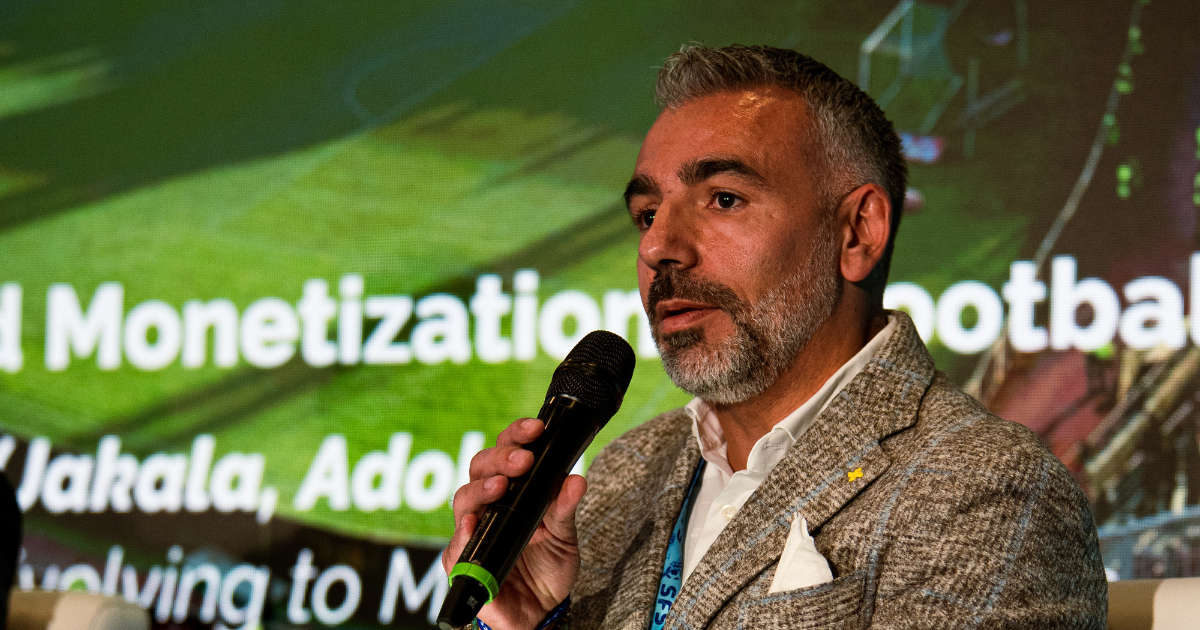
The panel “Data Wars: Ownership, Ethics and Monetization in Football” brought together some of the leading figures in digital innovation within the football industry. Speakers included Pierdamiano Tomagra, Head of Digital at Serie A, Raffaele Cerchiaro, Managing Director at Jakala, Andrea Peron, Sales Leader at Adobe Experience Cloud, and Claudia Di Renzi, Head of Accounting, CRM & Loyalty at FIGC. The session was moderated by journalist Giulia Piscina. In modern football, the decisive match is increasingly played off the pitch —
AI in Sport: Artificial Intelligence Amplifies Human Instinct and Revolutionizes the Game
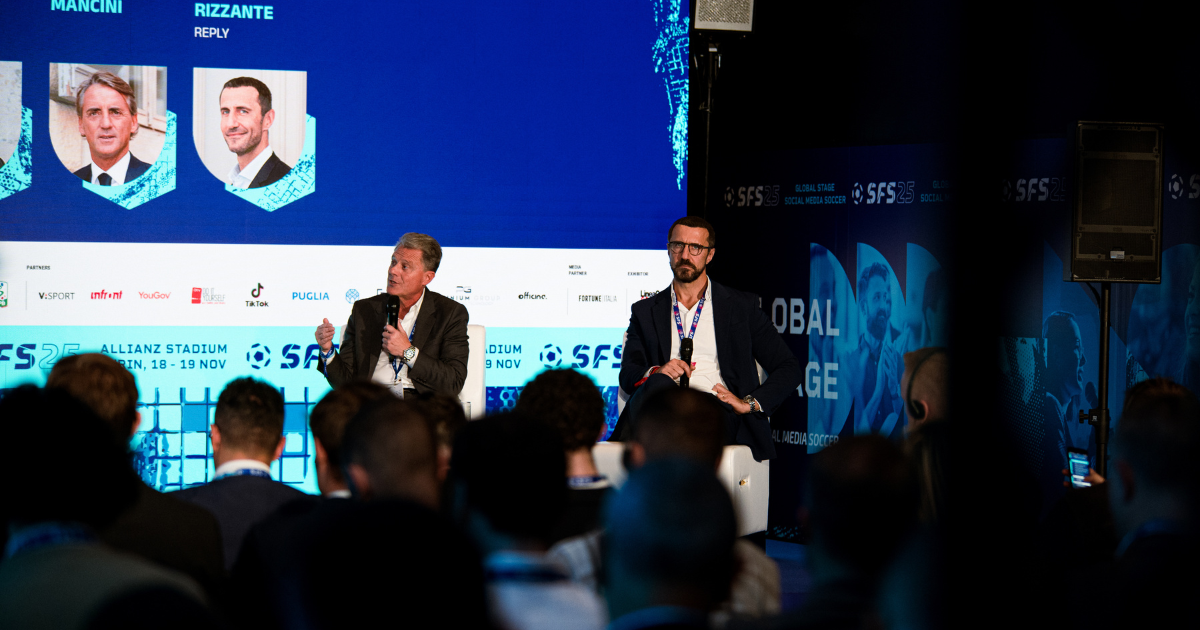
The panel "AI in Sport," moderated by Ivan Ortenzi, shone a spotlight on the dual relationship between technology and the human component in football. On stage, Filippo Rizzante (Reply) and Sergio Gianotti (AWS) dialogued, with a brief online contribution from Mister Mancini, who immediately expressed a clear stance: "AI is very useful, but I still trust my intuition (laughs, Ed.)." The new geography of technology Rizzante framed the technological scenario, noting how leadership, once "US centric" over the last 20 years, is
Saudi Pro League, a Data Revolution: Madsen Presents QIMA, the Platform Transforming Football
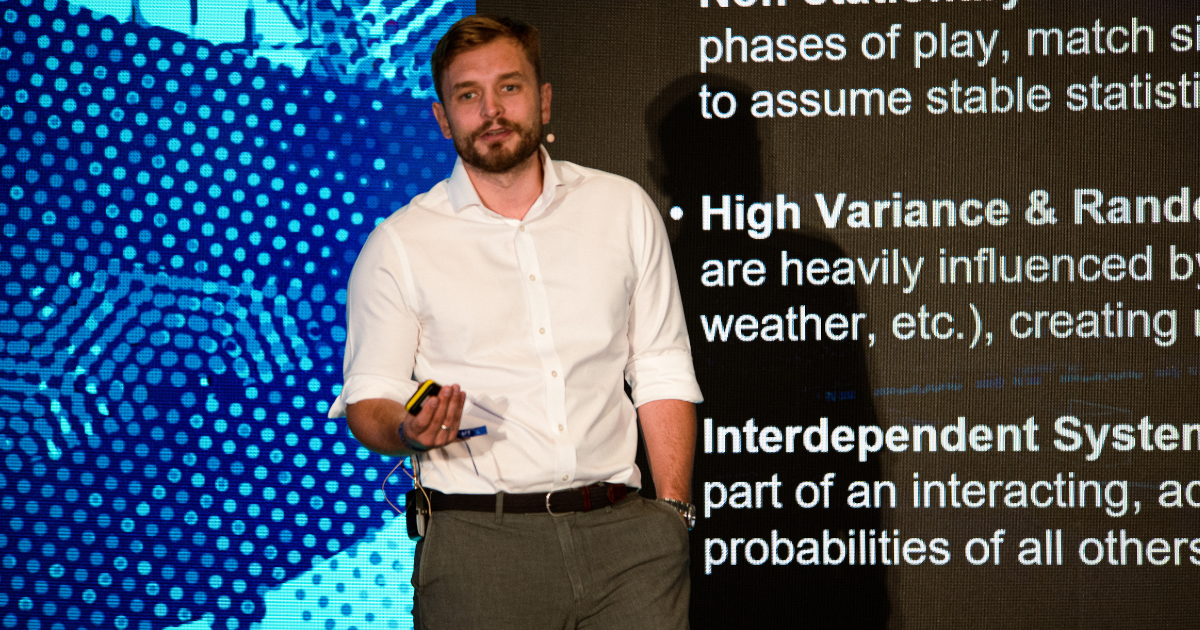
Not only Italian football: at SFS 25 the focus broadened to the international stage with a session dedicated to the Saudi Pro League, led by Jes Buster Madsen, Director of Football and Data Science for the league. For the past year, Madsen has overseen an ambitious project: building a unified platform capable of collecting and integrating all league data, making it accessible to clubs to better manage their season, performance and strategic planning. “We have the opportunity to create a centralized system,
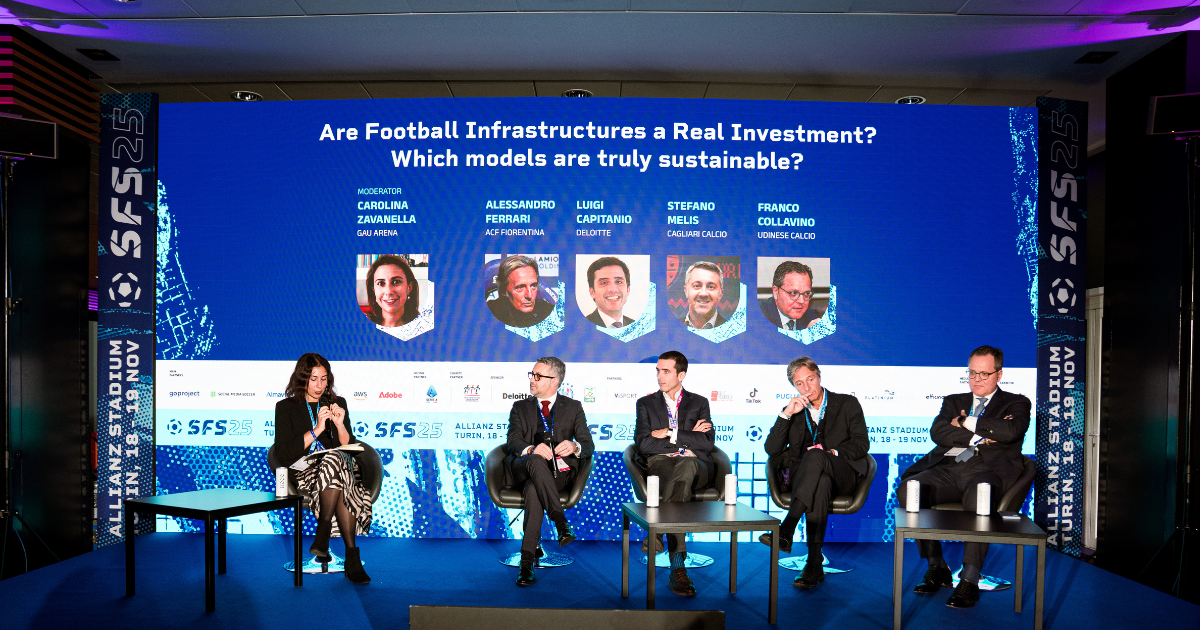
Are Football Infrastructures a Real Investment? Stadiums and Sports Centers: The Shift from Cost to Asset
The panel "Are football infrastructures a real investment?" addressed a crucial question for the future of Italian football: do investments in stadiums and sports centers truly generate value? The answer, which emerged from the discussion among experts from Deloitte and representatives of virtuous clubs like Fiorentina, Cagliari, and Udinese, was unanimous: yes, but only if integrated into a 360-degree business model. Present on stage were: Alessandro Ferrari (Fiorentina), Stefano Melis (Cagliari), Luigi Capitanio (Deloitte), Franco Collavino (Udinese), and the panel