




By Giulia Pezzano, Senior Immigration Analyst, Arce Immigration Law (Miami)
For many sports professionals, the O-1 visa is perceived as an option reserved for Olympic champions, world-famous players, or international superstars. A recent case from our practice showed why that is not always the case.
The O-1 is a temporary U.S. work visa for professionals who can demonstrate extraordinary ability in various fields, including athletics. When approved, it allows the professional to work in the United States in the area in which he or she has built that exceptional record, generally for an initial period of up to three years, with the possibility of extension.
Our client was a young soccer professional who had never considered the O-1 as a realistic immigration option. He wasn’t a famous top-flight player for one of Europe’s biggest clubs. His strength was much more specific: he had built specialized expertise in goalkeeping and goalkeeper development.
He had already built a respected career as a goalkeeper. In Italy, he developed within a professional club system and attracted national media attention after an exceptional performance at a prestigious youth tournament, where he was selected among the tournament’s top players after saving four penalties in one match.
His career continued in U.S. collegiate soccer, where he became a multiple-time All-American goalkeeper (a national collegiate honor), received national and conference honors, and established significant performance records. Over time, however, his experience evolved beyond playing. He became involved in coaching, evaluating, and developing other goalkeepers, combining his competitive experience with the technical side of the position.
That evolution became one of the most interesting aspects of the case. A goalkeeper coach is materially different than a general soccer coach. Goalkeeping is a highly specialized area involving positioning, reaction time, decision-making, video analysis, penalty preparation and specific training methods. Our client had even developed his own structured approach to penalty preparation, combining analysis of opposing players with technical and psychological preparation.
His O-1 case therefore focused on what he had actually become exceptional at. Rather than looking only at “soccer” as an enormous field containing millions of players and professionals, our strategy presented his accomplishments within the much more specific field of soccer goalkeeping and goalkeeper development.
This is where the case becomes particularly relevant to other sports professionals. Many people build highly specialized careers without ever thinking of themselves as “extraordinary.” A goalkeeper coach, athletic trainer, performance specialist, scout or technical analyst may have built significant recognition inside a particular niche without ever considering that those achievements could have immigration value.
Of course, an O-1 case still requires a strong documented record of recognition and achievement. But the starting point is identifying what the professional is actually known for and then looking carefully at the evidence that has accumulated throughout the career.
For this client, looking at his career through that lens revealed an immigration option he had never imagined. We prepared the O-1 petition around his record as a soccer goalkeeping professional and the specialized expertise he had developed throughout his career.
His petition was approved in less than 30 days, allowing him to continue developing his professional career in the United States. For sports professionals who recognize pieces of their own career in this story, it may be worth asking the same question. A specialized career can sometimes contain far more evidence of extraordinary ability than the person who built it realizes.

Extraordinary Ability in Soccer: An O-1 Success Story in Goalkeeping Development
By Giulia Pezzano, Senior Immigration Analyst, Arce Immigration Law (Miami) For many sports professionals, the O-1 visa is perceived as an option reserved for Olympic champions, world-famous players, or international superstars. A recent case from our practice showed why that is not always the case. The O-1 is a temporary U.S. work visa for professionals who can demonstrate extraordinary ability in various fields, including athletics. When approved, it allows the professional to work in the United States in the area in which
ADVANT is Main Partner of SFS 26: AI and Data Governance at the Heart of the Football Industry
The Social Football Summit (SFS) is thrilled to announce the return of its partnership with ADVANT, which will once again serve as a Main Partner for the 2026 edition, set to take place in the prestigious setting of the Allianz Stadium in Turin on November 10–11. Following the success of the previous edition, the renewed strategic alliance between SFS and ADVANT—a leader in management consulting and ICT System Integration—consolidates around the core pillars of digital transformation. ADVANT focuses on developing predictive systems

SFS Awards: Best Football Tech Performance & Health Solution
In elite football, player health management is no longer just a clinical concern—it is a critical financial strategy. With increasingly congested international fixtures and high-intensity match schedules, the economic toll of injuries directly impacts club balance sheets. Maximizing on-pitch performance while minimizing player downtime has become one of the most pressing operational challenges in modern sports management. The Sport Science revolution: biometrics, wearables, and prevention Protecting a club's human capital is undergoing a fundamental shift, powered by the convergence of technology, data
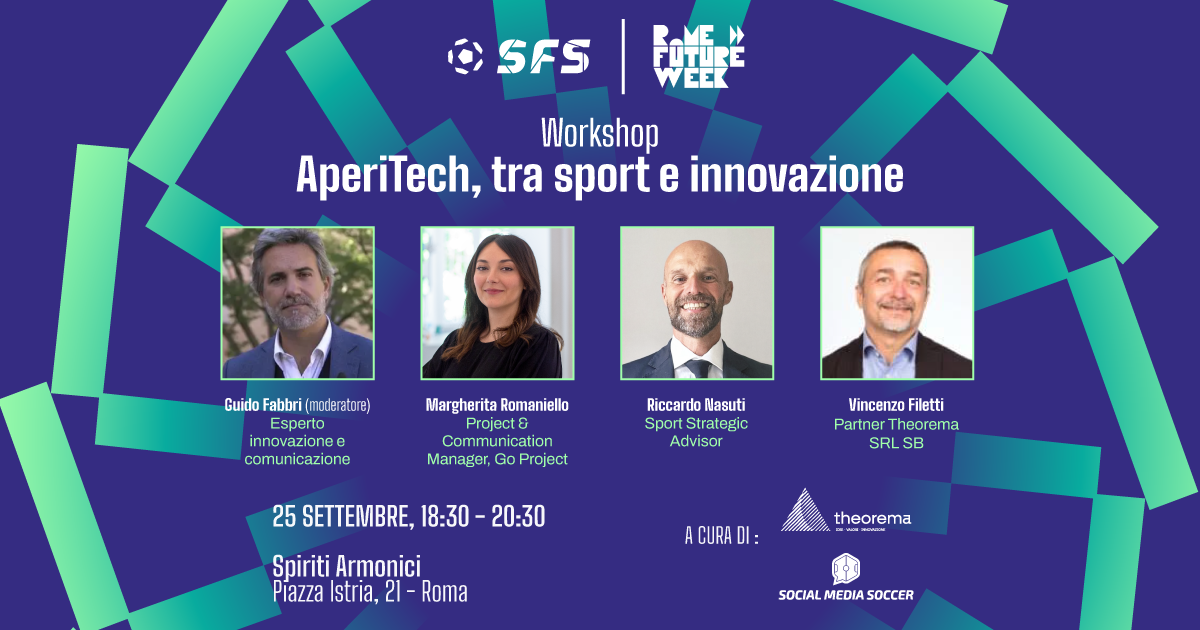
SFS and Rome Future Week: The Evolution of Sport Tech at an Innovation-Focused Aperitif
The convergence of technology, new skills, and the football industry returns to the spotlight during Rome Future Week. On September 25, 2026, the capital will host “AperiTech, between sport and innovation”, a format promoted by SFS ExtraTime in collaboration with Theorema and Social Media Soccer, designed to examine the transformation dynamics reshaping the SportTech sector. The event will take place in Rome at Spiriti Armonici, located in Piazza Istria 21, from 6:30 PM to 8:30 PM, offering a dynamic and
Udinese Leads the Way in Europe: Matchdays Become a Sustainability Benchmark with UEFA Manual
Sustainability in modern football is rapidly evolving from mere statements of intent into a core strategic pillar of club operations. Against the backdrop of a profound industry transformation, Udinese Calcio achieves a new international benchmark by launching the “Play for Sustainability – All on the Pitch for the Planet” initiative. Debuting at Bluenergy Stadium and Applying the UEFA Manual The key appointment is set for Saturday, September 19, 2026, when Udinese hosts Cagliari in Serie A. On this occasion, the Friulian club

SFS Awards: Best Football Tech Entertainment Solution
Today, football matches are no longer played purely within the ninety minutes of regular time, but in the ability to capture the attention of an increasingly fragmented audience. In a saturated media landscape—where competition comes from video games, streaming platforms, and social media—passive match viewing is an outdated format. The primary challenge for clubs, leagues, and broadcasters has become singular: transforming the casual supporter into an engaged and essential user within the brand's ecosystem. Beyond the screen: how technology is redefining

SFS Awards: Best Football Tech AI Solution
There was a time when strategic decisions in football—whether signing a player, managing workloads, or optimizing revenue streams—relied almost exclusively on empirical experience and gut instinct. Today, that model has evolved. The arrival of Artificial Intelligence in the football industry marks the definitive transition toward a data-driven approach, turning raw data into a high-value strategic asset. This is not about replacing the human element, but empowering it. Clubs, federations, media companies, and startups are integrating machine learning models and predictive algorithms
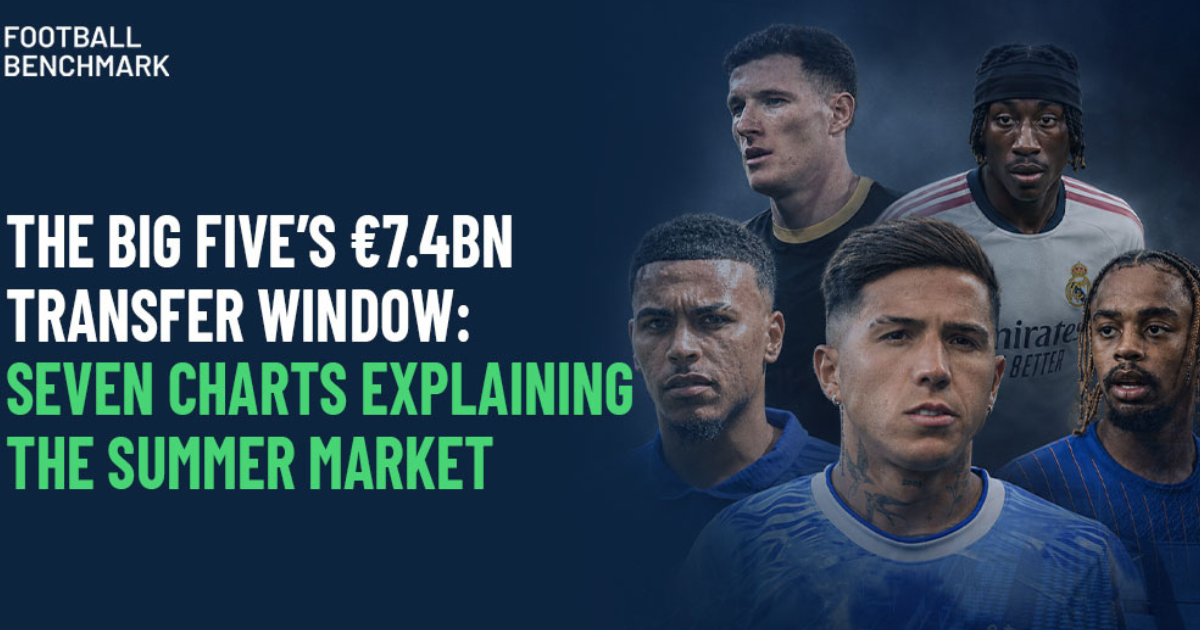
The Big Five’s €7.4bn transfer window: Seven charts explaining the summer market
Article written by Football Benchmark The 2026 summer transfer window was eventful, drawing attention across the industry as a succession of high-profile moves and nine-figure fees dominated the headlines. In this article, Football Benchmark takes a deep dive into the completed window to examine where the money was spent, where it came from, and the trends emerging across the market. Among the key findings, our analysis reveals the scale of the Premier League’s dominance, the continued importance of Ligue 1 as

Football Governance and Liability: SFS and Deloitte Legal Present the SFS Snack in Bari
The Italian football ecosystem is facing a critical phase of evolution, driven by an increasingly urgent need for management transparency, regulatory compliance, and a strong ethical commitment to safeguarding individuals. On Friday, September 18, 2026, the Nexthub Deloitte in Bari will host the SFS Snack, a national conference titled “Governance and Liability in Football: Law, Management, and Safeguarding,” organized by Social Football Summit in collaboration with Deloitte Legal. The event serves as an executive platform for dialogue between political and sports

SFS 26: the countdown begins, sales now open for Official Passes
The build-up to SFS 26 is officially underway. Following the conclusion of the promotional phase, the premier gathering for the global football industry is getting ready to reopen its doors at the Allianz Stadium in Turin on November 10–11, 2026. The event continues to grow as the ultimate hub for anyone aiming to understand, experience, and work within the sports and business ecosystems—from established executives and global brands to emerging professionals, students, and enthusiasts eager to explore what drives modern