



Audience Doesn’t Show Up by Chance: It Is Built
One of the most common mistakes when constructing the “women’s sport” product is mistaking sporadic attention for an ongoing relationship. Major events can generate interest, but transforming that interest into a habit requires vision, strategy, and data.
MOMENTUM | The Business of Women’s Sport — by SFS × The Breakaway
FAIR Pillar: Fans
Numbers matter more and more when discussing the women’s sport fanbase, but it isn’t a competition to see who draws the largest audience for a single match: the audience is a valuable asset that must be built, understood, and enriched day after day.
The sequence where a major event brings visibility, visibility brings fans, and fans bring revenue is undoubtedly comforting, but it is only partial. Between visibility and revenue lies the hardest work: understanding who showed up, why they did so, what they need to become loyal followers, and how to convert a scattered contact into a lasting relationship.
This is the first question of the FAIR framework developed by The Breakaway: do we truly know our audience, and are we building a direct relationship?
It is not enough to know how many people watched a match, followed a profile, or read an article. We need to understand how many of them can be reached again, how many can easily find information to attend the next match, how many return, how many choose to share their data, and how many begin to feel like part of a community.
Eighteen Million Interested People Are Not Yet a Fanbase
Women’s sport is currently experiencing a period of growing attention. This is positive, but it must be interpreted with precision.
A person might watch a final because it is a major event, follow a player because they know her backstory, appreciate the values associated with a discipline, or choose to attend a match as a family activity. These are all valid entry points, but they do not automatically produce the same type of fan.
YouGov’s research on women’s sport in Italy—conducted in collaboration with The Breakaway in April 2026—highlights the importance of this distinction. The pool of people interested in women’s sport is broad: specifically, 37% of survey respondents, which projects to 18.6 million people across the national population. However, only a small fraction considers it a primary passion (4% of respondents).
Between these two figures lies the opportunity: the strategic space that sports organizations, media, and brands must learn to occupy.
The same research identifies very concrete obstacles that prevent converting that 4% into a higher number. Among those who already follow women’s sport, 30% report insufficient media coverage or difficulty in finding content, while 27% point to a lack of event information. In other words, demand does not need to be invented: it needs to be made actionable.
The audience composition is also extremely multifaceted. In women’s volleyball, the most-followed women’s sport in Italy with approximately 14.6 million interested followers, 61% of the audience is male.
In the UK, Yonder’s Game On research shows that over half of those following women’s sport are men, and that age, motivations, and consumption habits vary widely. These are different markets and methodologies, so the figures should not be directly overlaid.
However, the overarching message is clear: there is no single type of women’s sport fan. Treating them as a uniform segment means forfeiting a portion of their potential value from the start.
From Reach to Relationship
For The Breakaway, building a fanbase requires a precise progression:
- Making the product visible and easy to find;
- Reducing friction in accessing content, schedules, and tickets;
- Transforming anonymous contacts into identifiable individuals;
- Creating reasons to (re)turn;
- Converting participation into belonging and economic value.
Many organizations jump straight from the first point to the fifth. They see a spike in viewership and immediately attempt to monetize it. But without first-party data and a recognizable value proposition, that spike remains borrowed: it belongs to the platform that distributed the content or the event that concentrated the attention—not yet to the sports property.
Therefore, the most critical KPI is not just how many people were reached. It is how many of them we know well enough to serve better next time. How many spectators buy a second ticket? How many return to the content outside of major events? How many transition from followers to members, from casual buyers to recurring customers, from category fans to supporters of a specific team?
BVB Women: The Experience Must Be Designed
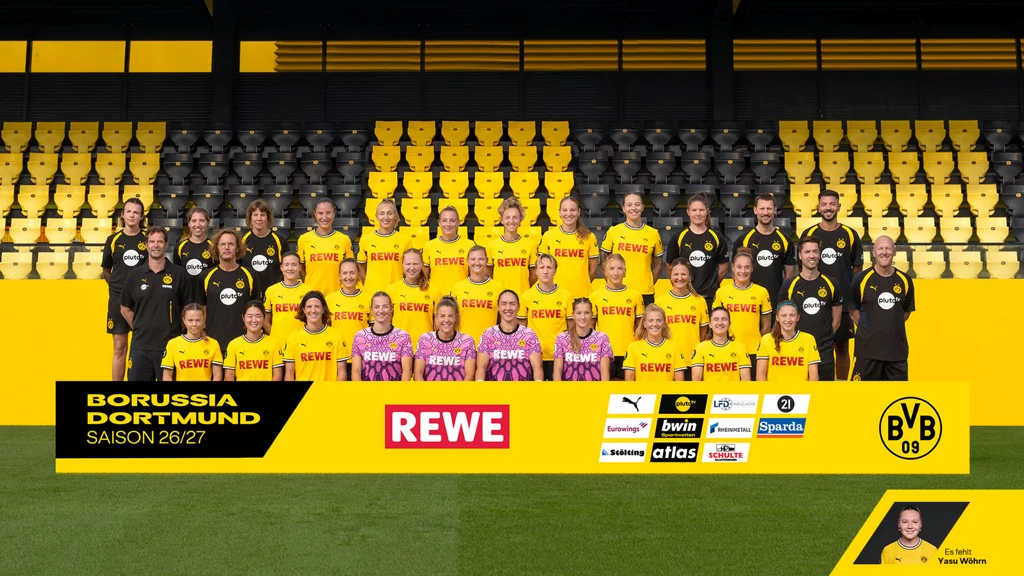
In August 2026, Borussia Dortmund Women faced AS Roma in front of 8,583 spectators at the Stadion Rote Erde. It was neither a league match nor a peak built around a final: it was part of the club’s season launch, designed to introduce the Black and Yellow fanbase to the women’s team within a familiar setting. It is worth noting that BVB Women plays in the third division of German women’s football, while the men’s team competes in the Bundesliga, the top tier.
This is the key takeaway. BVB did not treat the women’s match as a standalone product to be promoted to an audience built from scratch. They made it accessible to their existing supporters: a recognizable kickoff time, simple ticketing, a day designed as a holistic club experience, and a direct link to the team presentations (both women’s and men’s) at the Signal Iduna Park. They leveraged the club’s overall fanbase to create an integrated experience.
The result should not be viewed merely as an attendance figure. It serves as an example of designing the first-touch experience. For a portion of those 8,583 people, the match against Roma may have been their first live encounter with the women’s team.
The strategic question therefore begins after the final whistle: who are these people? How many will return for a league match? How many purchased a ticket for the first time? How many left contact details, followed the team, or bought a season ticket?
This is the step that many organizations overlook. A major event can capture attention; only a subsequent journey (spanning communication, scheduling, ticketing, content, and CRM) can convert that attention into a habit.
The BVB case study also demonstrates that integration with a major club does not have to mean absorption. When well-designed, it can reduce friction at the initial entry point: the audience already knows the culture, the venue, and the sense of belonging. The women’s team management must then provide its own distinct reasons for them to return.
The Audience Is an Asset
In a solid business plan, the audience must become a 100% measurable asset. Not just followers and impressions, but identifiable profiles, frequency, retention, conversion, lifetime value, and relationship quality.
This requires a strategy that connects ticketing, content, CRM, commercial, and operations; women’s sport is in the privileged position of being able to structure this framework from the ground up.
It also demands small, unglamorous choices and operational yet fundamental details: an updated calendar, a clear checkout page, consistent pre- and post-match communication, adequate facilities for diverse audiences, and compelling reasons to voluntarily share personal data.
The growth of women’s sport will not depend solely on the next record-breaking match or major tournament. It will depend on the ability to turn every moment of attention into a relational system that is accessible, recognizable, and repeatable.
An audience isn’t found. It is built, one contact at a time.
The Breakaway works alongside clubs, leagues, investors, and brands to convert the momentum of women’s sport into tangible business growth.
