




On the international stage, Italy is far more than a cradle of champions; it has become the global gold standard for sports medicine. While the athletes’ talent ignites the arenas, it is the expertise of our surgeons, physiotherapists, and cutting-edge facilities that ensures that talent shines again—even after the most devastating injuries.
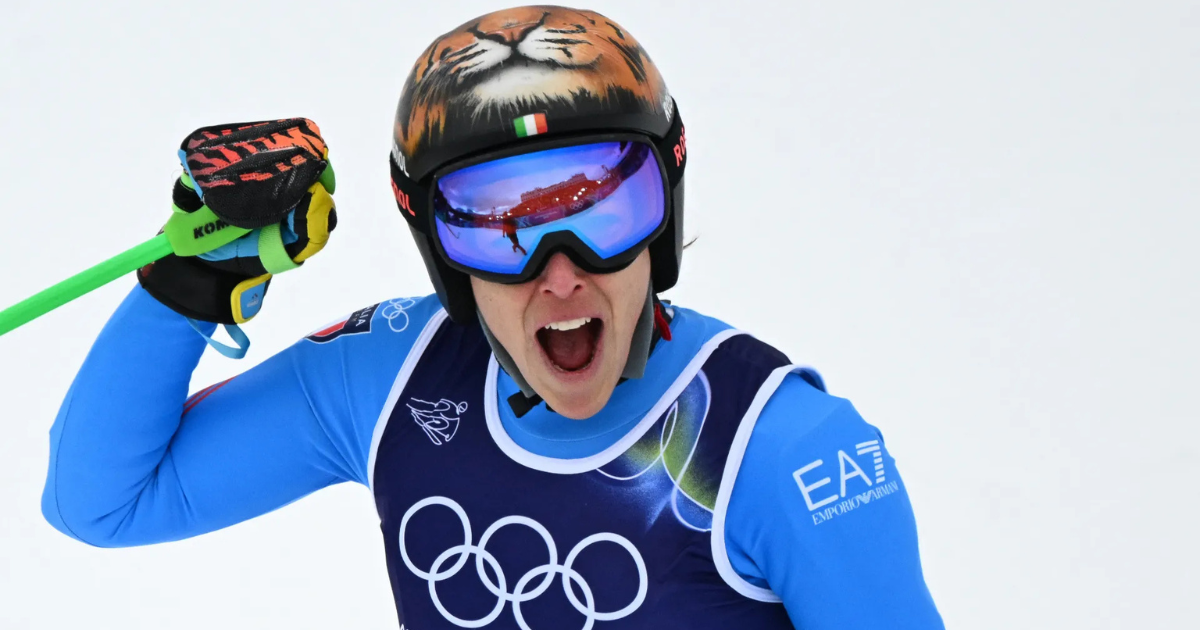
At SFS, where innovation and performance take center stage, Federica Brignone’s success at the Milano-Cortina 2026 Games stands as the ultimate manifesto of a system that blends surgical engineering, elite rehabilitation, and extraordinary numbers.
The Brignone “miracle”: engineering meets willpower
Brignone’s Olympic triumph was not just an athletic feat, but a methodological masterpiece spanning 315 days. It all began on April 3rd of the previous year, following a dramatic crash and a diagnosis that would have ended most careers: a displaced, multi-fragmentary fracture of the tibial plateau and fibula, coupled with a torn ACL.
As noted by Dr. Andrea Panzeri, Medical Director of FISI (Italian Winter Sports Federation), the challenge was won through an immediate, multidisciplinary approach. The athlete underwent surgery that very evening in Milan, performed by a world-class team. They had to masterfully balance the healing timelines of bone and ligaments, inserting a plate and seven screws in what Panzeri describes as a true feat of high-level engineering.
J Medical: the recovery ecosystem
A pivotal role in this comeback was played by J Medical in Turin. Born from the partnership between Juventus and the Santa Clara Group, this facility has solidified its status as an elite hub, not just for football, but for all professional sports.
For Federica, J Medical became “home” for months. Her routine consisted of seven hours of daily rehabilitation between the gym and physiotherapy. She was immersed in an ecosystem where the presence of veteran National Team professionals—such as Federico Bristot and Marco Freschi—guaranteed the perfect blend of psychological stability and clinical rigor essential for recovering top-tier players.
The European vision: Italy as a benchmark
The Italian success story unfolds within a rapidly expanding continental framework. European sports medicine is undergoing a profound transformation, with a market projected to reach nearly $3.5 billion in 2026, growing at an annual rate of 9%. While Germany leads in terms of market volume (accounting for approximately 25% of the EU market), Italy holds the leadership in scientific vision. In fact, the European Federation of Sports Medicine Associations (EFSMA) has officially adopted Italian guidelines for exercise prescription.
As Europe invests heavily in technologies such as Digital Twins—virtual replicas used to simulate physical loads and injuries—and wearable biosensors for prevention, the Italian model stands out for its ability to “export” elite competitive expertise into public healthcare. This approach ensures not only the performance of champions but also systemic savings for European healthcare by promoting sport as a form of therapy..
Inside the Lab: the technologies behind the “Miracle”
If Federica Brignone’s recovery seems miraculous, it is because it rests on technological pillars that are revolutionizing European sports medicine. Here are the technical details of the innovations mentioned:
- A “Digital Twin” is more than a simple simulation; it is a dynamic virtual replica of the athlete’s body. How it works: by combining biomechanical data, medical imaging (MRI, CT scans), and physiological parameters, doctors create a personalized 3D model. The benefit: in Brignone’s case, this allowed for the simulation of mechanical stress on the plate and seven screws before she even stepped back onto her skis. Clinical engineers could “virtually” test workloads, predicting tissue breaking points or inflammation with surgical precision. This shifted the process from “trial-and-error” to a data-driven transition toward peak performance.
- Next-Gen Wearable BiosensorsBeyond traditional heart rate monitors, elite rehabilitation now utilizes integrated smart sensors: Smart Plasters & Bio-sensors: intelligent patches capable of real-time monitoring of sweat biomarkers (such as lactate and cortisol). These assess systemic stress and muscle fatigue, preventing overtraining that could compromise healing bone. Wearable Electromyography (EMG): technical shorts or bands that measure muscle electrical activation. These were vital for monitoring the recovery of muscular symmetry in Brignone’s left leg, ensuring the operated tibial plateau did not suffer from dangerous postural compensations.
- Laboratory Medicine and Sportomics. Italy is a frontrunner in Sportomics—the application of metabolomics to sports. Predictive analysis: through constant blood sampling, medical teams at J Medical and FISI analyze an athlete’s molecular response to exertion. This allowed for the “fine-tuning” of Federica’s supplementation and nutrition during her seven months of rehab, biochemically accelerating bone calcification and ligament repair.
- Digital Olympic Hospital (Milano-Cortina 2026). The Brignone experience serves as the first field test for the “Olympic Hospital” model, which will be fully operational in 2026. This is a data-driven ecosystem where AI crosses historical data from thousands of similar injuries to suggest the best recovery trajectories to surgeons, shifting sports medicine from reactive to predictive.
The numbers of a strategic asset
Italian sports medicine is now a driving economic sector. In Italy, sport is a €32 billion industry (1.5% of GDP), supported by a unique professional network: the FMSI (Italian Federation of Sports Physicians) boasts approximately 4,000 specialists. This excellence serves a growing social base of over 16 million regular practitioners. Every euro invested in this sector generates a Social Return on Investment (SROI) of over €5.
Ultimately, Federica Brignone’s journey—from the risk of never walking again to Olympic Gold—proves that when an athlete’s mindset meets the world’s best surgical technology, no goal is out of reach. This is the message of excellence that SFS promotes: an Italy that doesn’t just compete, but designs the future of global performance and health.
Excellence rebuilding talent: Italian Sports Medicine and Federica Brignone’s “Miracle”
On the international stage, Italy is far more than a cradle of champions; it has become the global gold standard for sports medicine. While the athletes’ talent ignites the arenas, it is the expertise of our surgeons, physiotherapists, and cutting-edge facilities that ensures that talent shines again—even after the most devastating injuries. At SFS, where innovation and performance take center stage, Federica Brignone’s success at the Milano-Cortina 2026 Games stands as the ultimate manifesto of a system that blends surgical engineering,