




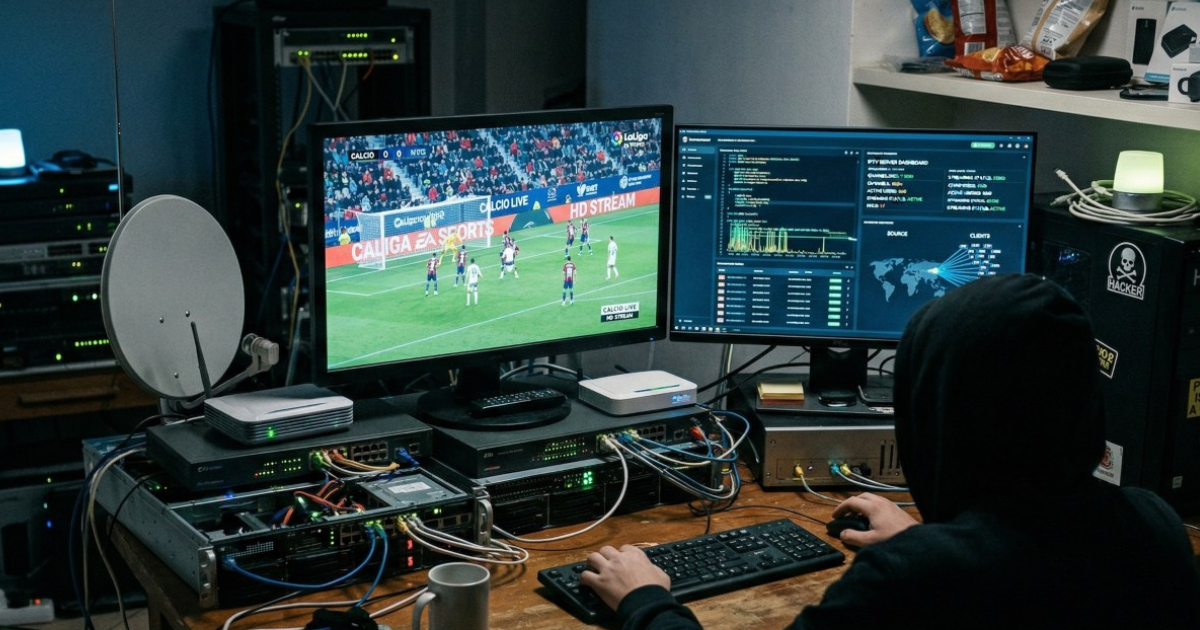
Piracy: Tebas’s Media-Tech Company Takes Down IPTV in France
The Paris Court aligns with LaLiga’s hardline approach: seven landmark rulings order the immediate blocking of illegal sites and services, setting a borderless precedent for the protection of TV rights.
While the sports industry ponders how to stem the haemorrhage of revenue caused by illegal streaming, Javier Tebas is responding with facts and technology. LaLiga has just secured a judicial “grand slam” in France, obtaining a series of rulings that are unprecedented for a foreign competition on French soil.
For the first time, a foreign league has achieved the same level of protection in France as a local competition, proving that the TV rights market is now a unified battlefield at the European level.
The “Dynamic Block”: The Ultimate Weapon Against Mirror Sites
The true victory lies not only in the dismantling of portals identified at the time of the complaint but in the introduction of dynamic blocking. This represents the standard toward which the entire industry must strive: the only truly effective solution against the fluid and shifting nature of piracy.
Thanks to this measure, French Internet Service Providers (ISPs) will be required to block access in real-time—not just to reported domains, but also to all new “mirror” sites and IPTV extensions created by pirates in an attempt to circumvent the law. This strategy safeguards the value of the LaLiga product for the duration of the current seasons, discouraging end-users through a viewing experience that is constantly interrupted and unreliable.

The evolution of LaLiga: from Football League to Media-Tech company
The success of this operation is no accident; it is the definitive confirmation of the Spanish league’s metamorphosis. Under Tebas’s leadership, the organisation has transformed into a true Media-Tech Company, where software code is now as vital as the rules of the game. Indeed, the fight against piracy is no longer just a matter for lawyers, but for engineers: owning in-house technological monitoring assets drastically reduces reaction times and increases the legal success rate.
The strategy is based on a proprietary ecosystem capable of mapping illicit traffic in real-time through Artificial Intelligence. This “intelligence” allows for the provision of irrefutable technical evidence to courts and enables close collaboration with authorities such as the French Arcom, turning slow bureaucratic processes into rapid technical interventions. It is proof that, in modern football, the protection of brand and intellectual property inevitably passes through digital innovation.
A new course for the Football Industry
The French case now represents a fundamental blueprint for Serie A and other European leagues: the protection of revenue can no longer stop at national borders. If football is to survive as a premium entertainment industry, it must adopt the same technological aggressiveness and strategic scalability shown by Madrid. The signal to the market is clear: the value of TV rights is defended through innovation, not just through appeals.

