



INSIDE SUSTAINABLE LEAGUES
“Inside Sustainable Leagues” is an editorial series exploring how some of the world’s leading football leagues are structuring sustainability through different models, activations and tools.
Having previously looked at governance, operational structures and the ways in which sustainability is brought into the calendar, the fourth article shifts the focus to another key dimension: the ability to communicate this journey and make it understandable to external audiences.
Accessibility: Creating a recognisable space
The first element is perhaps also the most immediate: making this commitment accessible, by creating a recognisable space where people can navigate and understand how it is developing. This is becoming increasingly common across European leagues, which are progressively bringing strategies, programmes, initiatives and dedicated content together within specific sections of their own channels.
The way this is done, however, varies considerably. Serie A, for example, brings together its CSR strategy, main campaigns and the eight areas of intervention identified through its work with UEFA under the heading “Social Responsibility”. A similar logic, at least in terms of structure, can be found in the Premier League, where “Football & Community” has its own dedicated space within the competition’s website, and in the Eredivisie, through its “Maatschappelijk” section.
In England, more specifically, this space goes beyond the league’s own initiatives and helps piece together a much wider system. Alongside campaigns are shared programmes, dedicated funding, the role of the Premier League Foundation and that of club charities within their communities. The digital architecture ultimately reflects the operational one: league, foundation, national programmes and local activity become different parts of the same story.
The Dutch model follows a similar approach. The same space brings together key areas of intervention – health, connection and sustainability – alongside programmes, news, impact data and links to the work of its professional clubs. It is therefore not simply a place to collect what the league itself is doing, but a gateway through which the wider commitment of professional football can begin to be understood.
A similar function can be seen in Belgium, where the Pro League brings its work together under “Football & Social Responsibility”. Starting from its multi-year strategic plan, the space organises this commitment across different thematic areas, alongside initiatives for clubs and supporters, content and partners. Here too, the dedicated section does more than collect news: it helps make the structure supporting this work easier to understand.
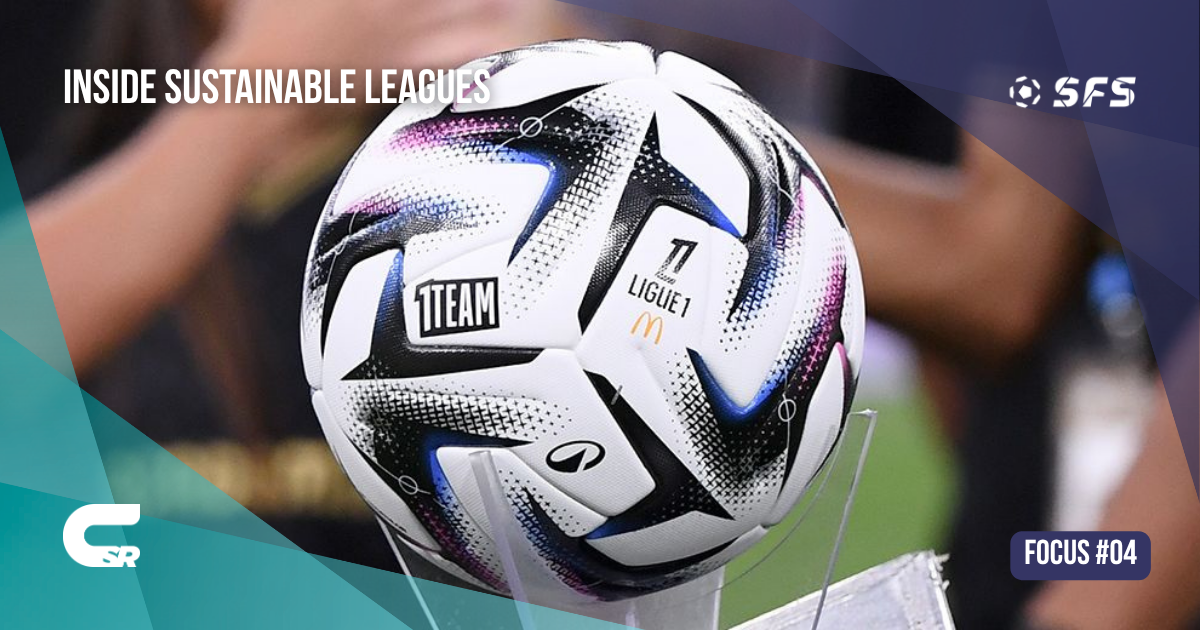
France and Germany add, if you like, another element: a recognisable identity associated with this space. The LFP has developed “1TEAM”, described as the engagement brand of French professional football and structured around inclusion, solidarity, health and sustainability. In Germany, #BundesligaWIRKT operates through a standalone platform that brings together and organises the social and environmental work of the 36 clubs across the top two divisions. Two different solutions, united by the decision to give their collective commitment a name – and therefore a distinct identity.
The Spanish model is different again. On the LaLiga website, Fundación LaLiga acts as the main gateway to these topics, with its own areas of intervention, programmes and tools such as Fair Play Social and Environmental Fair Play. This reflects the operational role assigned to the foundation within the Spanish system, something we explored in a previous article in this series.
Ultimately, these are different structures serving a common purpose: preventing strategies and initiatives from becoming a collection of disconnected content, and instead giving sustainability a recognisable space where external audiences can understand where to look, which material topics shape the journey and – in the more developed examples – how the league’s commitment connects with that of its clubs.
Visibility: Putting the work in the spotlight
Creating a dedicated space is a first step. The next is visibility: bringing that content to the attention of supporters and stakeholders, while also using football’s communication reach to connect with much wider audiences.
Again, different approaches emerge. One of the most interesting is the role leagues can play in giving greater visibility to the work of their clubs. In France, for example, 1TEAM regularly brings together initiatives developed by Ligue 1 and Ligue 2 clubs, organising them around the programme’s main areas of focus. Activities originating within local communities and on individual club channels are therefore given a second, shared platform. A similar logic can be found in Germany, where BundesligaWIRKT connects the DFL’s work with that of its clubs. The platform also forms part of a broader approach through which German professional football is supporting the development of sustainability across its ecosystem, combining licensing criteria, support tools and opportunities for exchange with a common space where different journeys can be brought together and showcased.
There is also another approach: placing an additional focus on this visibility at specific points during the season. The Premier League does this through “More Than A Game”, a campaign dedicated to showcasing the impact of English football through investment in communities, social programmes and infrastructure. Here, it is the commitment of the ecosystem itself that takes centre stage, creating a space for clubs, programmes and communities to tell the story of what happens beyond the pitch.
The football calendar can also be used to focus attention on a specific issue – a model that has become increasingly common across different leagues. In Italy, “Keep Racism Out” dedicates two Serie A matchdays each season to tackling discrimination, carrying the same campaign identity across captain’s armbands, patches, pitchside branding, interviews and other matchday assets. In Belgium, “Voetbal voor de Toekomst” has instead used a league weekend to showcase clubs’ environmental initiatives and directly engage supporters, starting with how they travel to stadiums.
These are different tools, but they share one important feature: the league is not simply communicating its own work. It can amplify what clubs are doing, build a collective narrative, or simultaneously use matches, stadiums, players and communication channels to focus attention on a particular message. Visibility therefore takes on a different function: bringing sustainability into football’s everyday narrative and putting it in front of audiences who would probably never have actively searched for it.
Reporting: Giving substance to the story
Making a sustainability journey accessible and visible allows people to know about it. But there is another step: supporting the story with data and evidence that can help us understand its scale, results and, where possible, impact. This is where communication meets reporting, through tools that can take very different forms and reach different levels of depth.
One of the most recognisable of these tools remains the report. Here too, however, the ways in which leagues choose to describe and measure their work can vary considerably. In Germany, the DFL’s Sustainability Report aggregates information from the league and clubs across the Bundesliga and Bundesliga 2, providing a broader picture of the system as a whole. A similar logic can be found in the Netherlands, where the Eredivisie and Eerste Divisie work with all 34 clubs and Utrecht University to produce an Impact Report focused on the social dimension. The latest edition brings together data on participants, programmes, investment and player involvement, alongside outcomes observed across selected projects.
In France, the 1TEAM report has been documenting the evolution of the LFP and clubs’ social and environmental work for several seasons, previously under a different name. Here too, reporting goes beyond simply collecting initiatives: it includes indicators relating to campaigns, programmes and club performance, while the introduction of a shared non-financial reporting platform is intended to progressively harmonise the way information is collected.
Measurement can also move down to the level of individual projects or events. One example is “Road to Zero”, through which Serie A accompanies the Coppa Italia final with post-event reporting on the ESG actions delivered and their results, progressively developing its indicators and data collection methods. In Spain, “Fair Play Social” instead focuses on building a shared methodology for clubs and foundations, providing indicators, tools and techniques to measure social impact and make results more comparable.
Finally, this work does not always take place exclusively within football itself. The Premier League periodically works with external organisations to quantify its economic and social contribution. The latest study, produced by EY, combines estimates of economic impact with an assessment of the social value generated by Premier League Foundation programmes and the work of club charities, projected at £4.3 billion between 2025 and 2028.
System-wide reports, shared indicators, assessments of individual projects and external analysis therefore respond to the same need through different tools: supporting the story of what is being done with evidence that helps us understand its scale and results. It is a dimension that is becoming increasingly visible in how leagues communicate their sustainability work, without necessarily taking the same form everywhere.
Editorial series by Community Soccer Report, a platform that reports, analyses and activates sustainability in Italian football.
