




The second panel of Day 2 Football Stage focused on the German identity, centered around the 50+1 rule, and featured Alexander Mühle, Director Marketing & Digitalisation at Borussia Dortmund, Bernd Fisa, Founder of Fisa Consultancy, and Philipp Reschke, Board Member of Eintracht Frankfurt Football AG.
To understand the scale of the Bundesliga phenomenon, one only needs to look at the data: clubs like Bayern Munich surpass 300,000 registered members. Not only the German ‘Panzer’ (tank) boasts staggering numbers, but also Borussia Dortmund (230,000) and Eintracht Frankfurt (155,000)—figures that testify to an enormous sense of belonging, difficult to replicate in other countries. The public doesn’t fill the stadiums by chance: they do it because football is experienced as an experience. It’s not just entertainment, but identity, everyday life.
On one side, there is spectacle-football, built on event-matches, lights, shows, and TV production. On the other, the German model: matches that are not just content, but the expression of a territory and a national culture. Borussia Dortmund is the perfect example: the goal is not merely to entertain, but to strengthen a regional identity, fueling the fans’ desire to be present and participatory.
As highlighted by Reschke, the atmosphere is not an accessory, it is “an extra part,” the element that makes the Bundesliga globally unique. German stadiums guarantee three structural advantages: affordable prices, modern and often renovated facilities, and organized popular participation, resulting in full stadiums, contagious energy, and an international perception of an authentic, passionate, and engaging league.
Yet, it hasn’t always been this way: about thirty years ago, Eintracht itself was fighting for the Meisterschale (German Championship shield), but the stadium was often half-empty. The turning point occurred post-2006, after the German World Cup: stadium renovations, new cultural enthusiasm, and growth of the Bundesliga product. Since then, public attendance has become a constant.
In the 70s and 80s, Eintracht Frankfurt experienced a period as a top-tier club, while in the 90s and 2000s, it slid towards the mid-table. In 2018, they won the DFB-Pokal (German Cup), and in 2022, they won the UEFA Europa League.
The path to digitalization was not simple; when Eintracht introduced digital ticketing and new apps, fans were not enthusiastic—quite the opposite. Today, however, managing flows, access, and data is much easier, enhancing the fan experience, and communicating with transparency (“why are we collecting this data?”).
Borussia’s response is clear: the Signal Iduna Park, home to the mammoth Yellow Wall, has become a symbol. Fair prices: season tickets at €250. The atmosphere is not built by marketing but by the supporters themselves, while commercial initiatives remain minimal. More than a product, Borussia is an ecosystem.
The 50+1 rule is a fundamental principle of German football that determines who controls a club. 50% of the shares + at least 1 share must be held by the club members (i.e., the fans or the original “sports association”). This way, the fans always maintain a majority of the decision-making power.
The central point is this: investors can put in money, but they cannot have total control. The rule limits large capital and enforces a strong connection with the fans. It is not an obstacle, but a narrative element.
This is where Borussia created a powerful commercial aimed at the American market: the competition is therefore international; they compete against Real, Barcelona, PSG. European victories are difficult to achieve, which is why the narratives export values like the acceptance of defeat, unity, and bonds.
In Germany, football is not a product to be sold: it is a life experience. It is recognition, community, energy, roots; it is tradition walking hand-in-hand with innovation. This fragile yet powerful balance is the key to the Bundesliga model. A model that aims not just to fill stadiums, but to fill stories.
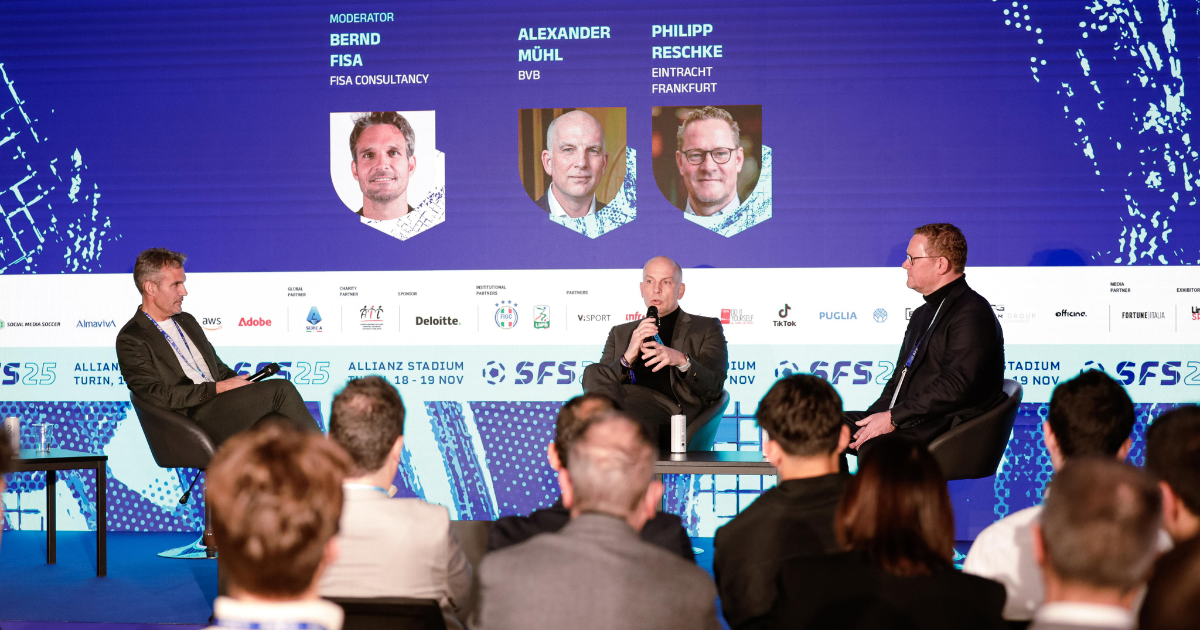
The Bundesliga Model Fills Stadiums and Fan Stories
The second panel of Day 2 Football Stage focused on the German identity, centered around the 50+1 rule, and featured Alexander Mühle, Director Marketing & Digitalisation at Borussia Dortmund, Bernd Fisa, Founder of Fisa Consultancy, and Philipp Reschke, Board Member of Eintracht Frankfurt Football AG. To understand the scale of the Bundesliga phenomenon, one only needs to look at the data: clubs like Bayern Munich surpass 300,000 registered members. Not only the German 'Panzer' (tank) boasts staggering numbers, but also Borussia
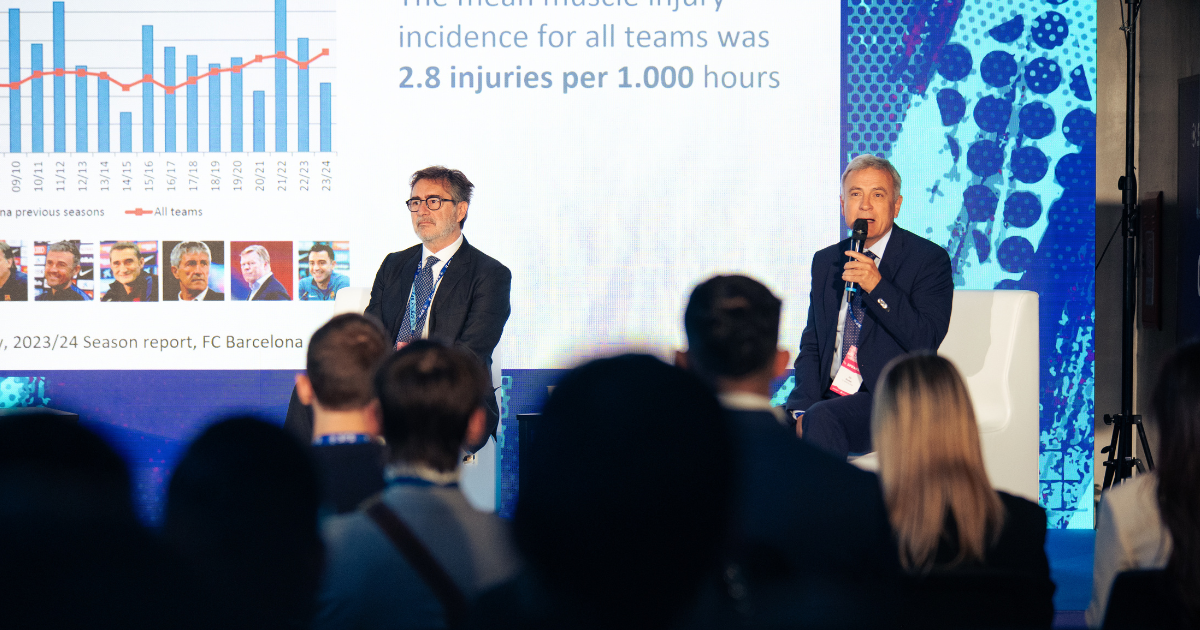
Injury Prevention in Sports: Isokinetic and FC Barcelona Share Insights at SFS 25
Sports medicine opened Day 2 on the Global Stage at SFS 25 with a high-level panel featuring Fabrizio Tencone, Sports Medicine Physician at the Isokinetic Medical Group, and Gil Rodas, MD, PhD, Head of Sport Medicine and the Medical Area at FC Barcelona, moderated by Carolina Tha. Injuries remain one of the biggest and most persistent challenges in sports. Tencone presented a long-term study carried out by Isokinetic: “Eight years ago, we expected injuries to increase significantly. Today’s data shows that

FIFA, Gai: “The upcoming World Cup? The greatest event ever organized on earth”
The SFS 25 Football Stage GoProject hosted the meeting “SFS 25 interview: A. Alciato interviews Romy Gai,” an interview conducted by Prime Video journalist Alessandro Alciato with Romy Gai, Chief Business Officer of FIFA, who began the meeting by talking about the FIFA Club World Cup and the agreement with DAZN, the sole broadcaster of the competition. The idea arose from the need to give the World Cup the visibility necessary to be recognized as an “elite” event. The aim
Impact Sport Lab is Born: The Laboratory That Measures and Multiplies the Impact of Sport
The Impact Sport Lab debuts at SFS 25. It is the new project by Ecoevents – a benefit corporation and Legambiente partner – created to concretely integrate sustainability into sport and offer clubs, leagues, federations, and sponsoring companies professional tools to generate social, environmental, and cultural value. Sport holds an extraordinary power: it speaks to millions of people, influences behaviors, and builds communities. Impact Sport Lab is born to transform this force into real impact, making sustainability a measurable, daily
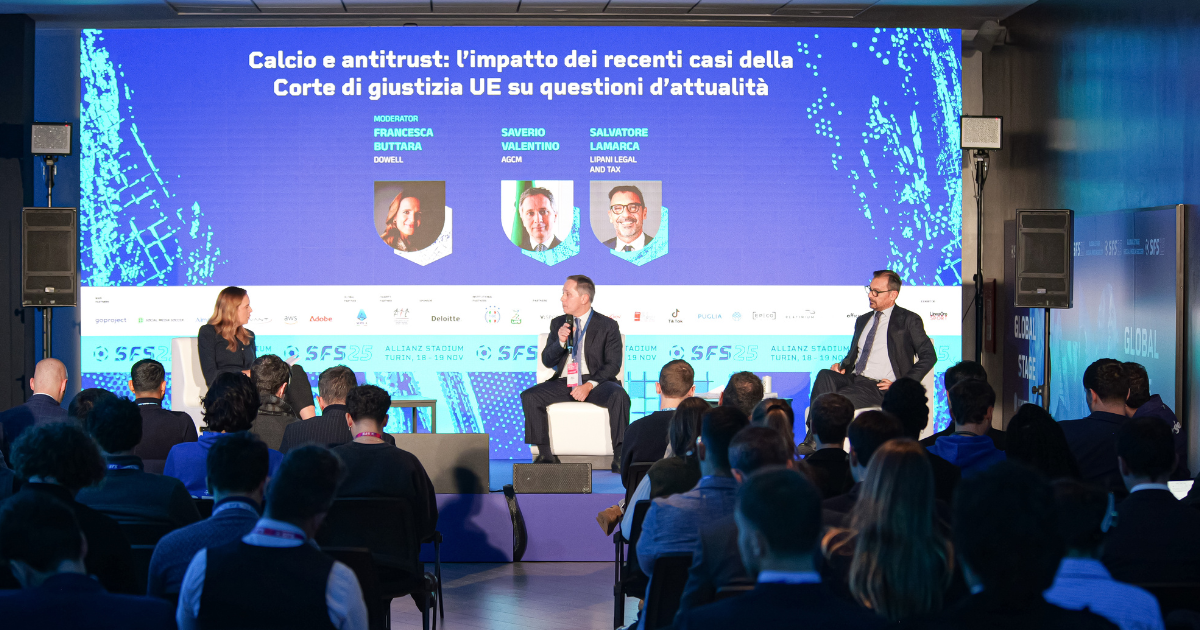
Football and Antitrust: “No more monopoly of FIFA and UEFA on the organization of competitions”
The Global Stage Social Media Soccer hosted the meeting “Football and Antitrust: The impact of recent EU Court of Justice cases on current issues.” The protagonists were Saverio Valentino (Member of the Board AGCM) and Salvatore Lamarca (Antitrust Lawyer and Author of the book “Sport and European Law”), moderated by Francesca Buttara (Founder DOWELL). We are facing a profound transition, a new era following the rulings of the European Court that place football within the market, a sector that must comply with principles
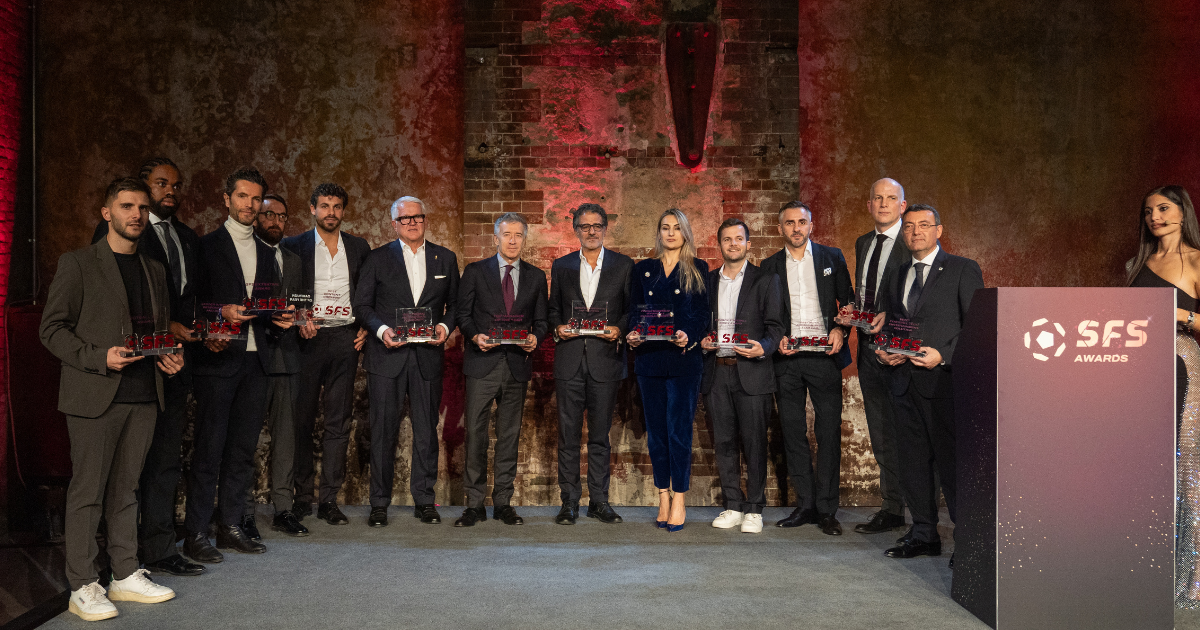
SFS AWARDS 2025: THE TRIUMPH OF EXCELLENCE AT THE OGR IN TURIN FOR ANINDUSTRY IN CONSTANTEVOLUTION
The 2025 edition of the SFS Awards concluded at the OGR in Turin, an event that celebrated excellence in the football industry. The evening, hosted by Anna Maria Baccaro, was enhanced by the presence of SFS partners. The setting of the OGR made the occasion even more memorable, and the event represented a unique opportunity to highlight the winning synergy between sport, innovation, social impact, and business. One of the most emotional moments of the Awards was the tribute dedicated to the memory
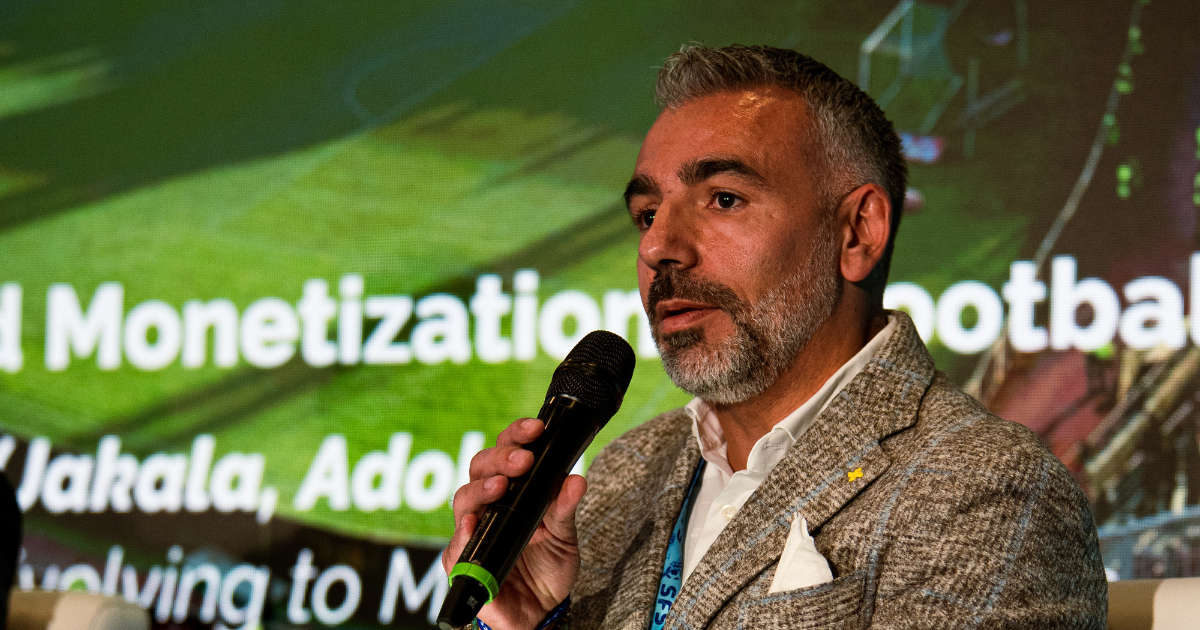
Data Wars in Football: How Data, Ethics and Personalization Are Shaping the Future of Fan Engagement
The panel “Data Wars: Ownership, Ethics and Monetization in Football” brought together some of the leading figures in digital innovation within the football industry. Speakers included Pierdamiano Tomagra, Head of Digital at Serie A, Raffaele Cerchiaro, Managing Director at Jakala, Andrea Peron, Sales Leader at Adobe Experience Cloud, and Claudia Di Renzi, Head of Accounting, CRM & Loyalty at FIGC. The session was moderated by journalist Giulia Piscina. In modern football, the decisive match is increasingly played off the pitch —
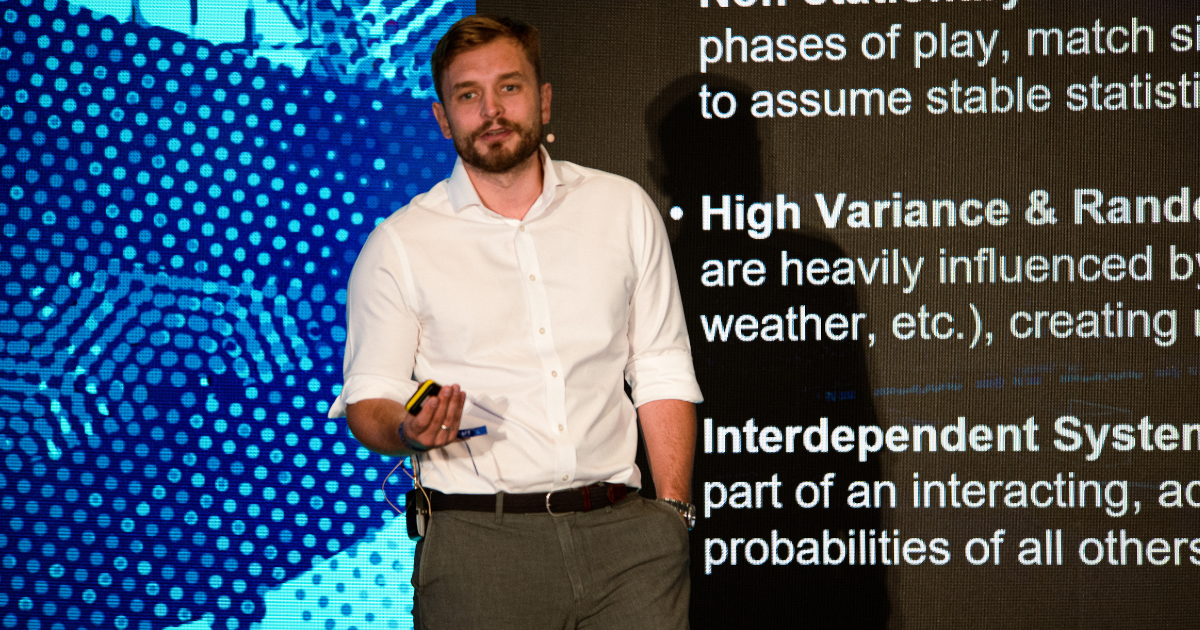
Saudi Pro League, a Data Revolution: Madsen Presents QIMA, the Platform Transforming Football
Not only Italian football: at SFS 25 the focus broadened to the international stage with a session dedicated to the Saudi Pro League, led by Jes Buster Madsen, Director of Football and Data Science for the league. For the past year, Madsen has overseen an ambitious project: building a unified platform capable of collecting and integrating all league data, making it accessible to clubs to better manage their season, performance and strategic planning. “We have the opportunity to create a centralized system,
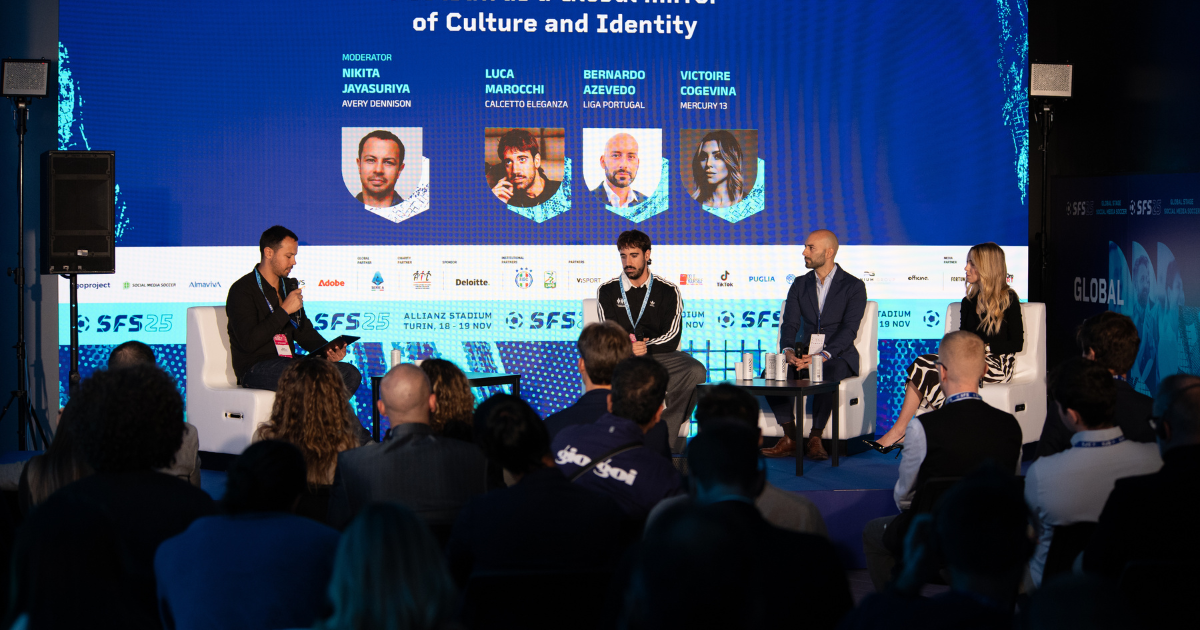
Football, Identity and Brand Revolution: The Future Runs Through Personalisation and Storytelling
The third panel of the day on the Global Stage focused on the relationship between football, identity and culture, featuring Luca Marocchi, Victoire Cogevina and Bernardo Azevedo, General Manager of Liga Portugal, moderated by Nikita Jayasuriya. The discussion explored the role of football as a builder of identity, both in the men's and women’s game. According to Victoire Cogevina, the social potential of the sport is still evolving: “Only time will tell, but I believe football is a platform for social
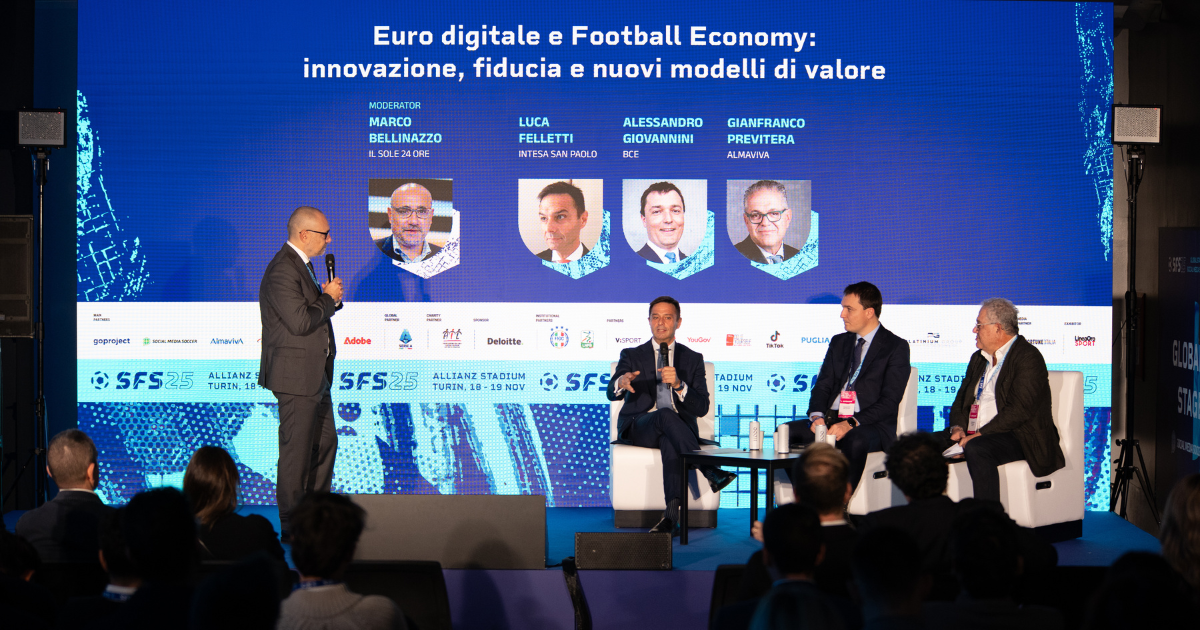
Digital Euro, Data and Fans: Italy Leads Europe’s Payment Revolution
SFS 25 hosted a panel focused on the relationship between the Digital Euro and the Football Economy, featuring Luca Felletti, Sales & Marketing Director at Intesa Sanpaolo, Alessandro Giovannini, Digital Euro Project Leader at the ECB, and Gianfranco Previtera, Commercial Director at Almaviva, moderated by Marco Bellinazzo from Il Sole 24 Ore. Giovannini opened the discussion by clearly explaining what the Digital Euro is and why it represents an inevitable transformation in a world where cash usage continues to decline. “The Digital Euro