




Article written by Football Benchmark
Manchester United FC are a club in transition. It is a state that has felt persistent since 2013, when Sir Alex Ferguson retired after more than two and a half decades at the helm of English football’s most dominant force. Much has changed in the years since, yet throughout that period, the club have remained some distance from the summit of the English and European game on the pitch. Off it, however, the brand strength and global appeal of Manchester United have endured, as evidenced by a range of indicators, but rivals have, in some cases, overtaken them in this regard as well.
On 20 February 2024, Sir Jim Ratcliffe and his INEOS Group acquired a minority stake in the club, with the transaction including responsibility for football operations and a commitment to infrastructure investment. The new leadership inherited an institution defined by two parallel realities. On one side, Manchester United remained a global trophy asset, operating one of the most powerful commercial engines in world football and consistently ranking among the most valuable clubs globally. On the other hand, the club were beginning to feel the financial effects of more than a decade of sporting inconsistency.
Exactly two years on from that minority acquisition, the milestone arrives at a moment that underlines how difficult stabilisation can be. Only last month, Ruben Amorim was relieved of his duties following a disappointing year, reinforcing the sense of instability that has shaped the club’s post-Ferguson cycle. At the time of writing, the mood has shifted again. Under Interim Head Coach Michael Carrick, the team have gone unbeaten in his first six matches, including victories over Manchester City FC and Arsenal FC – a reminder of how quickly things can change in football.
Distinct strategic preferences are nonetheless visible. There has been a clear emphasis on operational efficiency and cost control, a more explicit infrastructure agenda, and a renewed articulation of medium-term sporting ambition, including the internal “Project 150” objective of returning to major title contention by 2028.
This analysis looks at some of the strategic choices made during this period and assesses whether early indicators point towards a substantive change in approach, while recognising that the club’s trajectory remains closely tied to on-pitch performance.
Record enterprise value and revenues despite sporting volatility
Football Benchmark’s January 2025 valuations place Manchester United’s Enterprise Value at £4.2bn (+4% year on year), making them the third most valuable club behind only Manchester City (£4.24bn) and Real Madrid CF (£5.2bn). Within the Premier League, United sit narrowly behind City and ahead of Liverpool (£3.5bn), Arsenal (£3.3bn), Tottenham Hotspur (£3.0bn) and Chelsea (£2.5bn). INEOS therefore stepped into one of the largest non-American sporting assets globally. That scale continues to underpin the club’s commercial resilience.
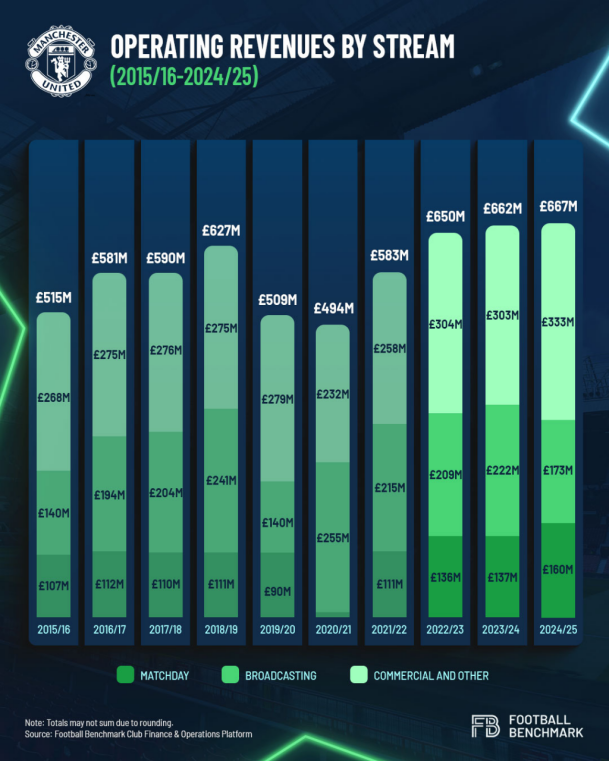
Operating revenue has seen limited growth in recent seasons, increasing from £650m in 2022/23 (the season prior to the acquisition) to £667m in 2024/25. While last season’s figures represent record revenues for the club, the rate of increase has been incremental during a challenging period on and off the pitch. The trend is broadly consistent with the club’s pre-acquisition trajectory over the past decade, aside from the temporary disruption caused by Covid.
The record commercial revenues were a decisive factor, reaching £333m in 2024/25 and accounting for more than half of total revenue. The club launched Qualcomm’s Snapdragon as their principal shirt partner for 2024/25 and subsequently extended the partnership through to 2029. In parallel, the 10-year adidas extension secured long-term stability, albeit with provisions that reduce payments in seasons without UEFA Champions League participation.
While commercial remains the most stable pillar, broadcasting income is significantly more sensitive to sporting performance. Broadcasting revenue increased from £209m in 2022/23 to £222m in 2023/24 before falling to £173m in 2024/25, reflecting participation in the UEFA Europa League rather than the Champions League during that season. The absence from UEFA club competitions in 2025/26 will therefore create a further step-down in broadcasting income this season, placing additional reliance on commercial growth as a financial buffer against sporting underperformance.
Over the same three-year period, matchday revenue rose from £136m to £160m. In 2023/24, Manchester United generated the third highest matchday revenue in Europe, behind only Real Madrid and Paris Saint-Germain FC, supported by consistent full stadium utilisation at Old Trafford despite sporting volatility. Even amid years of managerial change, restructuring, and inconsistent on-pitch performance, attendance levels have remained at capacity. Although matchday revenues increased further in 2024/25, full benchmarking is limited at this stage, given that not all leading clubs have yet published their financial results for the season at the time of writing.
Over a longer-term horizon, the relative weight of the club’s three core revenue streams has changed. In Sir Alex Ferguson’s final season in 2012/13, broadcasting accounted for approximately 28% of total revenue, with commercial contributing around 42%. By 2024/25, commercial revenue has grown to represent roughly half of total income, while broadcasting has declined proportionally despite higher absolute figures, reflecting both the scale of commercial growth and the financial impact of infrequent Champions League participation.
Cost control and capital structure
While the scale and global reach of the brand have cushioned sporting volatility, the financial impact of underwhelming league results and missing out on Champions League qualification remains material. The club are not competing in any European competition this year, removing a significant source of broadcasting and matchday revenue – with a single Champions League home fixture estimated to generate upwards of £6m in ticketing income. The new leadership has sought to offset such pressure through tighter cost control.
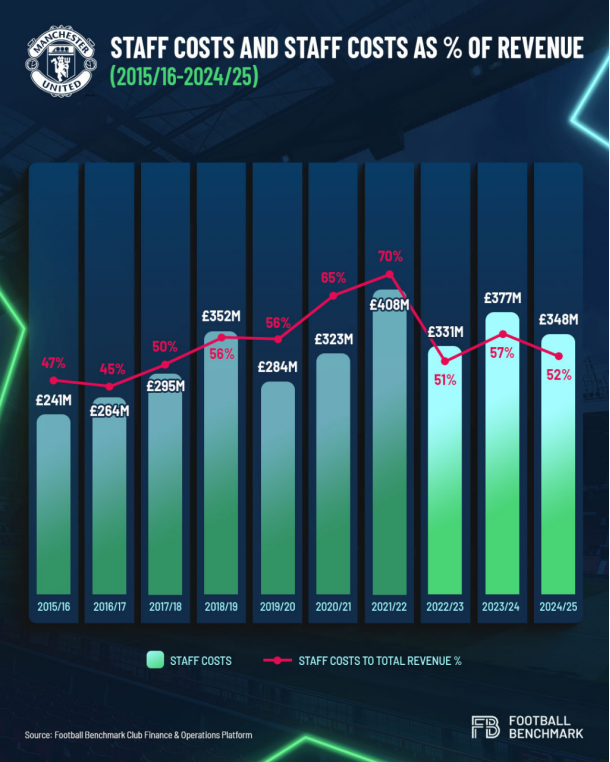
Staff costs were £331m in 2022/23, rose to £377m in 2023/24, and then reduced to £348m in 2024/25. As a proportion of revenue, the wage ratio increased from 51% to 57% before declining to 52%. Notably, the sharp reduction from 70% in 2021/22 to 51% in 2022/23 reflected both revenue growth and a significant decline in staff costs. The 2021/22 season had included managerial turnover and associated compensation payments, while 2022/23 coincided with the arrival of Erik ten Hag and a broader squad reset that saw several senior, high-earning players depart. In isolation, this could be viewed as normal fluctuation within an elite cost base. In context, it aligned with a broader organisational shift under INEOS towards a leaner operating model.
That shift has been visible and, at times, contentious. Following an initial round of job losses, further redundancies were confirmed in early 2025, with the club stating the objective was improved financial sustainability and operational efficiency. Full-time employee numbers went from 1,140 in 2023/24 to 932 in 2024/25, an 18% year-on-year reduction, bringing the club back below pre-pandemic levels. More recently, headcount has decreased further to around 700 employees, a materially leaner structure than in recent seasons and now broadly comparable to Manchester City’s most recently reported staffing levels.
Cost discipline appears to have been positioned by the club as an enabling condition for the wider strategy: supporting infrastructure ambition, protecting recruitment flexibility, and increasing resilience to short-term sporting setbacks. Within an evolving regulatory environment in England and Europe, where direct capital injection is not as straightforward as in previous years, operating control becomes a central lever of financial sustainability.
The club’s capital structure also remains a relevant consideration in this context. As of 30 June 2025, they reported net financial debt of £559m. While full peer comparison for the 2024/25 reporting cycle is not yet possible, given the limited number of published accounts, the absolute level of indebtedness continues to represent a structural constraint on financial flexibility. Over the past decade, the club has recorded average annual net financial costs of approximately £26m, reflecting the recurring impact of interest payments. In periods without Champions League participation, such fixed charges reduce the margin for manoeuvre within the operating model. According to media reports, INEOS completed its $300m equity commitment during 2024, increasing its stake to 28.94%. While this strengthens liquidity and signals ownership backing, financial flexibility remains influenced by operating performance and by applicable financial sustainability regulations.
The restructuring, therefore, formed part of a deliberate attempt to create financial headroom, even if the reputational implications of those decisions have been criticised by supporters and local stakeholders.
Infrastructure ambition and the matchday monetisation gap
If cost control represents one pillar of the new leadership’s strategy, infrastructure represents another. From the outset of the acquisition, modernising Old Trafford and the Carrington training facility was identified as central to the club’s long-term ambitions. For several years, both facilities had been viewed as lagging behind the state-of-the-art environments developed by leading European peers.
The redevelopment of Carrington was the first tangible step, with significant upgrades delivered ahead of the 2025/26 season. The more transformative proposal, however, concerns Old Trafford. While the stadium hosted the Champions League Final in 2003, no major redevelopment has taken place since 2006. In recent years, sustained scrutiny of the venue’s condition has increasingly shaped external perception, adding a reputational dimension, beyond purely financial considerations, to the case for redevelopment.
The club has progressed plans for a new 100,000-seater stadium, positioned as the centrepiece of a broader regeneration project in the local area in coordination with local authorities and regional stakeholders. The rationale for a new stadium is not purely symbolic; it is commercial.
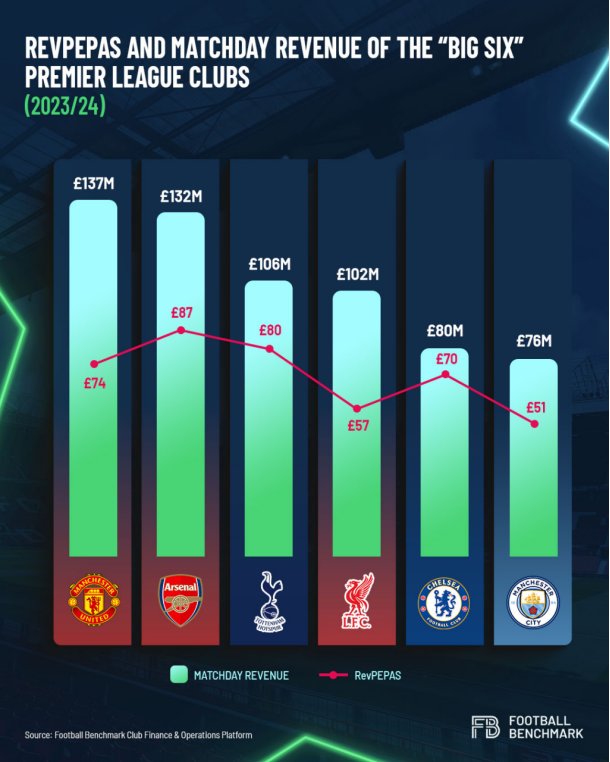
RevPEPAS (revenue per event per available seat) provides a more nuanced measure of matchday performance by focusing on efficiency rather than scale. It is calculated by dividing total matchday revenue by the combined seating capacity across all competitive home fixtures. This allows for comparison across clubs with differing stadium sizes and fixture volumes.
In 2023/24, the club generated the highest matchday revenue within the Premier League yet ranked third on RevPEPAS at £74, behind Arsenal (£87) and Tottenham Hotspur (£80). This combination reflects Old Trafford’s current profile: capacity is a strength but monetisation per seat lags modern benchmarks. The gap primarily reflects limitations in premium seating and hospitality rather than demand.
Across Europe, large-scale stadium redevelopment has reshaped club economics. Real Madrid’s Bernabéu transformation has significantly increased revenue, likewise with Tottenham Hotspur’s stadium. However, direct comparisons with a London-based club require context. Pricing elasticity in Manchester and the North West differs from that of London, where average income levels and corporate density are higher.
Season ticket pricing, therefore, remains a sensitive lever. After several years without increases, Manchester United increased season ticket prices for the third consecutive season last summer as part of efforts to strengthen the revenue base, drawing backlash from sections of the fanbase, though demand for tickets remains high. Balancing commercial ambition with supporter expectations is likely to remain a central decision within any stadium strategy.
Squad investment high, squad value still trailing
The operating reset has focused on infrastructure and cost control, but its success will ultimately be judged through recruitment and results.
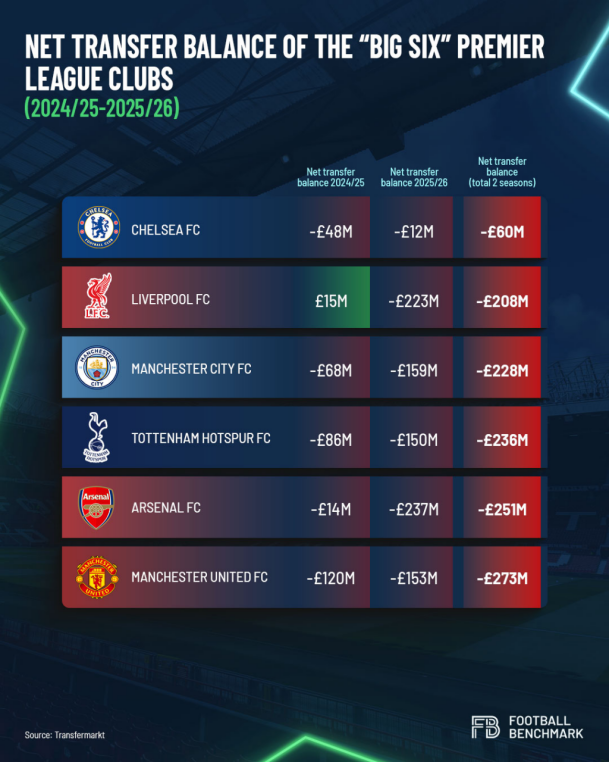
Across the past two seasons, including the recent January window, Manchester United recorded a combined net transfer balance of -£273m. Among the Premier League’s “Big Six”, this represents the most negative position over the period.
The imbalance reflects not only sustained investment but also limited player trading returns. In recent seasons, the club has struggled to generate significant transfer income, partly due to team underperformance, the depreciation of several high-profile players, and elevated wage commitments that have limited the pool of potential buyers willing to match existing salary levels. Frequent managerial changes have altered tactical priorities and squad profiles, reducing continuity and weakening resale positioning. In such circumstances, selling leverage diminishes, particularly when the market senses instability.
Despite the wider emphasis on cost control, recruitment activity has remained assertive. The sporting structure, however, has not been immune to change. The period included the appointment and subsequent mutual departure of Dan Ashworth as Sporting Director, with Jason Wilcox stepping up from Technical Director to lead the sporting department.
Recent windows do suggest a more defined recruitment direction. A clear emphasis on players aged 26 or under at the time of arrival is evident, pointing towards longer-term value retention. At the same time, the additions of Premier League-proven attackers such as Matheus Cunha and Bryan Mbeumo indicate a parallel objective of securing immediate output. Notably, such players were convinced despite the absence of European football, suggesting that the club’s scale and brand remain, for now, sufficiently attractive to secure priority targets. The strategy appears designed to combine future value growth with players capable of delivering now, while also reflecting a recruitment framework increasingly guided by the sporting leadership’s longer-term squad planning rather than being driven solely by the Head Coach’s immediate preferences.
However, the existing squad cost base is still high, an inheritance that the new leadership must manage carefully as the recruitment strategy evolves.
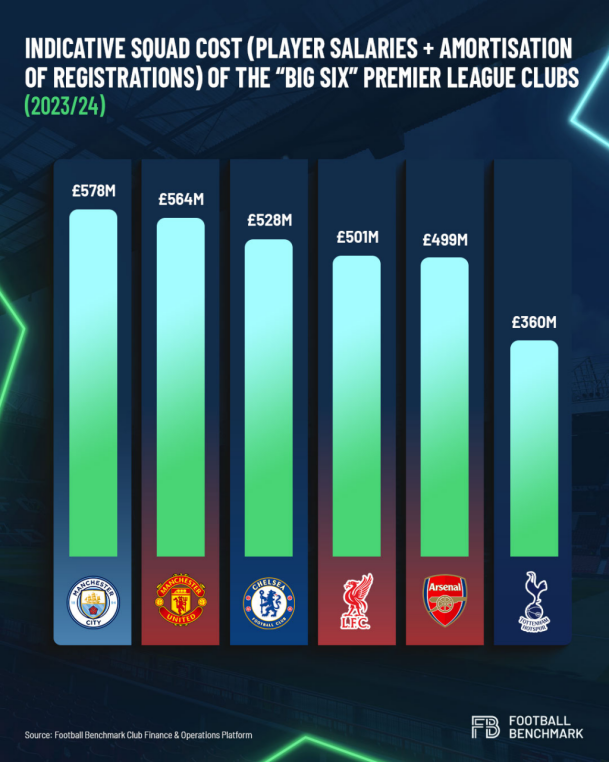
The total indicative squad cost reflects the combined annual expenses for player salaries and the amortisation of transfer fees. In 2023/24, Manchester United operated with the second-highest total squad cost in the league at £564m, close to Manchester City (£578m), indicating a cost base aligned with elite competitive ambition, despite finishing eighth that season. In 2024/25, when the club finished 15th in the table, United’s total squad cost reduced to £541m, while City remained at £578m. Comparable figures for other peers are not available at the time of writing for that season. Despite the team carrying a high cost base, the underlying market value of the squad and their on-pitch results do not currently align with that level of expenditure.
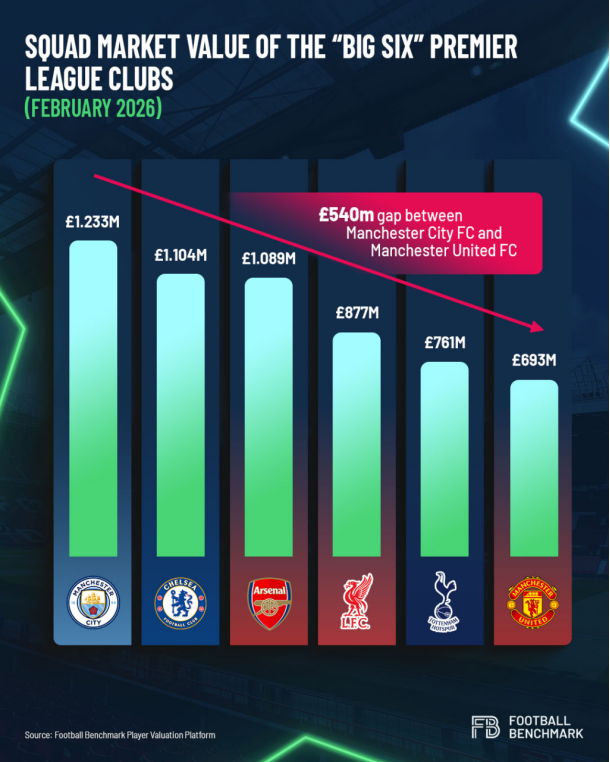
Manchester United’s aggregate squad value currently stands at £693m, materially below Manchester City (£1.2bn), Chelsea (£1.1bn), Arsenal (£1.1bn), Liverpool (£877m) and Spurs (£761m).
Even with continued investment, the squad’s overall value and league performance still lag behind as spending alone has not yet translated into sustained competitive progress.
Consistent Champions League participation remains central to closing that gap. The additional revenues expand transfer capacity, increase the club’s appeal to elite players, and help protect and enhance squad value. The next phase will test whether the revised sporting structure can turn sustained investment into stable performance and a squad capable of competing regularly at the top end of English and European football, rather than repeating a cycle of high expenditure without return on the pitch.
Big decisions, short-term strain, and the race to get things back on track
The INEOS period has seen a rebalancing of priorities. While revenues have edged upwards, supported by the enduring commercial strength of the club’s global brand, the pace of growth has been incremental rather than transformative. Cost control has become central to the operating model, with restructuring presented as a necessary step towards financial sustainability, even at the cost of strong criticism by fans and other stakeholders.
Infrastructure has become the other defining pillar. Plans for a new stadium reflect a long-term vision to modernise the club and better monetise consistently strong stadium utilisation. Attendance has remained robust despite sporting volatility, and redevelopment represents a lever to convert that sustained demand into improved matchday revenue, supporting long-term financial sustainability alongside the club’s commercial strength.
However, the club’s trajectory remains shaped by sporting performance and European participation. Even for a club valued above £4bn and generating close to £700m annually, regular Champions League football materially affects financial flexibility and competitive positioning in the short to medium term. While financial recalibration appears to be progressing, recruitment, squad management, and on-pitch results have yet to fully reflect the level of ambition set out by leadership.
Two years can feel significant in football, where narratives shift week by week. In structural terms, however, it is a relatively short window in which to judge decisions of this scale. What can already be observed is that two major early sporting decisions, the initial appointment of a Sporting Director and the first Head Coach hired under the new leadership, did not provide the stability that had been hoped for. Turnover in these roles is hardly unusual in football, yet it breaks rhythm and resets the clock.
The leadership has articulated an ambition to return to major title contention by 2028. The decision around the Head Coach position at the end of the season will therefore be a significant moment. The priority will be to ensure alignment behind a clearly defined sporting vision that provides stability and direction over the coming seasons. Ultimately, 2028 will serve as the clearest reference point for assessing whether the strategic decisions taken in these first couple of years laid the foundations for a Manchester United capable of competing sustainably at the top again, both on and off the pitch.
Football Benchmark supports clubs with independent advisory and intelligence services, providing strategic context and data-driven insight to inform decision-making and long-term financial and sporting sustainability.

Manchester United under INEOS: reforming a football behemoth amid instability
Article written by Football Benchmark Manchester United FC are a club in transition. It is a state that has felt persistent since 2013, when Sir Alex Ferguson retired after more than two and a half decades at the helm of English football’s most dominant force. Much has changed in the years since, yet throughout that period, the club have remained some distance from the summit of the English and European game on the pitch. Off it, however, the brand strength and
FIFA World Cup 2026: why is Zurich cutting costs despite record revenues?
An analysis of FIFA’s 2026 roadmap: balancing billion-dollar challenges with record-breaking forecasts, and how efficiency is redefining the football industry. It’s not just about stadium capacity or travel distances: the road to the 2026 World Cup is evolving into a sophisticated budgetary exercise. As North America prepares to host the unprecedented 48-team format, a strategic move has rippled through the sector: FIFA has slashed operating expenses by over $100 million, mandating drastic cost optimization. But what lies behind this decision? Is
Milan-Inter: invisible excellence and the health management of major events
From clinical management at San Siro to Premier League standards: how health safety and risk management transform the fan experience on the field. The Milan Derby is not just a top challenge or a global media event; it is, for all intents and purposes, a complex ecosystem that must ensure the safety of more than 75,000 people in a tight time frame. Behind the scenes at the "Stairway of Football," an impressive organizational machine is moving, transforming the stadium into a
World Cup 2026: welcome to the era of sporting giantism
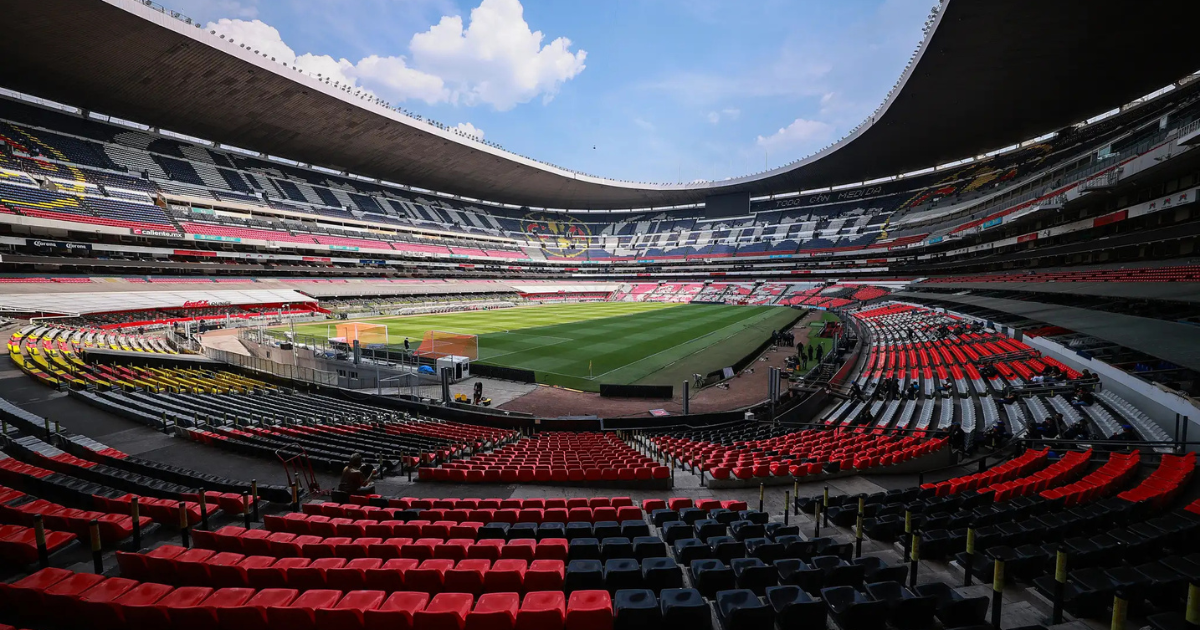
From 32 to 48 teams: an analysis of the logistical challenges and business opportunities of the tournament set to transform North America into the new epicenter of football. On June 11, 2026, what will take place at the Banorte Stadium in Mexico City, the legendary Azteca, will mark the beginning of a new era in world football. The next FIFA World Cup is no longer just a sporting milestone, but the greatest testing ground ever faced by the football industry. Between unprecedented
Matchday experience and loyalty: mapping fan attendance in Serie A
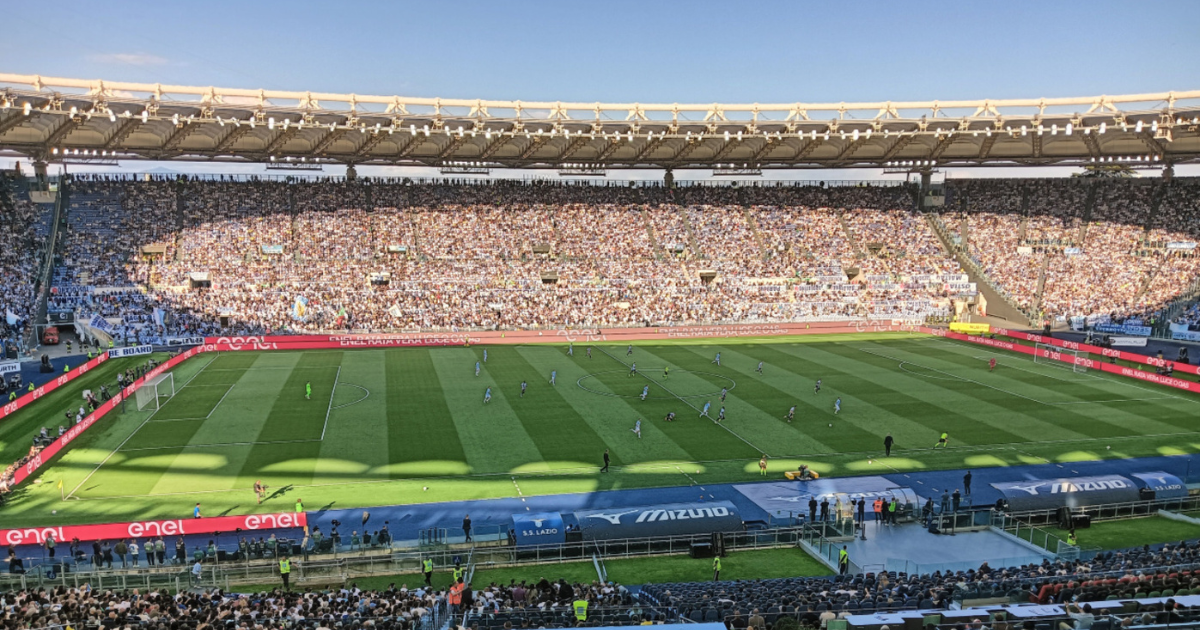
A five-year study by SeatPick analyzes stadium occupancy rates: Juventus leads for consistency, while Milan dominates in absolute volume. In the landscape of modern football, the stadium has evolved from a simple match venue into the beating heart of a fan engagement strategy designed to drive long-term loyalty. A recent analysis by SeatPick, based on Transfermarkt data from the last five years (2021-2026), provides a clear picture of "physical loyalty" in Italy, highlighting the clubs most successful in maintaining high stadium
MLS 2026: the year of reckoning between global stars and the World cup shadow
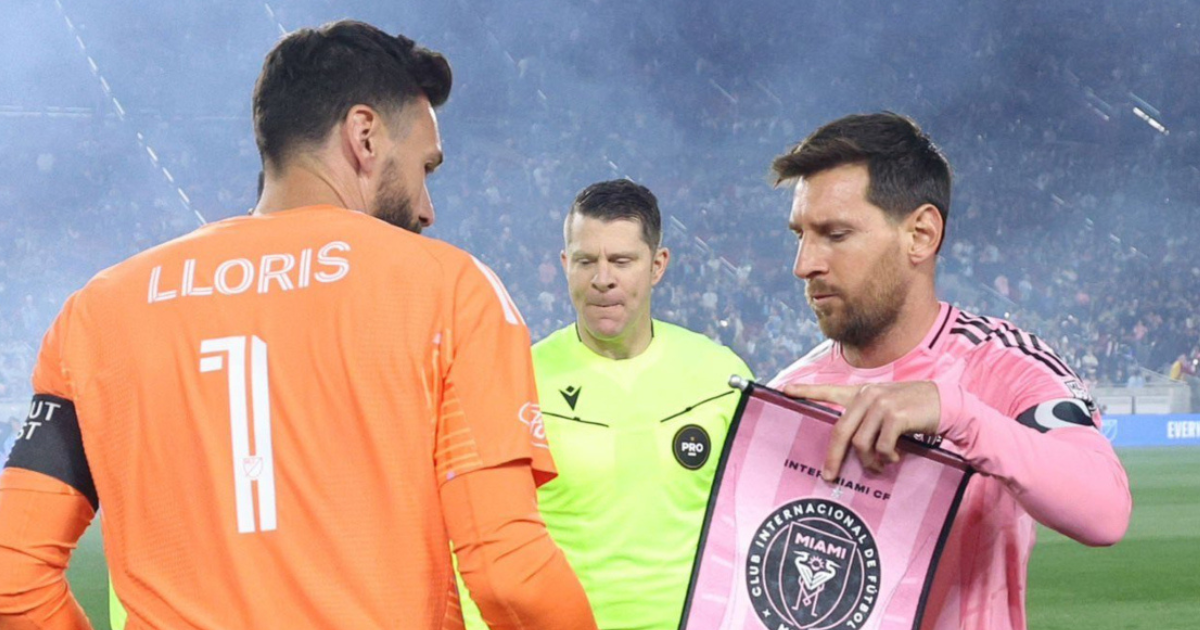
Between the "Messi effect," Martino’s return to Atlanta, and the anticipation for the 2026 World Cup, MLS is kicking off a season that will be decisive for the future of soccer in the US Major League Soccer has reopened its doors, and there is a palpable sense that this is no ordinary season. With the 2026 World Cup on the horizon—hosted across the USA, Canada, and Mexico—the American league finds itself in the eye of a storm of investment, star power,
The Economics of Attention: Why digital hype is the new currency of Football
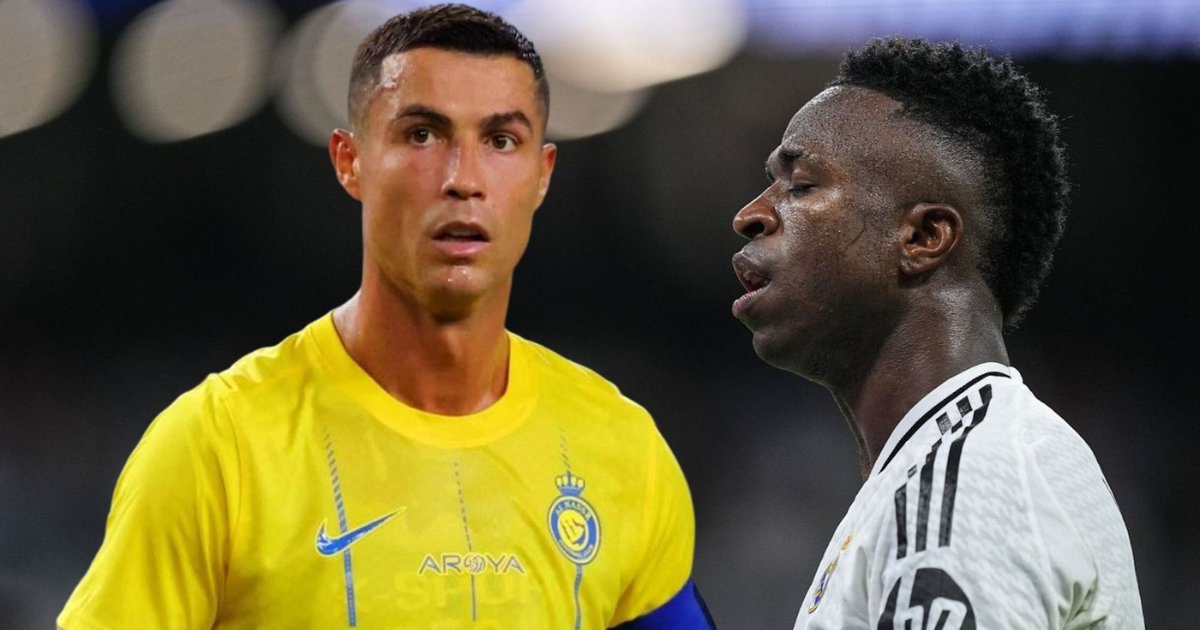
Vinicius Jr. leads digital hype with +1.5M fans per month, challenging CR7's $275M In the elite soccer of the 2025/2026 season, the referee's final whistle is but the beginning of a second game, perhaps more complex and certainly more profitable than the one played on the green turf. For those involved in innovation and the sports industry, we are facing an unprecedented metamorphosis: the value of a footballer today is no longer a simple sum of goals and assists, but a
The Other Side of Growth: The Security Emergency and Abuse in Women’s Football
While women’s football is experiencing unprecedented commercial growth and popularity, a dark side is emerging that threatens its founding values: the rise of stalking, misogyny, and online abuse is forcing clubs and players into a necessary—but painful—lockdown. Women’s football has always made accessibility its trademark, a distinguishing feature compared to men’s football, often perceived as distant and heavily guarded. However, this “closeness model” is now faltering under the weight of overexposure that is becoming dangerous for players’ safety. According to an investigation
“Numeri in Palla”, by Jacopo Carmassi: The Revenue Championship
English version prepared by editorial team Data and reflections on football club revenues and potential strategies to reduce imbalances Today I want to talk to you about standings. Not the one based on points earned on the pitch, but the one based on football club revenues. The concept that "the richest teams win" (or at least, those among the richest) finds numerous confirmations in reality, both in Italy and abroad. The mirror concept—that "the less wealthy teams lose"—is equally valid. There are,
Spotify Camp Nou: Barcelona Shields the Core of its Business with 14,000 New Seats for Members
More than just bricks and mortar: the return to the new Camp Nou transforms club members into a true competitive asset, blending Revenue Management with brand loyalty. As redevelopment work at the Spotify Camp Nou continues at full speed, FC Barcelona is sending a clear message to the club’s beating heart: its members (socios). In a recent official statement, the management confirmed that once municipal approval is secured for "Phase 1C" (concerning the Gol Nord section), the entire capacity increase will