




The Italian football ecosystem is facing a critical phase of evolution, driven by an increasingly urgent need for management transparency, regulatory compliance, and a strong ethical commitment to safeguarding individuals. On Friday, September 18, 2026, the Nexthub Deloitte in Bari will host the SFS Snack, a national conference titled “Governance and Liability in Football: Law, Management, and Safeguarding,” organized by Social Football Summit in collaboration with Deloitte Legal.
The event serves as an executive platform for dialogue between political and sports institutions, members of the judiciary, academic experts, and key leaders from the football industry. The morning will open with institutional welcomes from Francesco Paolo Bello (Managing Partner of Deloitte Legal), Vito Roberto Tisci (President of the FIGC Youth and School Sector), and the leadership of the Bari and Lecce Associations Salvatore D’Alusio and Antonio Tommaso De Mauro.
The program will feature three specialized technical panels. The first session, “Special Administration and Governance in Football,” moderated by Andrea Bozza (Head of Football at Deloitte Legal), will analyze judicial oversight and the management of distressed clubs. Featured speakers include Roberto Rossi (Public Prosecutor at the Court of Bari), judicial administrator and university professor Alessandro Formisano, and Saverio Sticchi Damiani (President of US Lecce).
The discussion will then shift toward corporate criminal law with the panel “Criminal Liability of Entities and Sports Companies: Prosecution, Defense, and Prevention Pursuant to Legislative Decree No. 231/2001” moderated by Sky Sport journalist Marina Presello, the session will examine the adequacy of organizational models in preventing corporate offenses, featuring insights from Public Prosecutor at the Court of Bari Ciro Angelillis, Criminal Lawyer, Deloitte Legal Valeria Logrillo, and Preliminary Investigations Judge Antonella Cafagna.
The panel “CorporateLiability, Protection of the Individual, and Safeguarding” (moderated by Valeria Logrillo) will explore the frontiers of ethics in sports. Key experts such as Prof. Lawyer Domenico Costantino (Coordinator of the Master’s Degree in Sports Law and Sports Management, UniBA), Vito Di Gioia (Secretary of the FIGC Youth and School Sector), Paolo Mormando – FIGC Prosecutor’s Office and Daniela Simonetti (FIFA Guardian and ChangeTheGame) will discuss best practices for creating safe sporting environments and strategies for abuse prevention.
The day will officially conclude — first with scheduled presentations by Dr. Paolo Contaldo, Attorney Sacha D’Ecclesiis, Judge, FIGC Federal Court of Appeal Roberto Eustachio Sisto — and then with a strategic summary and closing remarks by Gianfilippo Valentini (Founder of Social Football Summit) and attorney Pierfilippo Capello (Head of Sports at Deloitte Legal), followed by an executive networking session.
Participation is subject to approval by the organization following registration through the dedicated online form.
📅 Friday, September 18, 2026
⏰ 09:00 AM – 01:00 PM
📍 Nexthub Deloitte – Bari, Italy
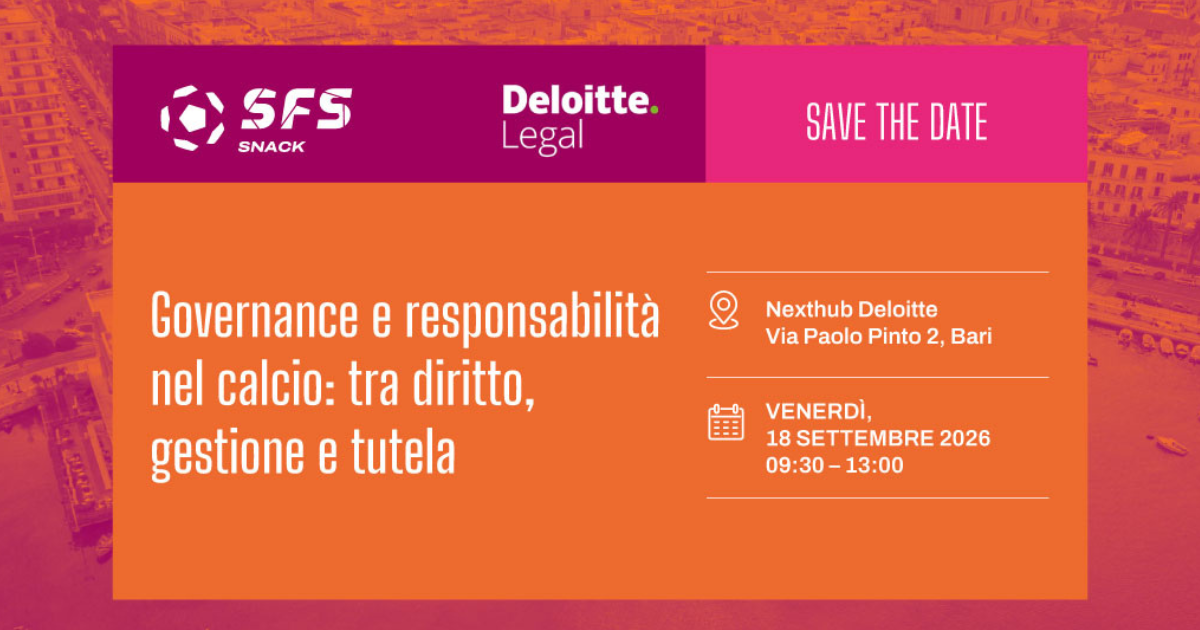
Football Governance and Liability: SFS and Deloitte Legal Present the SFS Snack in Bari
The Italian football ecosystem is facing a critical phase of evolution, driven by an increasingly urgent need for management transparency, regulatory compliance, and a strong ethical commitment to safeguarding individuals. On Friday, September 18, 2026, the Nexthub Deloitte in Bari will host the SFS Snack, a national conference titled “Governance and Liability in Football: Law, Management, and Safeguarding,” organized by Social Football Summit in collaboration with Deloitte Legal. The event serves as an executive platform for dialogue between political and sports
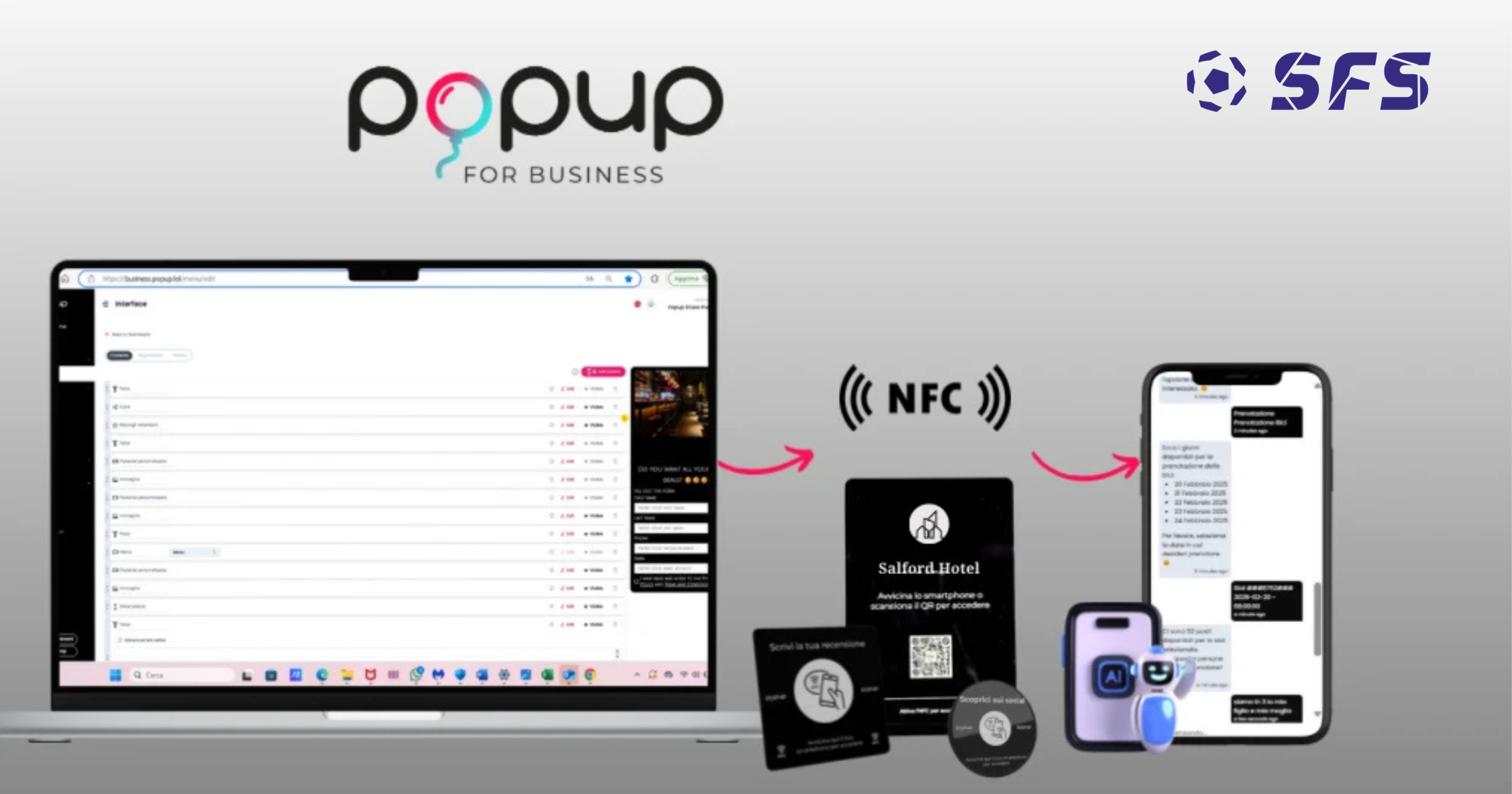
From Hospitality to the stadium: how POPUP is revolutionizing the Phygital matchday experience
Agility, continuous development, and a clear technological vision enabled POPUP to make a strategic pivot, adapting its digital solutions from the tourism and hospitality sectors directly to the core of the sports industry. Originally created to streamline customer interactions via QR codes and NFC tags, the startup evolved while preserving user simplicity at its core. This growth trajectory was further propelled by its showcase at SFS ExtraTime, the Social Football Summit initiative dedicated to highlighting the startups and technologies reshaping
Salesforce Joins the SFS Ecosystem as Main Partner
It is with great enthusiasm that the SFS (Social Football Summit) team announces that Salesforce is officially joining the SFS 26 ecosystem as a Main Partner. This strategic collaboration for innovation in the football industry will support this new edition of the summit, consolidating the event as the international B2B benchmark for digital transformation, business, and technological evolution applied to the world of football. Salesforce, the world’s number one agentic CRM platform, helps companies of any size reinvent their business with AI.
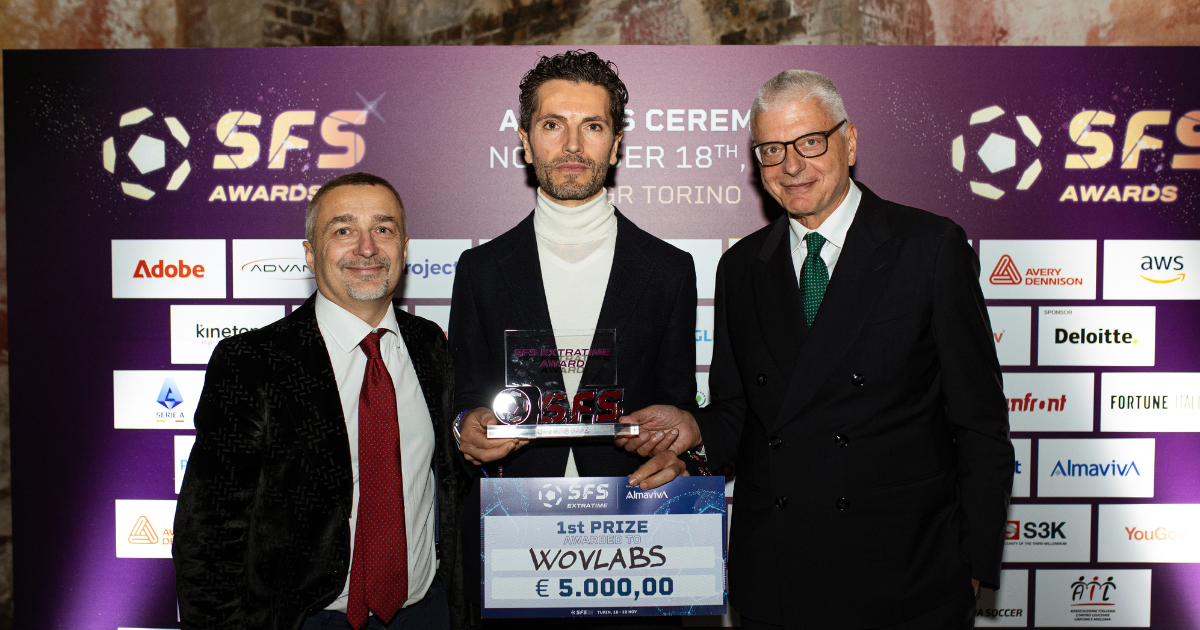
Authentica: The Winner of SFS ExtraTime 2025
Ahead of SFS 26 and the new ExtraTime start-up competition, the spotlight turns back onto the finalists of the Social Football Summit 2025: companies with different ideas and perspectives, but all united by the same drive to grow and innovate within their industry. A year after the last edition, each start-up has successfully consolidated its market positioning or enhanced its product offering, confirming a shared trajectory—the ability to evolve, stay agile, and effectively respond to the industry’s emerging needs. A standout
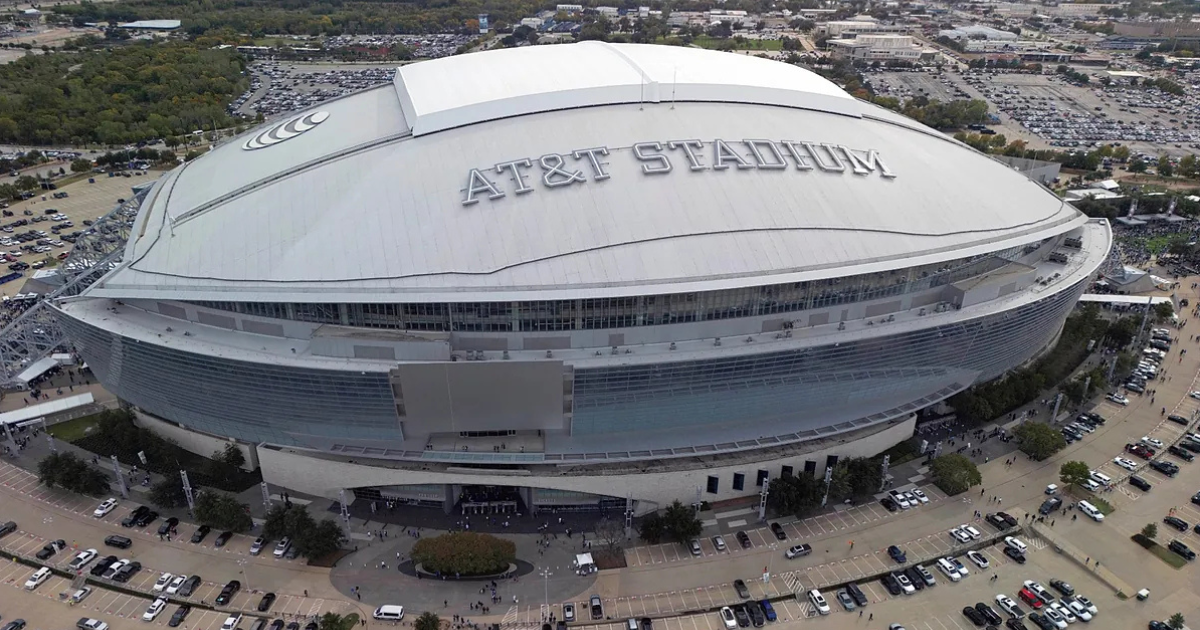
Smart Stadiums: LG Transforms Dallas’ AT&T Stadium with Next-Gen Displays
The Dallas Cowboys’ tech infrastructure reaches the next level with over 2,000 digital screens and Micro LED solutions, delivering an unprecedented visual experience. The evolution of major sports arenas into "smart venues" is moving forward at full speed. For modern sports and soccer venues, the goal is no longer just hosting an event—it is about completely redefining live entertainment. Every corner of the facility is being converted into a high-value digital touchpoint. Extraordinary visual coverage for the fan experience The ambitious tech
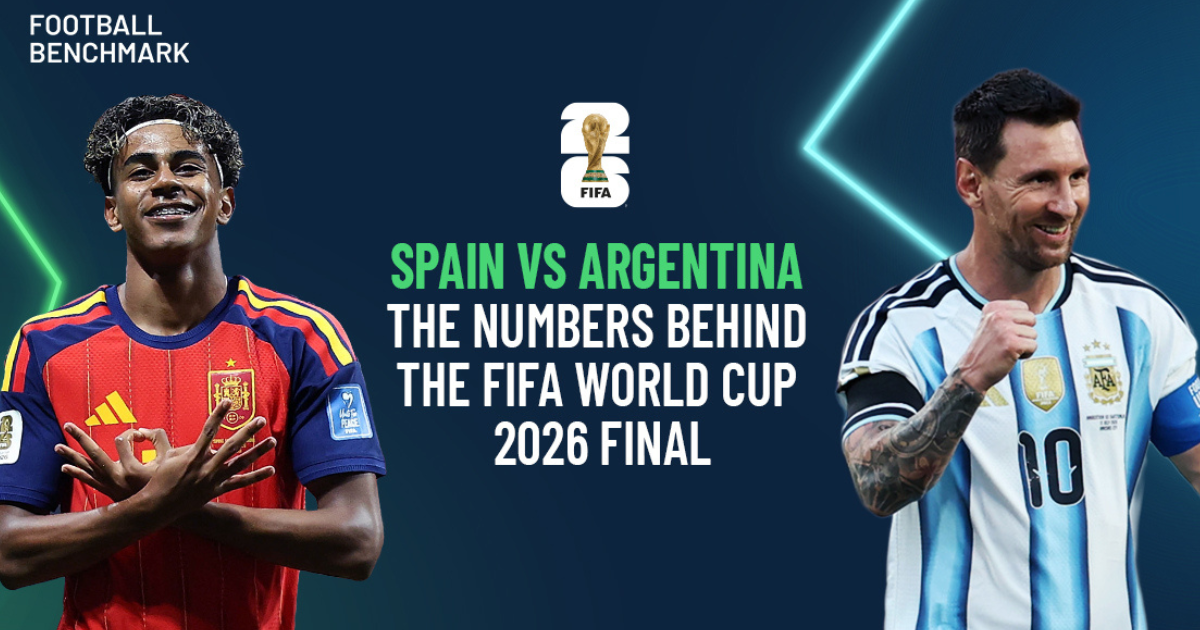
Spain vs Argentina: the numbers behind the FIFA World Cup 2026 Final
Article written by Football Benchmark The first-ever 48-team FIFA World Cup is down to two nations competing for football's most coveted prize. Spain and Argentina will meet in the FIFA World Cup 2026 Final on 19 July. European champions Spain are aiming to become world champions for the second time, while Argentina are looking to become four-time winners and to defend the title they won in Qatar four years ago. This analysis compares the two finalists across a range of indicators, from squad
Social Football Summit stands with UNICEF to support the future of children around the world
The Social Football Summit (SFS) team is proud and honoured to announce a new three-year charity partnership with UNICEF Italy. This partnership is based on the shared core values of SFS and UNICEF, such as sport, solidarity and respect for others, and a commitment to protecting the rights of children and adolescents worldwide. The Social Football Summit (SFS) is Italy’s leading international event for the football industry. Since its foundation in 2018, it has brought together clubs, federations, brands, start-ups, institutions

Svexa: analysis, performance, and athletic growth
The Zone7 platform, developed by Svexa, enables the deep monitoring, understanding, and knowledge of the human body. Through the predictive analysis of biological signals, the system can anticipate critical issues and effectively mitigate injury risks for athletes. Guided by the strategic use of Artificial Intelligence, this perfect symbiosis between data and science proves fundamental in optimizing workloads and transforming athletic performance into actionable insight. Throughout 2025, the start-up exponentially accelerated its growth, consolidating its global market position. Driven by these results,

The US World Cup “paradox”: full stadiums, but the job boom fails to take off
International mega-sports events are almost always presented as powerful engines of economic and employment growth for host nations. However, reality can sometimes prove far more complex than predictive models. This is currently unfolding in the United States, where the highly anticipated World Cup is delivering a spectacular show on the pitch, but falling short of expectations within the labour market. The employment boom predicted for the leisure & hospitality sector (restaurants, bars, hotels, and entertainment) simply has not materialised. In fact, it

Evolution of Sustainability Policies and Strategies in FIFA
Editorial contribution by FDC Consulting Digital ESG FIFA governs football on a global scale. It coordinates over 200 national associations, organizes the most-watched tournaments on the planet, and generates economic flows that few other sectors can match. All of this brings with it an environmental and social responsibility of extraordinary proportions. How has it addressed this in recent years? With a strategy that has made significant strides on paper, but still displays relevant contradictions in practice. Understanding this evolution is useful