




World Cup Fever: the massive economic engine driving North America
The eyes of the world are on North America: with the world championship just around the corner, thousands of fans are preparing to undertake long journeys following their national teams across the three host countries. It is a unique experience that, however, mobilizes a massive lateral economic machine involving numerous sectors and cities.
To manage the complex logistics, FIFA has launched a partnership with Airbnb—already valid for the FIFA Club World Cup 2025™ and active for the FIFA World Cup 2026™ and the FIFA Women’s World Cup 2027™. This collaboration allows citizens in the U.S., Canada, and Mexico to generate income by becoming hosts. According to Deloitte data, tourism stemming from the World Cup could have an impact of $3.6 billion (€3.101 billion) across lodging, travel, and related expenses, with 380,000 guests expected in the host cities.
World Cup 2026: a tournament with a massive future impact
Through its investments, Airbnb will generate approximately 34,000 jobs throughout 2026 across the local development landscape—including cafes, restaurants, and small businesses—aiming to create benefits that outlast the tournament itself. Furthermore, the platform’s spending limit for the “Host City Impact Program” will be expanded to $5 million to fund separate initiatives that foster event growth by promoting experiences involving both residents and fans from around the globe.
Future estimates extending beyond the World Cup project 1.7 million overnight stays from guests returning to the competition’s host cities. The spending associated with these visits could reach approximately $495 million (€426 million), with a total economic activity of $1.5 billion (€1.292 billion).
World Cup 2026: how much does a stadium ticket cost?
Naturally, the choice of cities will depend partly on the number of matches hosted. This inevitably leads to the question of tickets. As with every edition of the competition, the price of a single ticket will vary based on two factors: the importance of the match and the seat category within the stadium. Prices start at Category 4, which includes the most affordable tickets, and go up to Category 1, which is significantly more expensive. As announced, costs will steadily increase as the tournament progresses toward the semifinals; however, the opening match and the final follow a completely different pricing structure.
Let’s analyze the opening match: Mexico vs. South Africa, scheduled for June 11, 2026, at the Estadio Azteca in Mexico City. Attending the inaugural clash will require an average expenditure of $724 (€615): more than double a standard group stage match, which is estimated at an average of $305 (€259). Category 4, which usually costs $21 (€18) for other matches, will rise to $60 (€51), while other tiers will fluctuate between $320 (€272) and $2,201 (€1.871) for business seats.
A significant detail emerges when comparing this to the rest of the group stage: the cost for Category 3 of the opening match is almost identical to Category 1 ($323, approx. €274) of other matches, with a substantial decrease even for business seats, which drop to $993 (€844).
As the tournament progresses, prices will gradually rise. By the Round of 32, the average will climb to $309 (€263), reaching $324 (€275) in the Round of 16. The increase becomes sharp starting from the quarter-finals, where watching a clash between the world’s top eight teams will require an average spend of $468 (€398).
The cost nearly doubles for the semifinals, which will cost an average of $913 (€776). The minimum price for the penultimate stage of the competition will be $84 (€71), a gap of $357 (€307) compared to Category 3 (the next tier) and a staggering €840 difference compared to Category 1. Regarding Skyboxes and Business seats for the final four matchups, the figure will rise to $2,910 (€2,474). Conversely, there is a considerable drop for the third-place final, with an average price of $609 (€518).
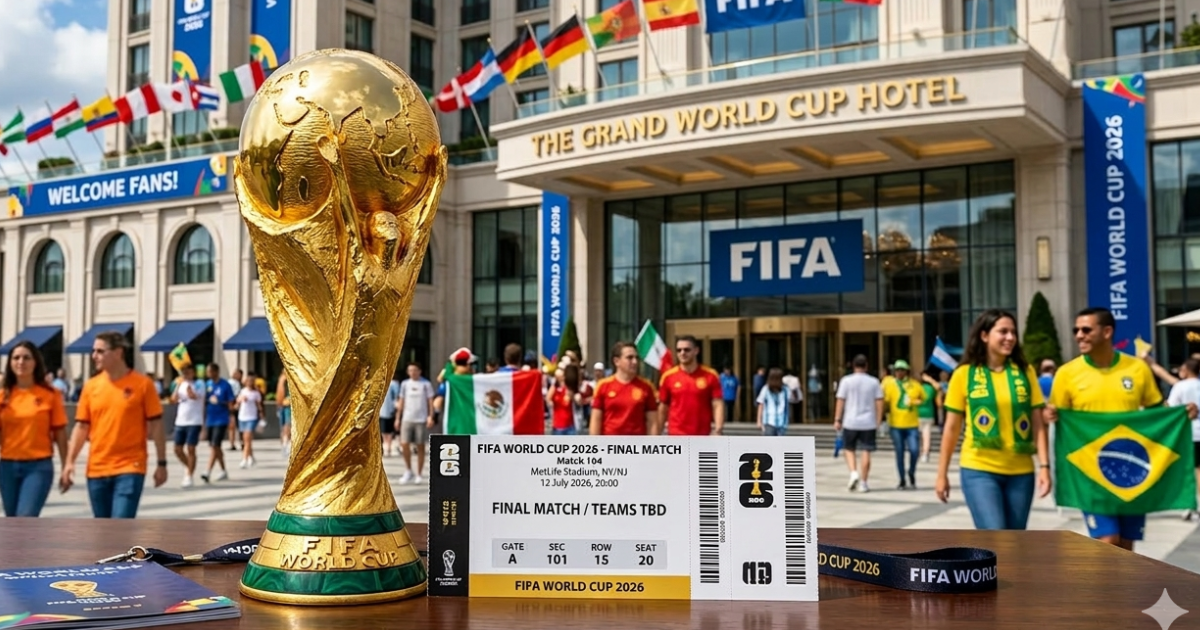
The final at MetLife Stadium in New York follows a different logic. In this case, tickets will start at a minimum of $128 (€118) and reach a maximum of $4,309 (€3,663). The average cost for the concluding match will hit $1,408 (€1.197). Overall, the North American tournament shows a substantial parity with the Argentina-France final held in Qatar in 2022, where the maximum cost (Category 1) was €1,607 and Category 3 was €604 (recalling that Category 4 was reserved exclusively for residents of the host country).
