




Following Football Benchmark’s multi-club ownership workshop at World Football Summit Madrid, Antonio Di Cianni, Director of Advisory, considers where MCOs can create value and the strategic and regulatory challenges that investors must address.
Multi-club ownership has become an established part of the global football investment landscape. The number of MCO groups worldwide increased from 18 in 2012 to 152 in 2024, while the number of clubs within these structures rose from 40 to 380 over the same period. Eight of the top 15 most valuable European football clubs in Football Benchmark’s 2026 Football Clubs’ Valuation report are now connected to what could be defined as multi-club networks.
After more than a decade of rapid expansion, however, the market has entered a period of consolidation. The number of clubs within MCO structures declined by 10% in 2025, while European club transactions involving an MCO fell from a peak of 58 in 2022 to 33 in both 2024 and 2025.
This does not mean that the MCO opportunity has disappeared. It shows that investors are looking more carefully at how these models can work in practice. Acquiring clubs is only the beginning. The more difficult task is building a group in which every club has a clear role and the intended sporting and financial benefits can genuinely be delivered.
That balance between opportunity and complexity was at the centre of the workshop I hosted at World Football Summit Madrid: “Multi-Club Ownership: Building competitive advantage in a globalised game”. David Dwinger and Xander Czajkowski of Estrella Football Group joined parts of the discussion and shared their experience of developing a horizontal MCO model.
The opportunity remains clear
If implemented effectively, an MCO can increase the value of its individual clubs and the wider group. For most groups, player development and trading remain the clearest opportunity. Operating across different markets can widen access to emerging talent and create pathways between clubs competing at different levels. But common ownership alone does not create an effective pathway. The clubs must have compatible recruitment strategies, suitable sporting environments, and a clear view of how each player can progress.
The value also does not depend only on players moving between affiliated clubs. A successful model should improve how the group identifies and develops talent and how it ultimately realises value, whether through first-team contribution or an external sale.
Commercial opportunities – although more difficult to achieve – may also exist through shared expertise, technology, and selected central services. A group may be able to reduce duplication, improve the capabilities of individual clubs, and offer commercial partners access to several markets. The scale and nature of these opportunities will differ between groups, depending on their markets, club profiles, and objectives.
The structure must follow the strategy
The choice between a vertical and horizontal structure has consequences for governance, investment, player pathways and the relationship with supporters. It should therefore follow the investor’s objectives rather than simply reflect an established MCO model.
A vertical model can create clear player pathways towards a flagship club but it may also produce an uneven allocation of resources and increase concerns that other clubs exist mainly to serve the leading one.
A horizontal model, on the other hand, gives clubs a more equal position within the network, with shared access to expertise and investment. During the workshop, David and Xander explained how Estrella is approaching this model, including its commitment to retaining each club’s name, badge, and local identity. Their contribution illustrated how a group can seek to balance local independence with the benefits of a wider network.
It also reinforced an important point: the model must reflect the specific objectives and composition of the group. A one size-fits-all approach does not work.
The questions we ask investors
When we work with investors considering an MCO strategy, we always begin with several fundamental questions. What do you want to achieve? What is your vision for the group, and what is your available ticket size?
These questions typically come before the search for a club. They determine the group-level strategy, the intended role of each club, and which capabilities should sit centrally or remain under local management.
We start by considering the most strategically sound market to invest in. Selecting a country and league should consider more than a club’s availability or estimated acquisition price. The media landscape, revenue distribution, competition structure, and the league’s financial performance all matter. The regulatory framework – including, importantly, nationality rules – access to continental competitions, and local attitudes towards MCO can also affect whether the model is viable in a given country.
Then, using a funnel approach, we move from market/league considerations to what the investor should acquire. What type of club fits the strategy? Is an acquisition necessary, or could a partnership achieve the same objective? Does the investor require majority control, or would a minority position be sufficient?
At club level, we assess, among other things, the ownership structure, finances, infrastructure, and commercial potential. We also examine the squad, the club’s record in developing talent and trading players, and whether it can fulfil the intended role within the group.
An attractive opportunity can itself become the starting point for an MCO strategy, or be considered more optimal as a standalone acquisition. The key is to understand how the club could fit within the investment proposition and whether the investor has the resources and operating capabilities to support it after the transaction.
Regulation must be considered from the start
Regulation is now shaping MCO strategy rather than simply placing limits around it. Article 5 of UEFA’s club competition regulations limits the control or influence that one party can exercise over multiple clubs, prohibiting them to take part in the same UEFA competition. Even more importantly, UEFA’s Financial and Sustainability Regulations restrict the accounting treatment of transfers between related clubs: they are no longer able to improve their financial performance through intra-group transactions. Indeed, in the event of an intra-MCO transfer, the selling club must record the transaction at the lower of proceeds and net book value, limiting the capability to record profit on disposal of players through intra-MCO transfers.
FIFA limits the number of international loans, while domestic rules covering nationality, minimum salaries, and reserve teams vary considerably between markets.
Regulation is therefore not a workstream to address once acquisitions have been completed. It can determine which markets are suitable, how ownership and governance must be structured, and whether the intended player pathways are workable. These issues need to form part of the original investment thesis.
From investment idea to operating model
The potential advantages of multi-club ownership are apparent. An MCO can provide access to talent and markets that individual clubs may struggle to reach independently. It can also strengthen club capabilities and create new player development opportunities. But these outcomes depend on the quality of the strategy and its execution.
The most efficient MCOs are those in which every acquisition has a clear purpose, the operating model supports that purpose, and each club becomes stronger through its participation in the group.
This is where my colleagues and I at Football Benchmark often support investors. We help them define the investment strategy, understand whether an MCO is the right approach to achieve their objectives, and turn that into action.
We also work with owners post-acquisition, reviewing organisational structures, operating performance, and whether the group is delivering the expected sporting and commercial benefits. If you would like to continue the conversation, you can reach me at antonio.dicianni@aceadvisory.eu.
Multi-club ownership: Building competitive advantage in a more complex market
Following Football Benchmark’s multi-club ownership workshop at World Football Summit Madrid, Antonio Di Cianni, Director of Advisory, considers where MCOs can create value and the strategic and regulatory challenges that investors must address. Multi-club ownership has become an established part of the global football investment landscape. The number of MCO groups worldwide increased from 18 in 2012 to 152 in 2024, while the number of clubs within these structures rose from 40 to 380 over the same period. Eight of the
Audience Doesn’t Show Up by Chance: It Is Built
One of the most common mistakes when constructing the "women’s sport" product is mistaking sporadic attention for an ongoing relationship. Major events can generate interest, but transforming that interest into a habit requires vision, strategy, and data. MOMENTUM | The Business of Women’s Sport — by SFS × The Breakaway FAIR Pillar: Fans Numbers matter more and more when discussing the women’s sport fanbase, but it isn’t a competition to see who draws the largest audience for a single match: the audience is
Football and ESG: Sustainability as the New Strategic and Economic Lever for the Sports Business
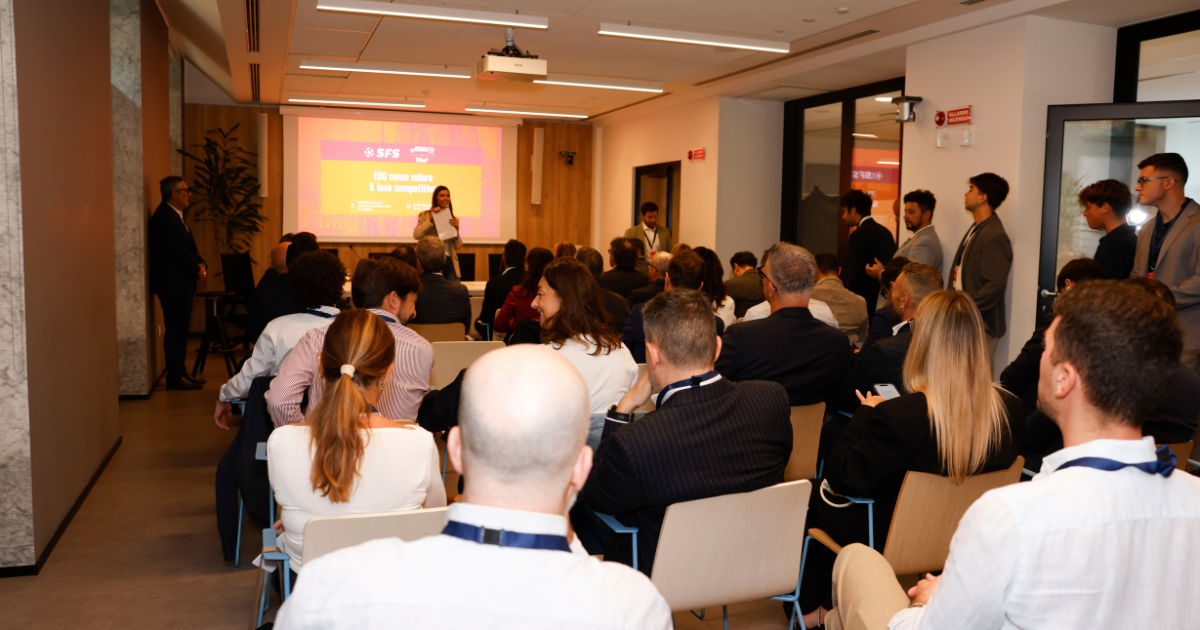
How can professional football and ESG sustainability principles be reconciled? Above all, how can the industry prove that environmental, social, and governance commitments are not added costs or synonyms for austerity, but extraordinary opportunities to generate new commercial value? These key questions were addressed at the latest SFS Snack Milano event, organized by the Social Football Summit in collaboration with ESGeo | RISE and hosted at the headquarters of Gruppo Avvale. This high-profile gathering brought together leagues, clubs, international brands, and
INSIDE SUSTAINABLE LEAGUES
“Inside Sustainable Leagues” is an editorial series exploring how some of the world’s leading football leagues are structuring sustainability through different models, activations and tools. Having previously looked at governance, operational structures and the ways in which sustainability is brought into the calendar, the fourth article shifts the focus to another key dimension: the ability to communicate this journey and make it understandable to external audiences. Accessibility: Creating a recognisable space The first element is perhaps also the most immediate: making this commitment

The Operating System of Sport: How Salesforce Is Redefining the Future of the Football Industry
Digital transformation in modern football has moved beyond the initial digitisation phase and entered a new era: that of the Agentic Enterprise, where first-party data integration and autonomous AI redefine both fan experience and B2B business models. In this highly innovative landscape, Salesforce — serving as Main Partner of SFS 26 — stands out as a true operating system for sport, delivering a proven technological framework to Italian and international clubs alongside global entities like FIFA, Formula 1, and LA28. Ahead of SFS

Extraordinary Ability in Soccer: An O-1 Success Story in Goalkeeping Development
By Giulia Pezzano, Senior Immigration Analyst, Arce Immigration Law (Miami) For many sports professionals, the O-1 visa is perceived as an option reserved for Olympic champions, world-famous players, or international superstars. A recent case from our practice showed why that is not always the case. The O-1 is a temporary U.S. work visa for professionals who can demonstrate extraordinary ability in various fields, including athletics. When approved, it allows the professional to work in the United States in the area in which

SFS Awards: Best Football Tech Performance & Health Solution
In elite football, player health management is no longer just a clinical concern—it is a critical financial strategy. With increasingly congested international fixtures and high-intensity match schedules, the economic toll of injuries directly impacts club balance sheets. Maximizing on-pitch performance while minimizing player downtime has become one of the most pressing operational challenges in modern sports management. The Sport Science revolution: biometrics, wearables, and prevention Protecting a club's human capital is undergoing a fundamental shift, powered by the convergence of technology, data
SFS and Rome Future Week: The Evolution of Sport Tech at an Innovation-Focused Aperitif
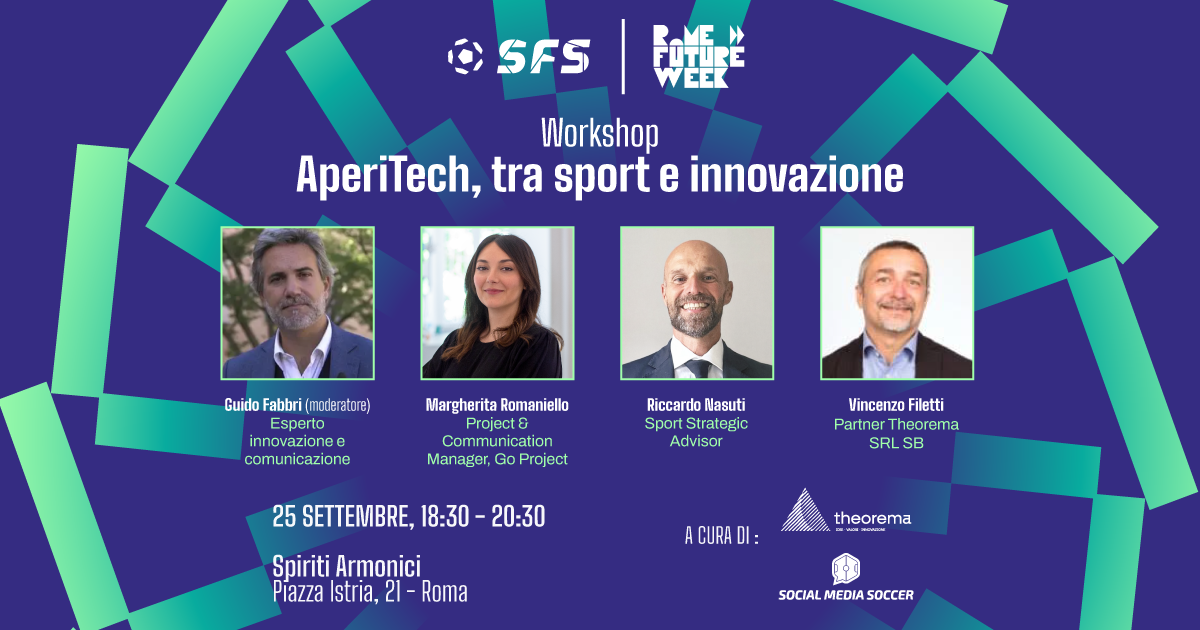
The convergence of technology, new skills, and the football industry returns to the spotlight during Rome Future Week. On September 25, 2026, the capital will host “AperiTech, between sport and innovation”, a format promoted by SFS ExtraTime in collaboration with Theorema and Social Media Soccer, designed to examine the transformation dynamics reshaping the SportTech sector. The event will take place in Rome at Spiriti Armonici, located in Piazza Istria 21, from 6:30 PM to 8:30 PM, offering a dynamic and
Udinese Leads the Way in Europe: Matchdays Become a Sustainability Benchmark with UEFA Manual
Sustainability in modern football is rapidly evolving from mere statements of intent into a core strategic pillar of club operations. Against the backdrop of a profound industry transformation, Udinese Calcio achieves a new international benchmark by launching the “Play for Sustainability – All on the Pitch for the Planet” initiative. Debuting at Bluenergy Stadium and Applying the UEFA Manual The key appointment is set for Saturday, September 19, 2026, when Udinese hosts Cagliari in Serie A. On this occasion, the Friulian club

SFS Awards: Best Football Tech Entertainment Solution
Today, football matches are no longer played purely within the ninety minutes of regular time, but in the ability to capture the attention of an increasingly fragmented audience. In a saturated media landscape—where competition comes from video games, streaming platforms, and social media—passive match viewing is an outdated format. The primary challenge for clubs, leagues, and broadcasters has become singular: transforming the casual supporter into an engaged and essential user within the brand's ecosystem. Beyond the screen: how technology is redefining