




Article written by Giulia Pezzano, Senior Immigration Analyst, Arce Immigration Law (Miami)
With the 2026 FIFA World Cup approaching and the co-host United States preparing for a surge of fans, media, and football professionals, entry rules are becoming part of the football conversation. Football travel is now routine: preseason tours, international friendlies, fan trips, and a growing wave of creators and media moving with the game.
In Washington, that reality intersects with a concrete policy proposal: U.S. Customs and Border Protection (CBP) (within the Department of Homeland Security) has proposed an update to ESTA, the electronic travel authorization used by eligible visitors from Visa Waiver Program countries for short stays in the United States. ESTA typically allows up to 90 days for tourism, limited business visitor activity, or transit.
The core of the proposed changes is whether to expand the details travelers must provide, with an emphasis on social-media identifiers over the prior five years. Practically, this means that ESTA applicants would be required to provide the links to all their social media profiles, allowing U.S. authorities to screen the information therein against the stated intention of the trip. The details may still evolve, but the direction is clear: more information collected earlier, and more emphasis on whether a traveler’s story is consistent before they ever board a flight. This move has already drawn criticism from travel-industry groups and some lawmakers, even as the details are still being finalized.
For football travelers, the biggest issue is not the proposal itself but the misconceptions that already cause problems at airports. The most common misconception is that many people treat ESTA like a visa, which is incorrect. In simple terms, ESTA is closer to a permission to travel, and it does not guarantee entry to the U.S. The final decision is made by U.S. Customs and Border Protection (CBP) at the port of entry, where officers are tasked with deciding whether a visitor’s purpose fits the rules of a short trip.
That is important because, on paper, football travel often looks unusual, although it is completely legitimate. For example, a supporter might land in Miami for a match, fly to another city two days later, and return home the following week; a group of football fans might arrive with a packed itinerary that changes in real time. A media team might be following a national football team across several states. None of this is prohibited. But it can invite routine questions—especially in an environment where screening may become more detailed.
Football fans planning to visit the U.S. may not be acquainted with border inspection and admission procedures. In practice, the questions CBP asks are remarkably consistent, and they tend to have little to do with football, but rather with basic aspects of the trip, such as purpose, duration, location, funding, and whether the traveler will work. For many readers, it helps to see them plainly. CBP’s questions are usually straightforward and practical: why you are coming to the United States, how long you plan to stay, where you will be staying (and in which cities), who is paying for the trip, what you do for work at home, and whether you intend to work or provide services while in the U.S.
When those answers line up with the itinerary, most trips go smoothly. When they don’t, and the plans are vague, funding is unclear, or the visit sounds halfway between tourism and work, travelers may be sent to secondary inspection. Secondary inspection is not a criminal process. It usually means CBP is taking extra time to clarify the trip because something does not make sense on its face. The mistake many travelers often make in this phase is trying to “talk their way out” with improvisation. At the border, small contradictions matter because CBP is evaluating credibility and admissibility in real time.
The modern football ecosystem adds a newer complication: content. The proposal would empower authorities to screen the content in applicants’ social media profiles up to the prior five years, in order to determine whether the trip is likely to involve any type of work activity. Posting photos from the football stands is not, by itself, the issue. But the line becomes less comfortable when a trip starts to look like a professional or commercial project. Sponsorship deliverables, paid appearances, promotional events, structured production for a brand, or coverage that resembles a formal assignment can all raise the question of whether this is still a visitor trip or if it involves work or professional services in the United States. U.S. immigration law draws a meaningful distinction here, and the category in which you fall depends on these facts. For creators and media professionals, especially those traveling with commercial obligations, this is where planning becomes crucial.
Another point that surprises travelers is how limited ESTA travel can be when plans change. It is often the case that travelers want to extend their stay. ESTA travel is designed for short, temporary visits, and travelers generally cannot extend their stay or change status in the United States. That leaves less room for late adjustments if the trip evolves into something more professional than originally intended, or if the traveler realizes at the airport that their story is not clear.
If ESTA is denied, the alternative is typically a B-1/B-2 visitor visa application through a U.S. consulate. For World Cup travel, ticket holders may be able to use the Department of State’s priority appointment scheduling channel to secure an earlier interview date, though the vetting standards remain the same. In plain terms, holding a FIFA World Cup ticket can shorten the wait for a consular appointment, but it does not create an automatic pass.
The broader reality is that international travel is increasingly being assessed through consistency across forms, itineraries, funding, and publicly available information. The World Cup simply makes this visible because it compresses global movement into a tight window and mixes tourism, media, and commerce in the same trip. The practical lesson is not to panic, but to be clear: know your itinerary, understand who is paying, and make sure what you plan to do in the United States fits the category you are using.
ESTA under the microscope: what’s changing for football travel to the U.S. — and why it matters
Article written by Giulia Pezzano, Senior Immigration Analyst, Arce Immigration Law (Miami) With the 2026 FIFA World Cup approaching and the co-host United States preparing for a surge of fans, media, and football professionals, entry rules are becoming part of the football conversation. Football travel is now routine: preseason tours, international friendlies, fan trips, and a growing wave of creators and media moving with the game. In Washington, that reality intersects with a concrete policy proposal: U.S. Customs and Border Protection (CBP)
Euro 2032: The Origin and Structural Evolution of Italian Stadiums Vying to Host the Tournament
There is a dream called Euro 2032. The goal is clear and shared by several cities across the Italian "boot." Between surprise entries, a few current certainties, and the risk of shocking exclusions, the race to host this long-awaited continental event remains wide open. Final selections will inevitably be limited due to the joint bid with Turkey. While cities like Rome, Milan, Turin, and Florence seem to have the upper hand, enchanting locations such as Naples, Bari, Palermo, and Cagliari

Excellence rebuilding talent: Italian Sports Medicine and Federica Brignone’s “Miracle”
On the international stage, Italy is far more than a cradle of champions; it has become the global gold standard for sports medicine. While the athletes’ talent ignites the arenas, it is the expertise of our surgeons, physiotherapists, and cutting-edge facilities that ensures that talent shines again—even after the most devastating injuries. At SFS, where innovation and performance take center stage, Federica Brignone’s success at the Milano-Cortina 2026 Games stands as the ultimate manifesto of a system that blends surgical engineering,
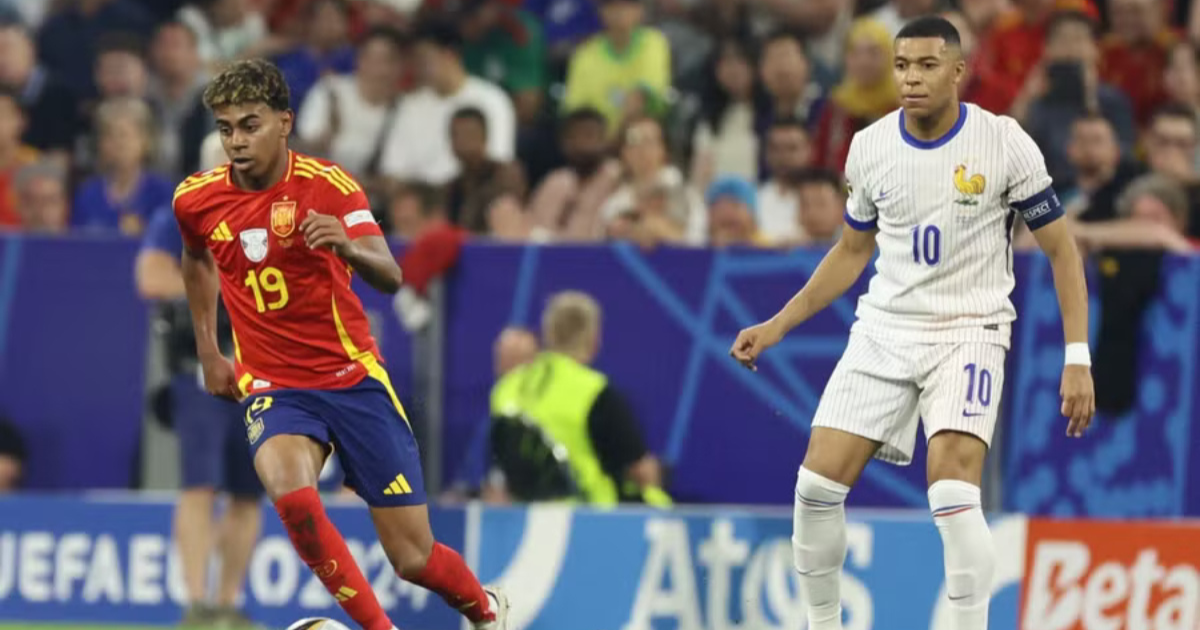
World Cup 2026, it’s still Nike vs adidas: costs, strategies and expected results
The kickoff of the 2026 World Cup is approaching, and while the 48 national teams are warming up for the biggest tournament ever across the USA, Canada, and Mexico, a similarly intense game is being played on the sidelines. It’s the endless duel between the two giants of sportswear: Nike and adidas. With a potential audience approaching 5 billion viewers, this World Cup is not just a sporting event, but the most important marketing and textile engineering laboratory of the decade. The

SFS Saudi Edition 2025: Italy and Saudi Arabia engage in dialogue through football, beyond the match
Riyadh, 22 December 2025 – The second edition of SFS Saudi Edition, held in Riyadh, recorded strong attendance and a high level of content, confirming the initiative's value and positioning as an international reference platform for dialogue between Italy and Saudi Arabia in football and sports business. The event was organized by the Social Football Summit and Lega Calcio Serie A, and developed in collaboration with the Italian Embassy in Riyadh, the Italian Trade Agency in Riyadh, the Ministry of Sport, and the Ministry of
SFS Saudi Edition 2025 unites Italy and Saudi Arabia in football
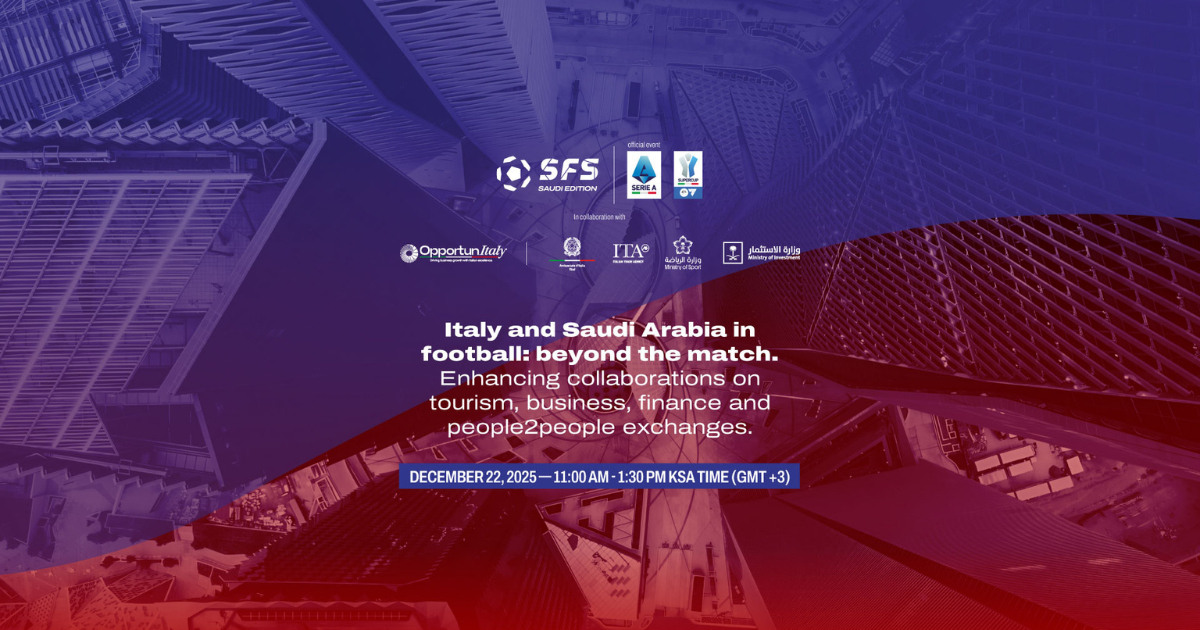
Riyadh hosts the second edition of the SFS event, strengthening the dialogue between sport, business, and innovation. The Social Football Summit (SFS) returns to Riyadh with the second edition of the SFS Saudi Edition, following the inaugural event held in January 2025, further strengthening the dialogue between Italy and Saudi Arabia through football, sports business, and innovation. The event will take place on December 22, 2025, from 11:00 a.m. to 1:15 p.m. (KSA local time, GMT +3), followed by a light lunch, at
SFS Takes the Next Step: Riyadh Welcomes the 2nd Saudi Edition
The SFS expands its international footprint with the launch of SFS Saudi Edition, scheduled for 22 December 2025 in Riyadh Following the extraordinary success of SFS25 at the Allianz Stadium in Turin in November, the international platform dedicated to innovation, business and culture in football strengthens its global presence with a new strategic appointment organised in partnership with Lega Serie A, and developed in collaboration with the Embassy of Italy in Riyadh and the Italian Trade Agency (ITA/ICE) Office in Riyadh, during the
Beyond Visibility: how sports sponsorships generate business
For years, their value was measured using traditional metrics like Gross Advertising Value (GAV), based on the quantity of exposure: how many people see the logo and for how long. Today, this approach is no longer sufficient. Sponsorships are not mere advertisements (or 'spots'): their impact depends on the quality of the exposure and fan perception. To demonstrate the true ROI, an integrated model is needed that combines visual data, brand insights, and purchasing behavior. In this article, we analyze
Mondial 2026, Trump and FIFA launch the fast track for ticket-holding fans
The American attorney Giorgio Polacco (Arce Immigration Law): “Faster appointments for the visa, but no automatic pass-through.” With the launch of the FIFA PASS, the new priority appointment booking system for visas ahead of the 2026 World Cup, the White House and FIFA promise shorter lines at consulates for ticket-holding fans. But what really changes for those who want to go to the United States to watch the matches? We discuss it with Giorgio Polacco, an American attorney at Arce Immigration
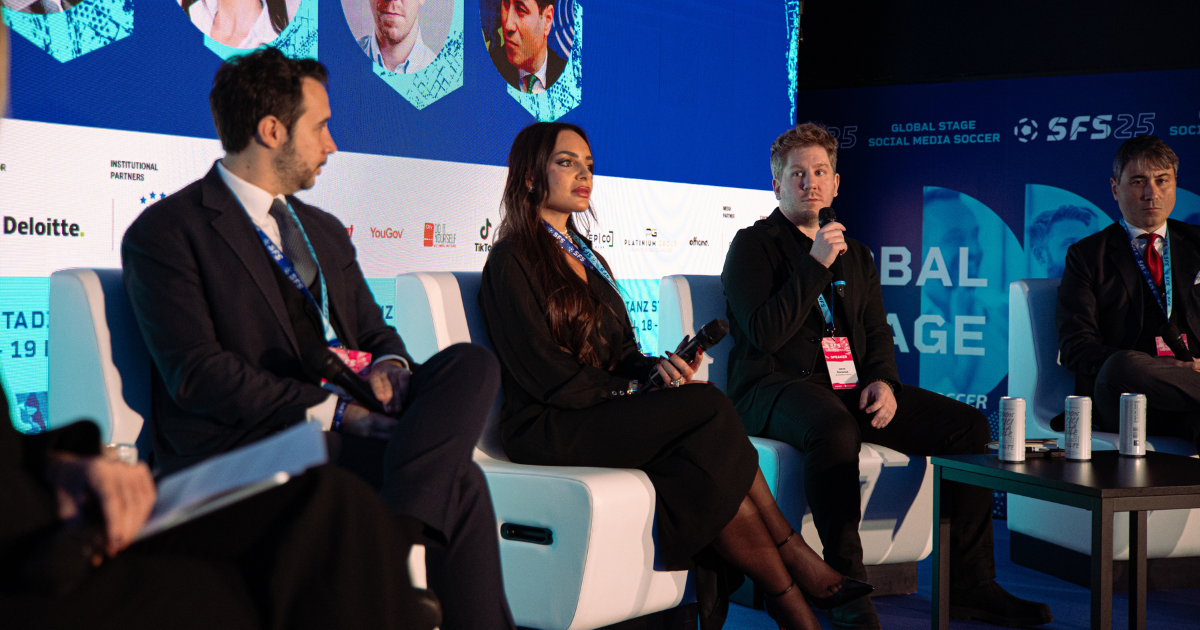
Geopolitics and Sport, the Report from the Allianz Stadium
Article written by Carlo Rombolà On Tuesday, November 18th, a debate on the geopolitics of football—a topic that is extremely interesting and multi-faceted—took place at the Global Stage of the Social Football Summit, held this year within the heart of the Juventus stadium. Moderated by Giulia Aloisio Rafaiani, the stage featured the voices of Francesca Petriccione (from Vada), Jakub Romaniuk, Valerio Mancini, and Carlo Rombolà. These professionals are interested in and work in the world of international relations and, naturally, football, albeit