




On the afternoon of Day 2 on the Global Stage, a panel was held focusing on investment in football through multi-club ownership models. The session, moderated by Lucas Ferrer, Partner at Statim Legal, featured contributions from Jan Kleiner, Director of Football Regulatory, FIFA, Lina Souloukoulu, CEO of Nottingham Forest FC and Marcos Motta, Partner, Bichara e Motta Attorneys at Law).
Jan Kleiner opened the discussion by outlining FIFA’s position on the growing phenomenon of multi-club ownership, in which financial groups control multiple football teams: “This trend raises two major concerns: the integrity of competitions and the transparency of transfer dealings. No one wants to see two clubs under the same ownership competing against each other, and even on the transfer market it becomes difficult to assess the fairness of deals between clubs belonging to the same group.”
Speaking from the club perspective, Lina Souloukou brought the direct experience of a CEO managing multiple football organizations: “Today, 17% of the world’s top clubs operate under multi-club structures. Our group has already shown concrete results with both Olympiakos and Nottingham Forest. However, meeting the requirements set by federations and leagues takes significant work, especially when two clubs from the same group compete against each other or handle a mutual transfer.”
To ensure full transparency, the ownership group behind Nottingham Forest has established a blind trust designed to manage potentially sensitive situations between clubs within the same holding structure.
Highlighting the broader implications, Marcos Motta underlined the impact of multi-club ownership on the entire football industry: “These economic models bring resources, but they also risk eroding some of the romanticism that football has always embodied. Our sector aims to win, and winning is expensive. There are vertical models, more complex to manage, and horizontal ones, where each club in the group holds equal value. Both structures come with significant challenges.”
Looking ahead, Motta raised another crucial point: for smaller clubs, not being part of a multi-club group could become a competitive disadvantage. This is why, he argues, FIFA and national federations must develop shared regulations that can effectively govern the entire system.
“What truly matters is safeguarding the long-term stability of the football ecosystem,” concluded Lina Souloukou, “and ensuring that both clubs and federations have solid foundations on which to make long-term investments”.
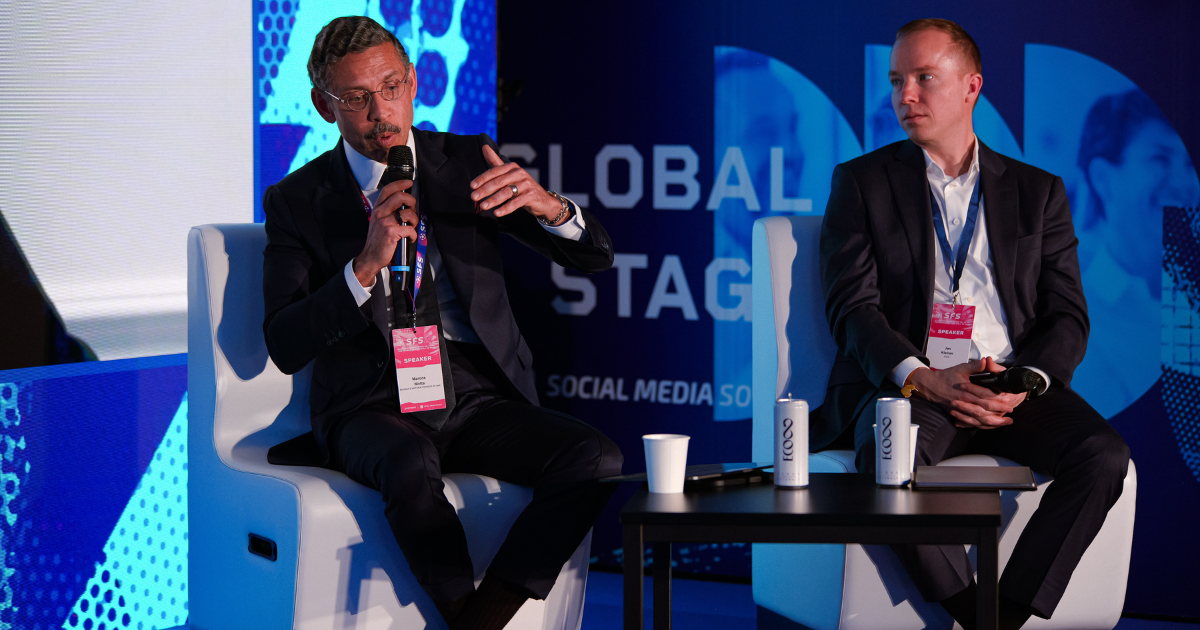
Multi-Club Ownership in Football: Rules, Risks and the Future of Investment in the Global Football Industry
On the afternoon of Day 2 on the Global Stage, a panel was held focusing on investment in football through multi-club ownership models. The session, moderated by Lucas Ferrer, Partner at Statim Legal, featured contributions from Jan Kleiner, Director of Football Regulatory, FIFA, Lina Souloukoulu, CEO of Nottingham Forest FC and Marcos Motta, Partner, Bichara e Motta Attorneys at Law). Jan Kleiner opened the discussion by outlining FIFA’s position on the growing phenomenon of multi-club ownership, in which financial groups control
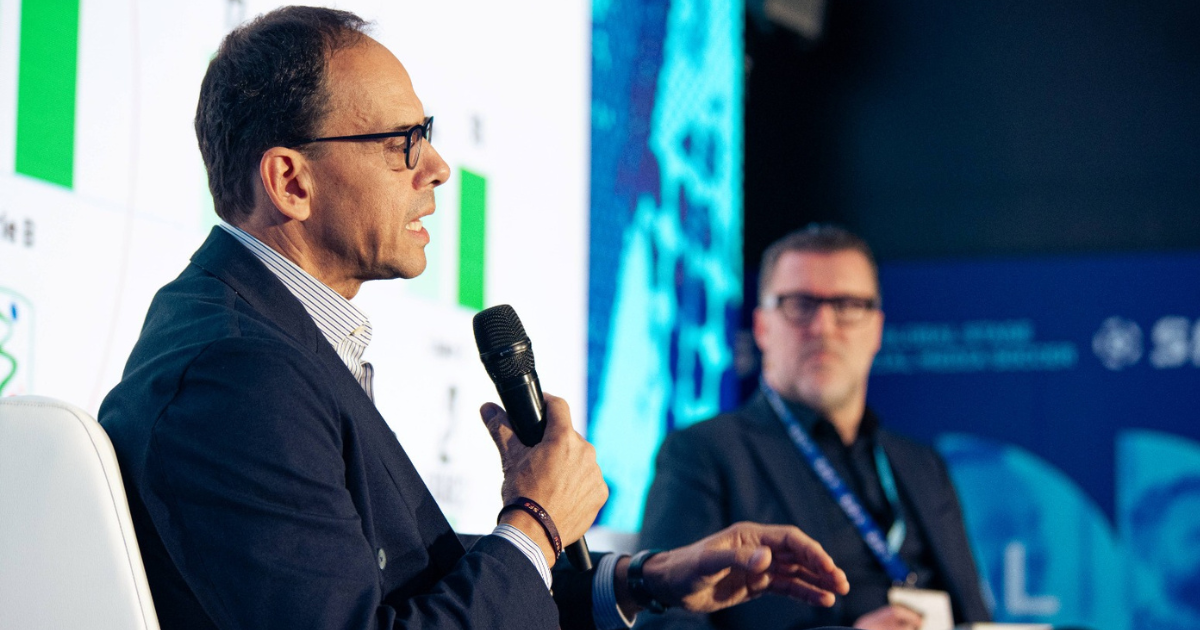
Sustainability, Talent, and Infrastructure: Serie BKT Between Financial Challenges and Product Appeal
During SFS 25, the panel dedicated to Sustainability, Talent Development, and Infrastructure unveiled the economic and structural dynamics of Serie BKT, highlighting critical issues alongside unique opportunities. The speech by Paolo Bedin, President of Lega Serie BKT, interviewed by Andrea Sartori, CEO of Football Benchmark and independent advisor to Lega B, provided a lucid overview of the need for a strategic shift for the entire football system and the Italian second division. The financial challenge: economic data Bedin opened the debate by
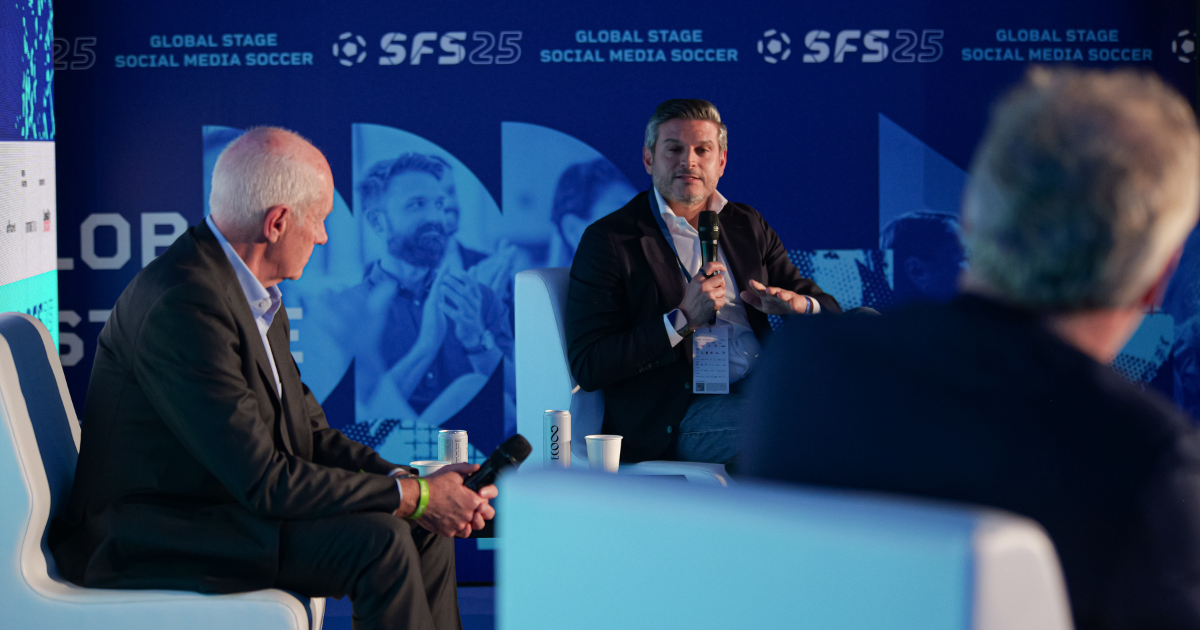
Knowing the data to know your customers
The last SFS25 meeting of the Global Stage opened a dialogue on data awareness with the help of Francesco di Biase Italy Chief Representative of PLATINIUM GROUP, Paolo Magri CEO of EICMA and Mattia Gamberoni Head of Italy and Spain at STRIPE. In the world of sports and entertainment events, truly knowing your audience means making smarter decisions, building better experiences, and generating value. The problem? Many clubs and organizations don't know their data. They don't “read” their fans and end up building
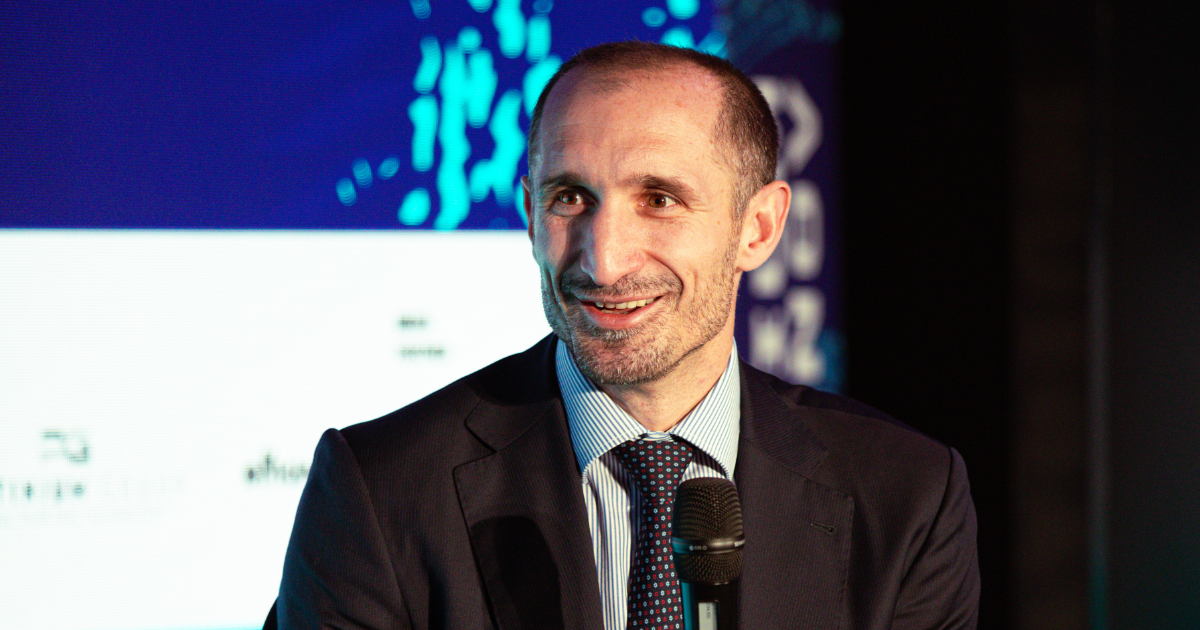
Life lesson with Giorgio Chiellini
When you are not fully aware of the direction to take, it can be useful to be guided by the words of Juventus' new Director of Football Strategy, Giorgio Chiellini, who spoke during the sixth panel of the day at the Football Stage during an interview conducted by Giulia Mizzoni. Choosing goals: this is the first step. Without a specific goal, it is difficult to know how and where to move. They are needed to turn on the light, such as
The Bundesliga Model Fills Stadiums and Fan Stories
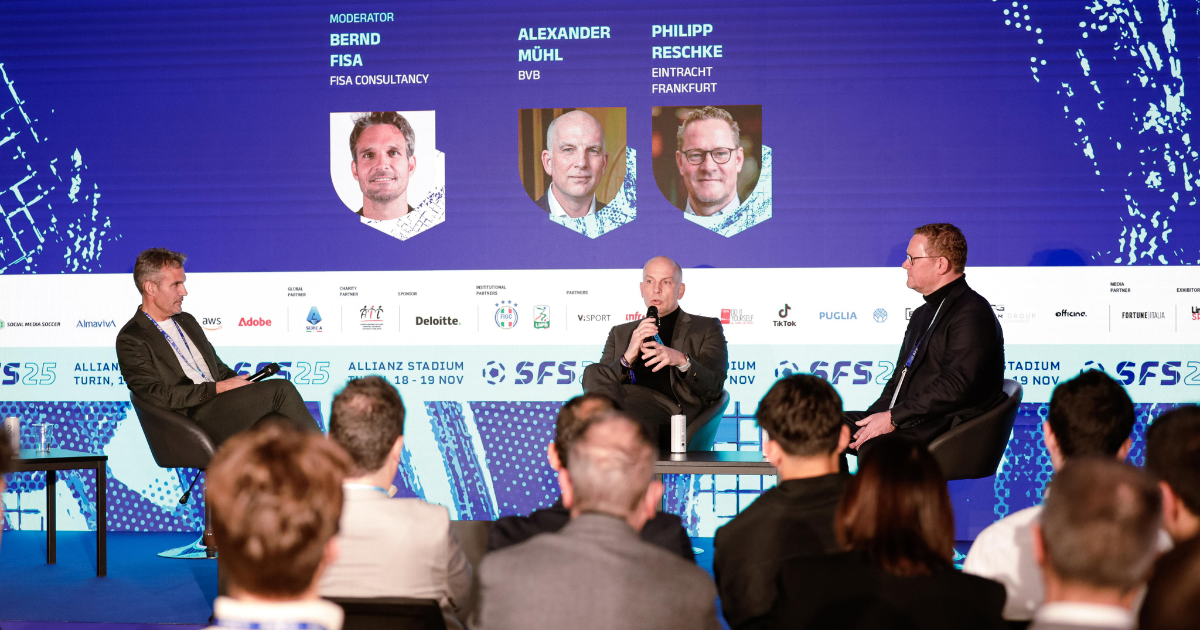
The second panel of Day 2 Football Stage focused on the German identity, centered around the 50+1 rule, and featured Alexander Mühle, Director Marketing & Digitalisation at Borussia Dortmund, Bernd Fisa, Founder of Fisa Consultancy, and Philipp Reschke, Board Member of Eintracht Frankfurt Football AG. To understand the scale of the Bundesliga phenomenon, one only needs to look at the data: clubs like Bayern Munich surpass 300,000 registered members. Not only the German 'Panzer' (tank) boasts staggering numbers, but also Borussia
Injury Prevention in Sports: Isokinetic and FC Barcelona Share Insights at SFS 25
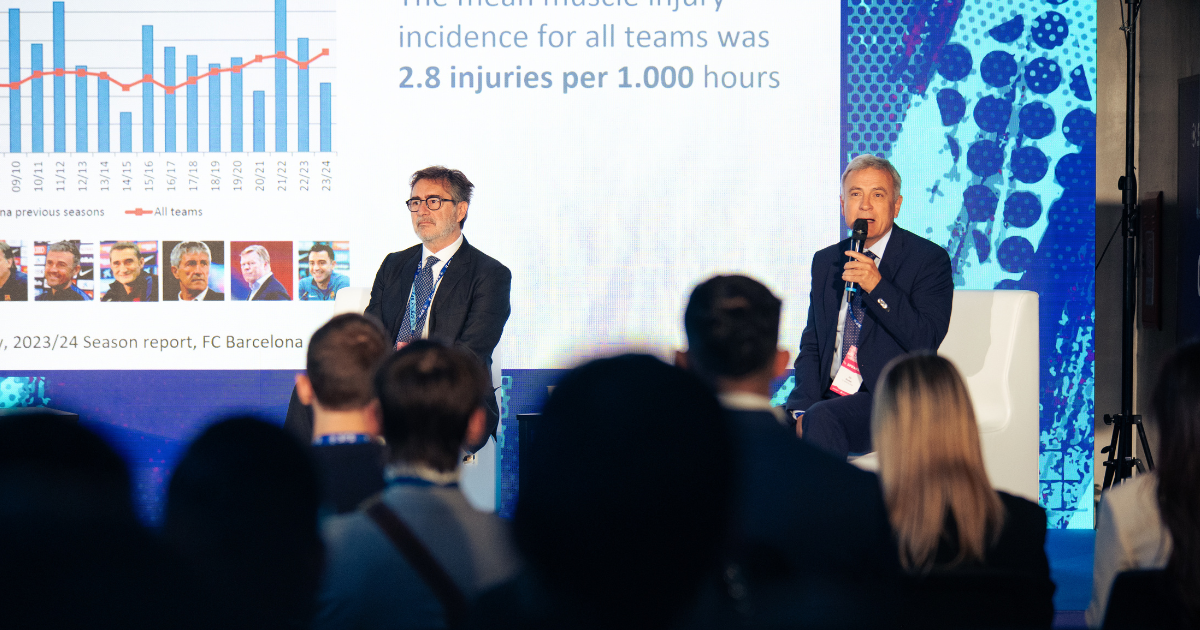
Sports medicine opened Day 2 on the Global Stage at SFS 25 with a high-level panel featuring Fabrizio Tencone, Sports Medicine Physician at the Isokinetic Medical Group, and Gil Rodas, MD, PhD, Head of Sport Medicine and the Medical Area at FC Barcelona, moderated by Carolina Tha. Injuries remain one of the biggest and most persistent challenges in sports. Tencone presented a long-term study carried out by Isokinetic: “Eight years ago, we expected injuries to increase significantly. Today’s data shows that

FIFA, Gai: “The upcoming World Cup? The greatest event ever organized on earth”
The SFS 25 Football Stage GoProject hosted the meeting “SFS 25 interview: A. Alciato interviews Romy Gai,” an interview conducted by Prime Video journalist Alessandro Alciato with Romy Gai, Chief Business Officer of FIFA, who began the meeting by talking about the FIFA Club World Cup and the agreement with DAZN, the sole broadcaster of the competition. The idea arose from the need to give the World Cup the visibility necessary to be recognized as an “elite” event. The aim
Impact Sport Lab is Born: The Laboratory That Measures and Multiplies the Impact of Sport
The Impact Sport Lab debuts at SFS 25. It is the new project by Ecoevents – a benefit corporation and Legambiente partner – created to concretely integrate sustainability into sport and offer clubs, leagues, federations, and sponsoring companies professional tools to generate social, environmental, and cultural value. Sport holds an extraordinary power: it speaks to millions of people, influences behaviors, and builds communities. Impact Sport Lab is born to transform this force into real impact, making sustainability a measurable, daily
Football and Antitrust: “No more monopoly of FIFA and UEFA on the organization of competitions”
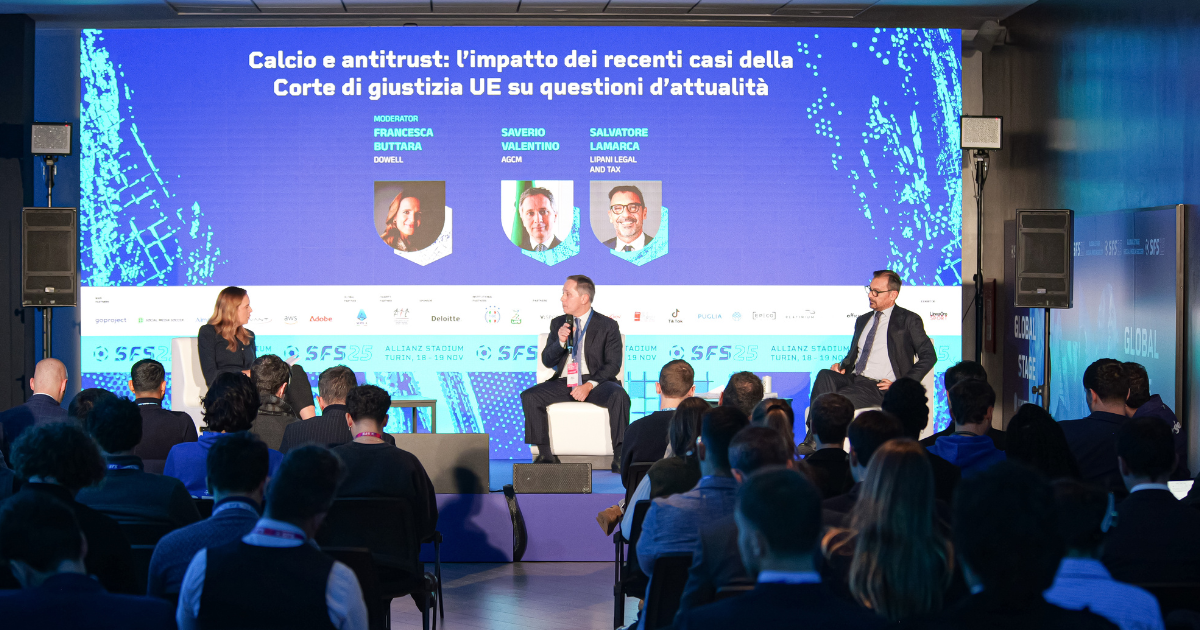
The Global Stage Social Media Soccer hosted the meeting “Football and Antitrust: The impact of recent EU Court of Justice cases on current issues.” The protagonists were Saverio Valentino (Member of the Board AGCM) and Salvatore Lamarca (Antitrust Lawyer and Author of the book “Sport and European Law”), moderated by Francesca Buttara (Founder DOWELL). We are facing a profound transition, a new era following the rulings of the European Court that place football within the market, a sector that must comply with principles
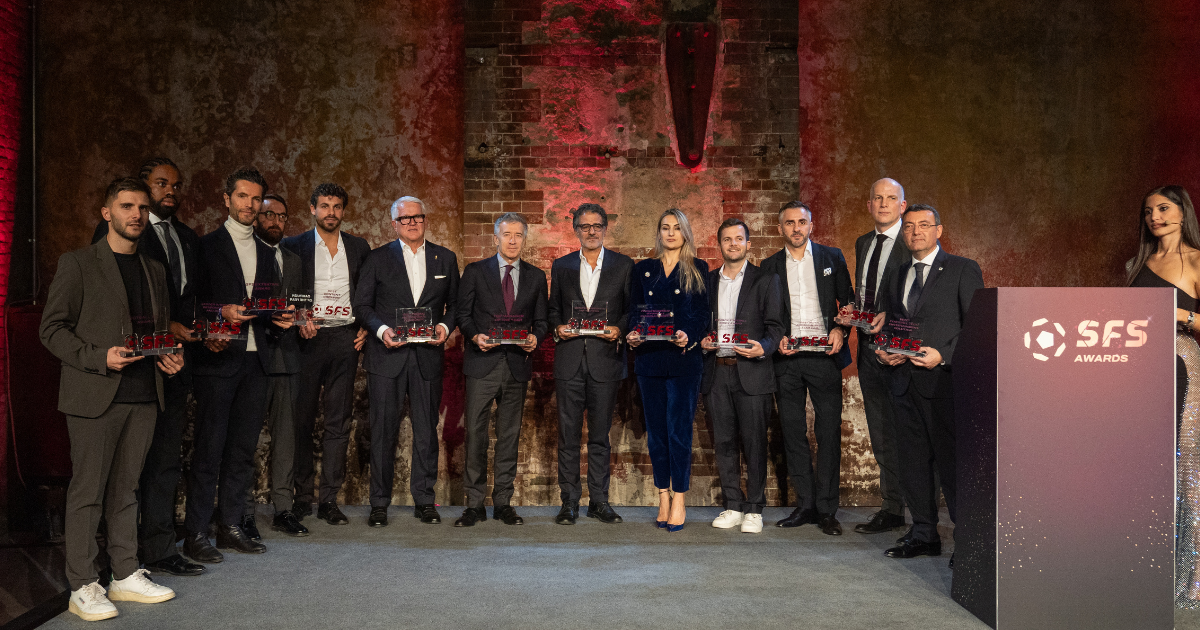
SFS AWARDS 2025: THE TRIUMPH OF EXCELLENCE AT THE OGR IN TURIN FOR ANINDUSTRY IN CONSTANTEVOLUTION
The 2025 edition of the SFS Awards concluded at the OGR in Turin, an event that celebrated excellence in the football industry. The evening, hosted by Anna Maria Baccaro, was enhanced by the presence of SFS partners. The setting of the OGR made the occasion even more memorable, and the event represented a unique opportunity to highlight the winning synergy between sport, innovation, social impact, and business. One of the most emotional moments of the Awards was the tribute dedicated to the memory