




In view of SFS 25, we interviewed Stefano Maneri, Senior ESG Advisor at ESGEO (Avvale Group), a key player in sustainability consulting and digital governance. In this exclusive interview, Maneri clarifies how the ESG approach must move beyond the logic of a mere “constraint” to become a driver of business and innovation for sports clubs. He analyzes the challenges facing Italian football, the regulatory and cultural gap compared to leagues like the Premier League, and the strategic importance of having a digital platform for managing representative, traceable, and auditable data, thus avoiding phenomena such as greenwashing and social washing.
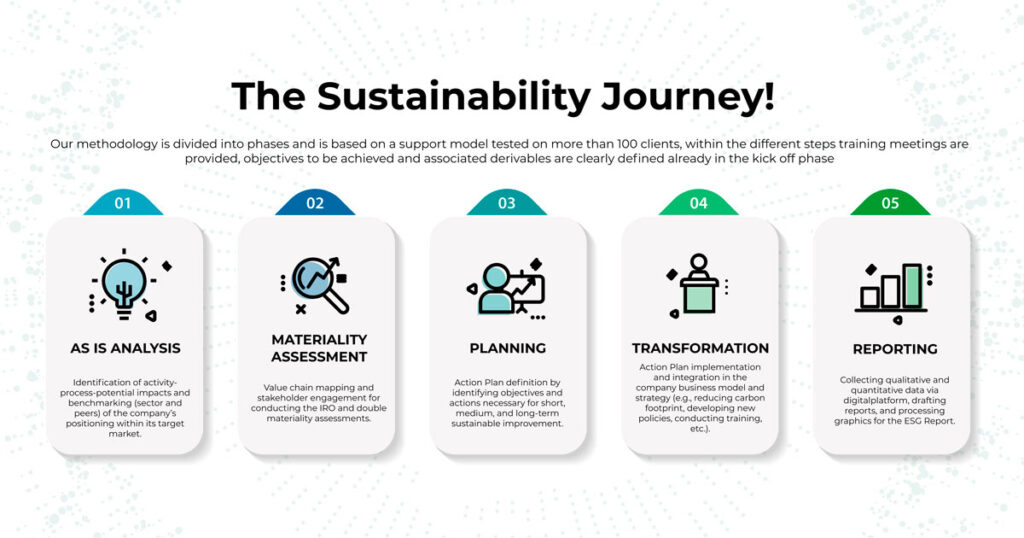
The invitation is to discover the ESGeo methodology for guiding clubs on their sustainability journey, integrating all existing club activities (for example, those related to social/charity issues) to develop a systemic approach to ESG topics that can be closely linked both to the club’s “core” activities and to those related to the entire value chain.
What is ESGEO, what does it represent, and which reference market does it operate in?
“ESGeo was founded in 2019 as a startup focused on developing digital platforms for managing sustainability data and information. Today, ESGeo, with a team of more than 50 professionals, is part of the Avvale Group, a major international player in the IT system integration sector. Alongside the evolutions of its digital ESG platform, it has also introduced advisory activities, helping clients, particularly in the football sector, to develop their ‘Sustainability Journey’ by integrating ESG themes into their strategies and daily activities.
Therefore, our offering today is dual and integrated: first and foremost, our digital ESG platform which can be used either stand-alone and/or to support and integrate consulting activities for developing a concrete and reliable sustainability project for football teams. We have clients among Serie A clubs, as well as companies that provide services for stadiums. It is important to emphasize that our expertise is multi-sectoral, having over 150 clients in multiple commodity sectors, beyond the sports sector”.
The SFS 25 Manifesto highlights how sustainability in football touches upon various aspects. What are the virtuous sporting models and paradigms? Which policies, on the other hand, does ESGeo oppose because they are potentially harmful?
“When we talk about a ‘sustainability journey’, we are referring to our proprietary methodology, which starts with an analysis of the club’s activities and then considers its entire value chain, including suppliers, fans, local communities, media, and shareholders. Our primary objective is to analyze business processes to identify relevant ESG issues and collect credible and verifiable data in order to define objectives and actions that are both practicable and communicable through ESG reports, also following European and international standards.
We work to create a systemic structure that, starting from the company, can extend beyond the club’s boundaries, also utilizing our digital technology, to appropriately involve interested stakeholders and collect relevant and traceable ESG data“.
Sustainability is often perceived as a constraint. What is your vision? Are the European and UEFA policies too restrictive? And what are the main obstacles our country must overcome to close the gap with other countries?
“The UEFA is taking significant action in engaging federations, leagues, and clubs in Europe on sustainability issues. An example of this is the requirement that, starting from the 2025-26 season, all European clubs must comply with the sustainability requirements defined by the UEFA Club Licensing, demanding that European clubs have both a dedicated function and the development of an ESG strategy and policies to obtain the license.
However, there is a substantial difference between those who act purely out of obligation and those who do so with a clear vision and purpose. Italian football shows a delay in terms of ESG maturity. Yet, football has a greater social impact compared to other sectors due to its visibility. The Premier League is ahead, with more structured policies and governance. In Italy, the system is evolving and has not yet achieved either full awareness of the importance of having a strategic ESG vision or the conviction of the positive impact it can generate. It might seem strange, but among Serie A clubs, apart from a few exceptions, there is greater dynamism on sustainability themes and activities in smaller clubs compared to the larger ones. This is because sustainability does not depend on size or revenue but on the purpose, the so-called “purpose,” which is the true proactive engine of sustainability”.
Is there a political limit as well as a cultural one? In Italy, we are often reluctant to embrace stadium sustainability also due to administrative issues… in short, the private stadium seems like a mirage.
“Timeliness is essential to provide certainty to those who want to invest. In Italy, the process is often complicated, partly due to a lack of funds. Italian structures have been called to action by Ceferin ahead of EURO 2032 due to the poor current infrastructural conditions of the stadiums. We must act not because of a constraint, but for a purpose. And the purpose is not only social but also business-oriented, because sustainability generates incredible collateral benefits.
Today’s CEOs have shifted from moral value to business value, aligning sustainability with fundamental business risks and operational realities such as costs, customers, commercial actions, and capital investments. Today, CEOs integrate sustainability into their presentations. The ‘silent CEO’ talks less about sustainability, but when they do, they present it as a tangible lever of business value. If this change in approach is not understood, sustainability will continue to be seen only as a mere constraint and cost“.
Your company works with data and integrated reporting, the current “white oil.” Can you tell us about the present and future of data and the use of AI for data-driven research, in line with the pillar of new technologies in our manifesto?
“I dati sono fondamentali, ma solo se usati con una strategia chiara. Il dato in sé infatti è insufficiente se non si è in grado di capirlo, valutarlo e comunicarlo efficacemente. ESGEO offers a digital platform for ESG governance useful for managing strategies, materiality, policies, action plans, and MBOs for managers, going beyond mere data collection and reporting. We provide traceable, verifiable, and auditable data thanks to our third-party certified platform. The complexity of a club requires innovative and technological tools, even for ESG management, even if not all actors are ready to fully exploit them today“.

SFS is proud to have you as a connected entity to our event. Can we have your feedback on the event and the platform as a fruitful moment for networking?
“I believe that SFS 25 is currently the only event in Italy with this structure, capable of bringing together so many players with heterogeneous viewpoints and know-how. This allows for the sharing of information and perspectives, helping the industry to progress. And we, in turn, are proud to contribute to a panel on ESG governance. Openness to change and a thirst for knowledge are fundamental to replicating evolved systems.”
Would you like to add anything in conclusion?
“Today, a club truly becomes sustainable when it goes beyond its own boundaries and clearly, transparently, and seriously involves its stakeholders along its entire value chain. Those who favor a holistic philosophical methodology are on the right track. Let’s not limit ourselves to developing aseptic data and reports, but let’s develop and integrate our ‘Sustainability Journey.’”

Stefano Maneri, ESGeo: “Italian Football is chasing, but sustainability can be the lever that wins the championship!”
In view of SFS 25, we interviewed Stefano Maneri, Senior ESG Advisor at ESGEO (Avvale Group), a key player in sustainability consulting and digital governance. In this exclusive interview, Maneri clarifies how the ESG approach must move beyond the logic of a mere “constraint” to become a driver of business and innovation for sports clubs. He analyzes the challenges facing Italian football, the regulatory and cultural gap compared to leagues like the Premier League, and the strategic importance of having

Building the sustainable journey for football!
SFS represents an important event of dialogue and progress, founded on the values of sustainability and innovation, principles that ESGeo wholeheartedly embraces: this is why we are proud to participate not only as a partner, but also through the organization and management of a panel dedicated to ESG Governance. At the Social Football Summit 2025 we will also discuss how advanced ESG data management and its digitization can accelerate the transition to a more transparent and sustainable soccer. At ESGeo, we support
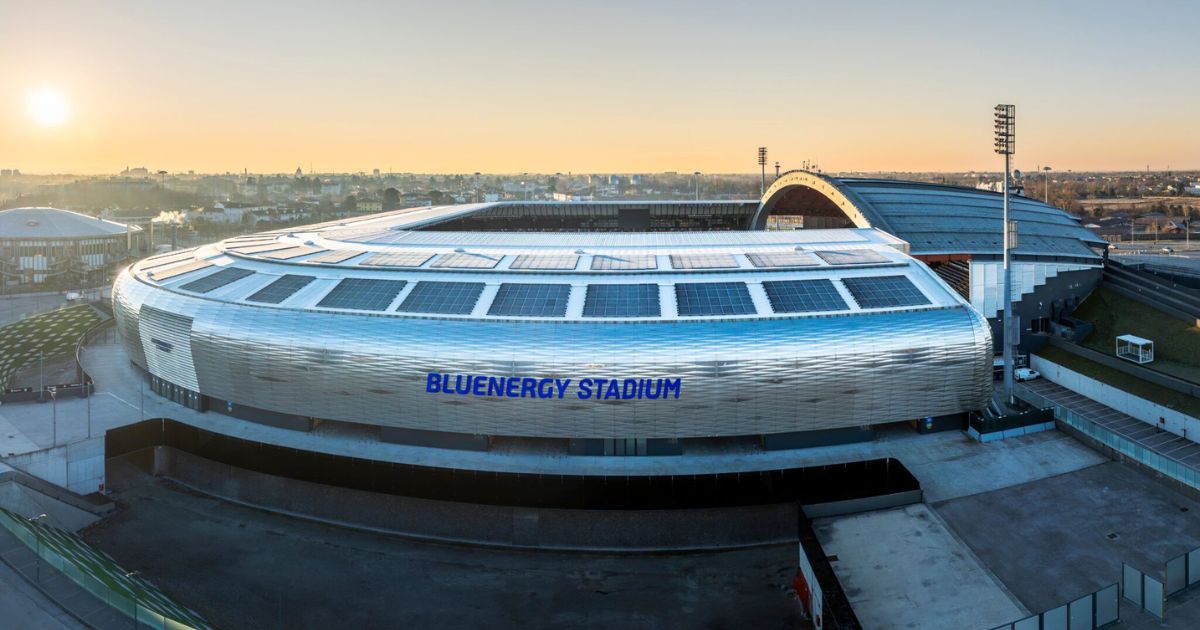
Bluenergy Stadium solar farm at the center of soccer’s first energy community
Press release published on the official website of theUdinese Calcio. An unprecedented sustainability and solidarity initiative comes to life around the 1.1 MWh/year photovoltaic park at Udine Stadium Udinese Calcio and Bluenergy Group's joint commitment to environmental and social sustainability takes an extraordinary new step today. As the two clubs announce the completion of work on the photovoltaic system housed on the roof of Bluenergy Stadium, a new project involving the Friuli Venezia Giulia region and society comes to life. THE ENERGY COMMUNITY "Energy
Premier League’s Green Revolution: ESG, Innovation and Passion for Football
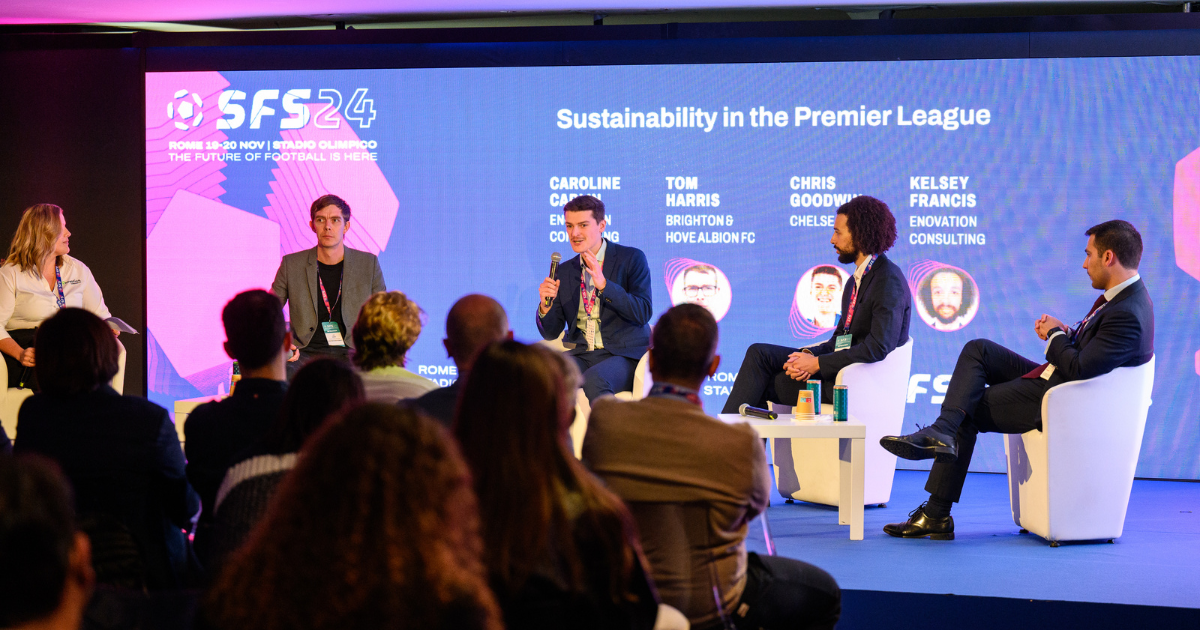
During an engaging panel organized by SFS24, industry experts and managers examined the crucial role of sustainability in soccer, focusing on how Premier League clubs are adopting environmental, social and governance (ESG) strategies to innovate and transform their operating model. The panel featured prominent figures such as Tom Harris, Sustainability Manager Brighton & Hove Albion FC; Chris Goodwin, ESG Manager Chelsea FC; Caroline Carlin, Head of Clients and Sustainability Enovation Consulting; and Kelsey Francis, Senior ESG Reporting and Communications Manager also
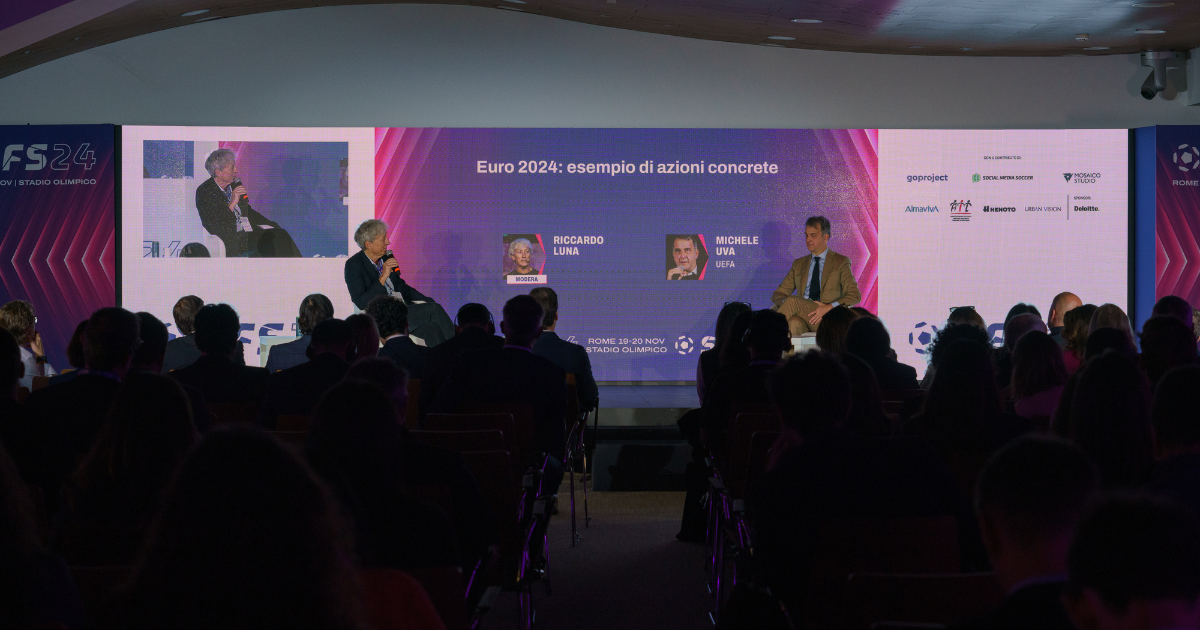
“The path to sustainability requires collective action”, said Michele Uva at SFS24
After presenting the ESG strategies implemented for EURO2024, Michele Uva – UEFA’s Director of Social & Environmental Sustainability – was interviewed on stage at the SFS by journalist Riccardo Luna. The panel, titled "Euro2024: an example of concrete actions", focused on sustainability, which Uva himself described as "an essential asset with significant cultural and social influence". Just days before COP29, the United Nations Climate Change Conference, the Summit devoted considerable attention to the interplay between environmental policies and the football
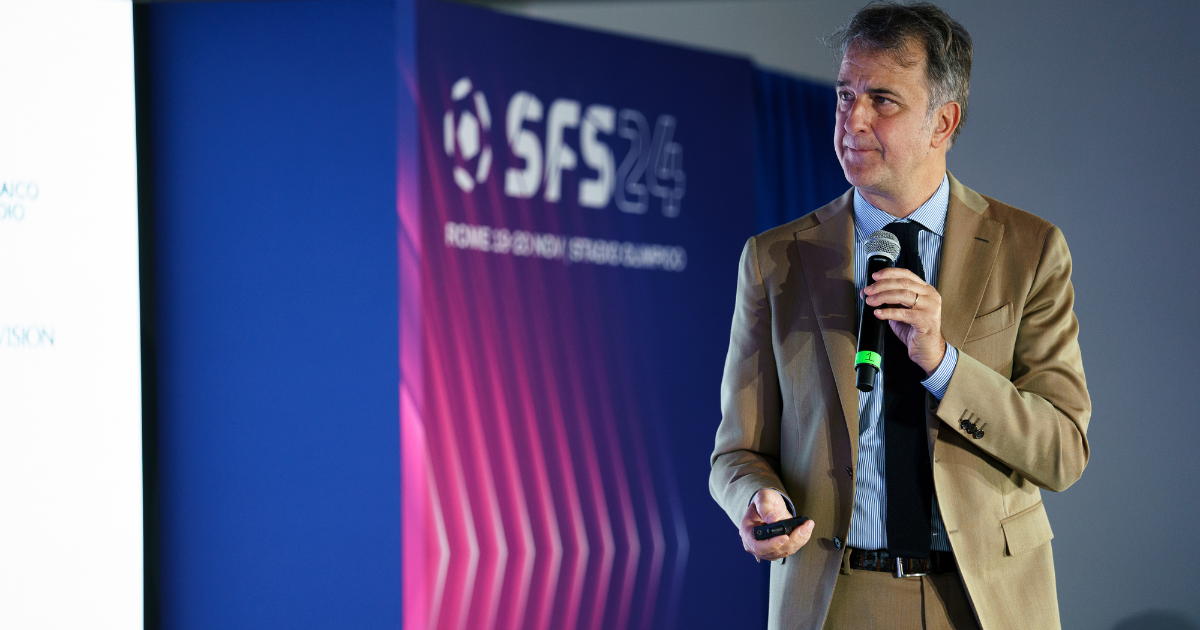
EURO 2024, ESG strategies with Michele UVA
Michele Uva, UEFA Director of Social & Environmental Sustainability, presented a summary of the key ESG (Environmental, Social and corporate Governance) actions implemented for the UEFA Euro 2024 tournament held in Germany at the SFS24. This journey began two and a half years ago with the aim of defining a replicable path for the future for UEFA, federations, and amateur clubs. Before outlining the ESG activities, however, Uva wanted to outline the scope of the event in terms of personnel involved, cumulative

Football’s commitment to sustainability at 360°
The SFS hosted a panel dedicated to the issues of environmental sustainability applied to football at 360 ° and inclusiveness in the management of sports clubs. Present at the debate were Anna Sagarra representing Real Betis, Jenny Morris, Director of City Football Leadership Institute and Sarah Batters of the London Lionesses. The commitment made by the Spanish club Real Betis with the "Forever Green" project is significant. "The initiative reached 600 thousand people on social media with 18 different activities carried

Sustainability in the Premier League
Football cannot be considered solely for its technical, tactical, and entertainment value. The most beautiful game in the world, in fact, is inevitably also concerned with considerations related to sustainability (ESG). This does not only refer to the economic aspect but also includes environmental governance, social inclusion matrices, and infrastructure-related issues. And it is precisely at the Stadio Olimpico in Rome, during the SFS24 event, that sustainability will be the protagonist of an interesting panel featuring Chris Goodwin and Tom Harris,
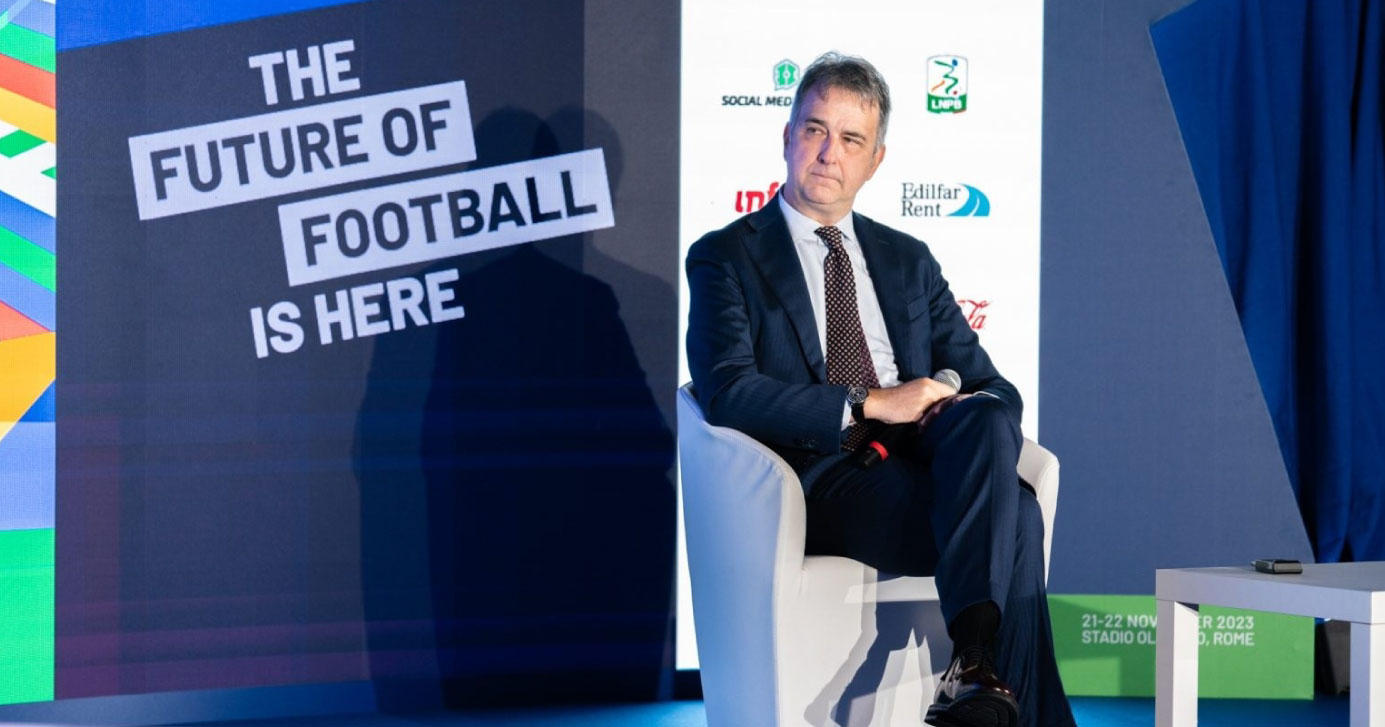
Sustainability will be at the heart of SFS24
This is an increasingly central theme for all major events, and we will try to explain why. The recent edition of the European Championships, held in Germany, did not go as we had hoped. As we know very well by now, Spalletti's national team failed to express the game they wanted and stepped aside for an excellent Switzerland. However, there is a fellow countryman who can absolutely consider EURO 2024 a success. You may be wondering who that is, and the question is absolutely
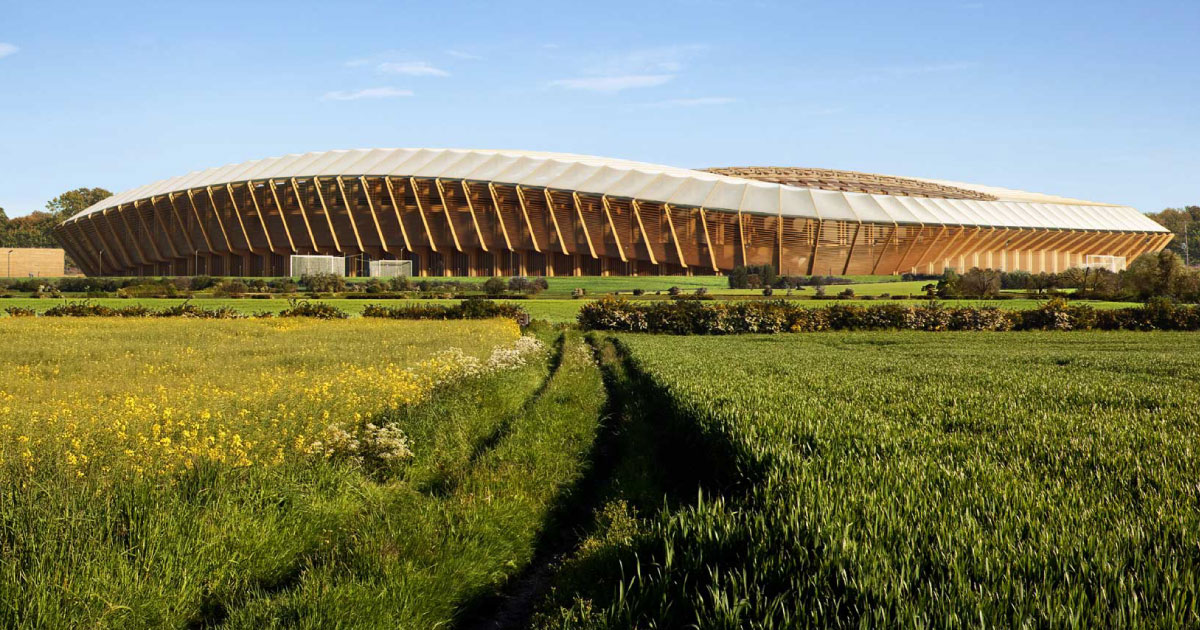
From the “Golden Goal” to the “Green Goal” – The Sustainable Future of Football
Football, the sport that captures the hearts of billions worldwide, has a long history of evolution both in its rules and its cultural impact. From 1993 to 2004, fans had to hold their breath in anticipation of the Golden Goal – a rule used to decide knockout matches that went into extra time. According to this rule, the first team to score during extra time would immediately win the match. The Golden Goal is especially remembered by the teams that