




By Giulia Pezzano, Senior Immigration Analyst, Arce Immigration Law (Miami)
The 2026 FIFA World Cup has already delivered an important immigration lesson before many fans have even packed their bags: a U.S. visa does not guarantee entry into the United States.
Somali referee Omar Abdulkadir Artan, selected to serve as a match official at the tournament, was reportedly denied entry at Miami International Airport despite holding a valid U.S. visa. According to public reporting, U.S. Customs and Border Protection (CBP) found him inadmissible because of “vetting concerns.” FIFA President Gianni Infantino later described the situation as unfortunate, but stressed that FIFA is a sports organization and cannot rule over governments or police forces. FIFA also stated that it is not involved in host-country immigration processes, including visa adjudications. In other words, even a World Cup credential and a valid visa do not override U.S. border authority.
This distinction is essential and still too underestimated by the general public. A visa allows a traveler to reach a U.S. port of entry and request admission. The final decision is still made by a CBP officer at the airport, land border, or other inspection point. The consulate may approve the visa, but the officer at the border can still refuse admission if, at the time of inspection, the officer concludes that the traveler is inadmissible or that the purpose of travel does not match the visa.
The Artan case is unusual because it involves a high-profile World Cup official and reported security-related concerns. Most travelers are unlikely to face that kind of allegation, but the underlying lesson applies broadly. Fans, journalists, sponsors, consultants, tournament staff, and business visitors may all be questioned at the border about why they are coming, how long they will stay, who is paying for the trip, whether they intend to work in the United States, and whether they have sufficient ties abroad to leave after the visit.
This does not mean travelers should approach the border with fear, but they should approach it with seriousness. Beyond checking whether a visa is physically valid, CBP officers are assessing whether the traveler’s answers, documents, travel history, purpose of entry, and overall circumstances are consistent with U.S. immigration law. A weak or confusing explanation can create problems even when the traveler had no bad intention. For that reason, the inspection process should be treated as part of the trip, rather than as a formality after the visa has been issued.
Therefore, for World Cup travelers, preparation is of utmost importance. A visitor should be ready to explain the trip promptly, clearly, and consistently. Useful documents may include a round-trip ticket, hotel confirmation, match tickets or event credentials, a detailed trip itinerary, proof of financial ability to cover the stay, and evidence of ties abroad such as employment, residence, family, studies, or business obligations. These documents do not guarantee entry, but they help show that the trip is temporary and consistent with the visa.
The same is true for football-related professionals. A journalist should carry an assignment letter. A sponsor representative should be prepared to explain meetings or promotional activities. A tournament official should carry event correspondence and credentialing documents. The key is consistency: the documents, answers, visa type, and actual purpose of travel should all tell the same story.
The safest advice is: do not treat the visa as the end of the immigration process. It is only one step. The entry decision happens later, in real time, at the port of entry.
The World Cup will bring the world to North America, but for those entering the United States, the first gate is not the stadium gate, but the immigration inspection desk. At that desk, even when presenting a valid visa, the most important question is whether the traveler can show a lawful, temporary, credible, and well-documented purpose for entering the United States.

A Visa does not guarantee an entry to the United States: what the somali referee case teaches about U.S. immigration
By Giulia Pezzano, Senior Immigration Analyst, Arce Immigration Law (Miami) The 2026 FIFA World Cup has already delivered an important immigration lesson before many fans have even packed their bags: a U.S. visa does not guarantee entry into the United States. Somali referee Omar Abdulkadir Artan, selected to serve as a match official at the tournament, was reportedly denied entry at Miami International Airport despite holding a valid U.S. visa. According to public reporting, U.S. Customs and Border Protection (CBP) found him

The O-1/O-2 Visa Strategy: How Player Transfers and Essential Support Staff Can Move Faster and Cost Less
By Giulia Pezzano, Senior Immigration Analyst, Arce Immigration Law (Miami) A player transfer rarely involves just one person. When time is short and performance depends on trusted support staff, the little-known O-1/O-2 visa strategy can help move both the athlete and the essential team around the athlete faster, more smoothly, and often at a lower overall cost. In the football market, time is money. Clubs have narrow transfer windows, and coaches often want the athlete in camp immediately. A commercial team is
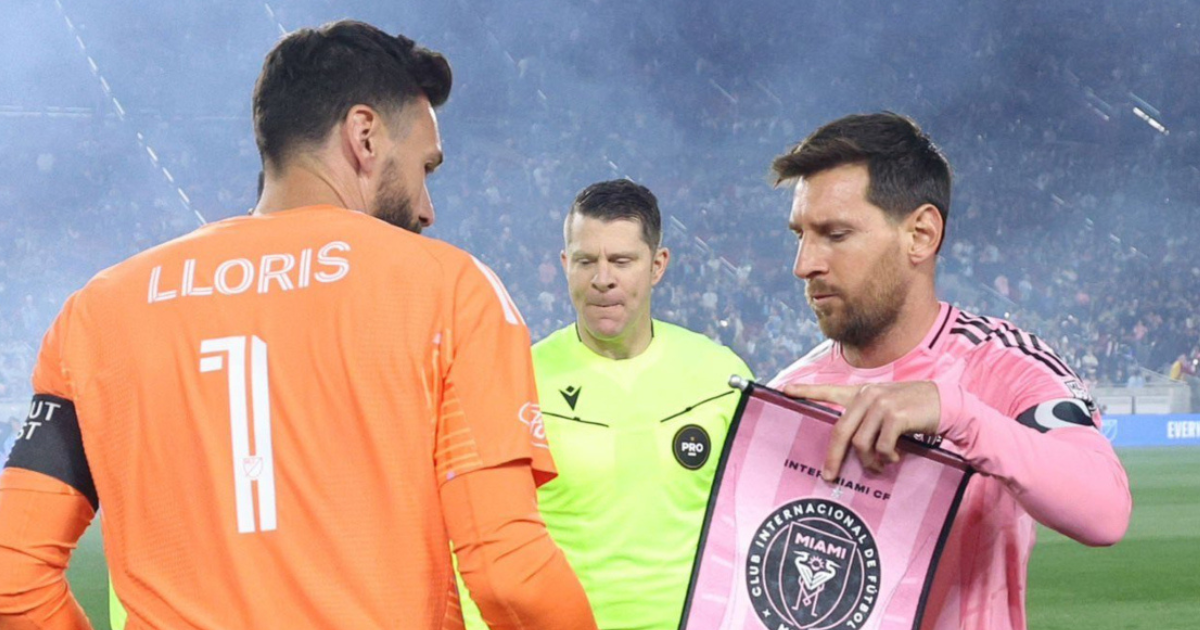
MLS 2026: the year of reckoning between global stars and the World cup shadow
Between the "Messi effect," Martino’s return to Atlanta, and the anticipation for the 2026 World Cup, MLS is kicking off a season that will be decisive for the future of soccer in the US Major League Soccer has reopened its doors, and there is a palpable sense that this is no ordinary season. With the 2026 World Cup on the horizon—hosted across the USA, Canada, and Mexico—the American league finds itself in the eye of a storm of investment, star power,
ESTA under the microscope: what’s changing for football travel to the U.S. — and why it matters
Article written by Giulia Pezzano, Senior Immigration Analyst, Arce Immigration Law (Miami) With the 2026 FIFA World Cup approaching and the co-host United States preparing for a surge of fans, media, and football professionals, entry rules are becoming part of the football conversation. Football travel is now routine: preseason tours, international friendlies, fan trips, and a growing wave of creators and media moving with the game. In Washington, that reality intersects with a concrete policy proposal: U.S. Customs and Border Protection (CBP)

Mondial 2026, Trump and FIFA launch the fast track for ticket-holding fans
The American attorney Giorgio Polacco (Arce Immigration Law): “Faster appointments for the visa, but no automatic pass-through.” With the launch of the FIFA PASS, the new priority appointment booking system for visas ahead of the 2026 World Cup, the White House and FIFA promise shorter lines at consulates for ticket-holding fans. But what really changes for those who want to go to the United States to watch the matches? We discuss it with Giorgio Polacco, an American attorney at Arce Immigration
Global talent and innovation: Arce Immigration Law’s migration strategy for US sports
In anticipation of their participation in SFS 25, we interviewed Giorgio Polacco, partner and representative of Arce Immigration Law, a firm specializing in immigration assistance for professionals, athletes, and technical staff looking to work in the US market. In this conversation, Polacco illustrates the crucial role of "Global Talent Mobility" and how strategic immigration consulting—focused particularly on Extraordinary Ability visas (O-1/EB-1)—is not just a legal necessity, but a true driver of growth, innovation, and stability for clubs and leagues. This