




Article written by Football Benchmark
Growing professionalisation in women’s football is increasingly visible off the pitch, as clubs establish dedicated leadership structures to support the game’s long-term development. Among Europe’s leading leagues, England’s WSL has become a clear example of how this transformation is taking shape.
Most clubs now feature dedicated leadership roles for their women’s sides, with Managing Directors and CEOs responsible for overall structures. Chelsea appointed its first Women’s Football CEO in 2024, Brighton in 2023, while others have formalised positions that were previously shared within wider club hierarchies. Collectively, these developments mark a new phase of maturity, positioning the WSL as an advanced women’s league in Europe in terms of organisational design. Comparatively, in a market like Spain (despite exceptional on-pitch success recently), the landscape differs from that in England, as most clubs still lack dedicated leadership structures for their women’s football sections.
To assess the professionalising structures, this article examines the evolution of women’s football leadership across England’s WSL through three dimensions – gender, women’s football experience, and playing background – while drawing selective comparisons with Spain’s Liga F.
Gender representation in WSL leadership
Clubs are increasingly establishing dedicated corporate structures covering sporting, commercial and operational areas specific to the women’s game, marking a clear shift from shared oversight to defined leadership. Professionals are being recruited to focus exclusively on women’s football, although these roles remain challenging to fill given the limited pool of specialist talent and the need for both business and football expertise. But how can the profile of these leaders be described? When it comes to gender representation, the WSL’s leadership landscape reflects steady progress in increasing the number of women in senior roles.
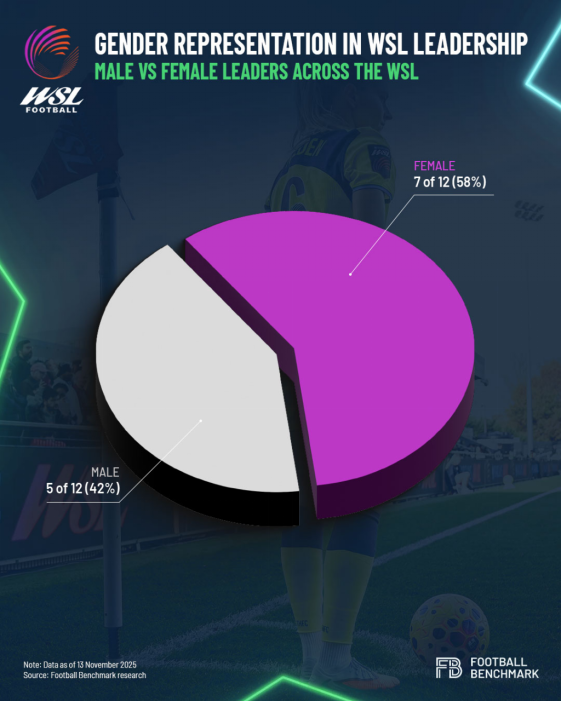
Across the 12 WSL clubs, 7 of the senior leaders responsible for women’s football are women (58%) and 5 are men (42%). The majority of clubs now have women leading their women’s football operations, many holding the title of Managing Director or CEO. This marks a significant step in the industry, with more women now occupying visible decision-making positions at the elite level of the women’s game.
Charlotte O’Neill, Managing Director at Manchester City Women, and Maggie Murphy, Managing Director at Aston Villa Women, are among the figures leading women’s clubs. Both head their clubs’ women’s football operations and are supported by female colleagues in Directors of Women’s Football roles, reflecting not just the expanding space for women in senior decision-making across the league but also the emergence of layered female-led leadership, with women holding positions within the leadership team at technical levels as well.
At West Ham United, Karren Brady’s oversight of the women’s team while serving as Vice-Chair of the club is an example of a club where responsibilities remain shared across the organisation.
In Spain’s Liga F, the landscape is currently more male-dominated. Of the 16 senior figures leading women’s football operations, 10 are men (63%) and 6 are women (37%). While representation is improving, the structural setup explains much of this imbalance. Many Liga F clubs still lack independent leadership positions for the women’s side, meaning responsibilities are often shared with existing executives from the men’s football or business operations.
Experience within the women’s game
The professional experience of those leading women’s football operations provides another indicator of how the game is evolving off the pitch.
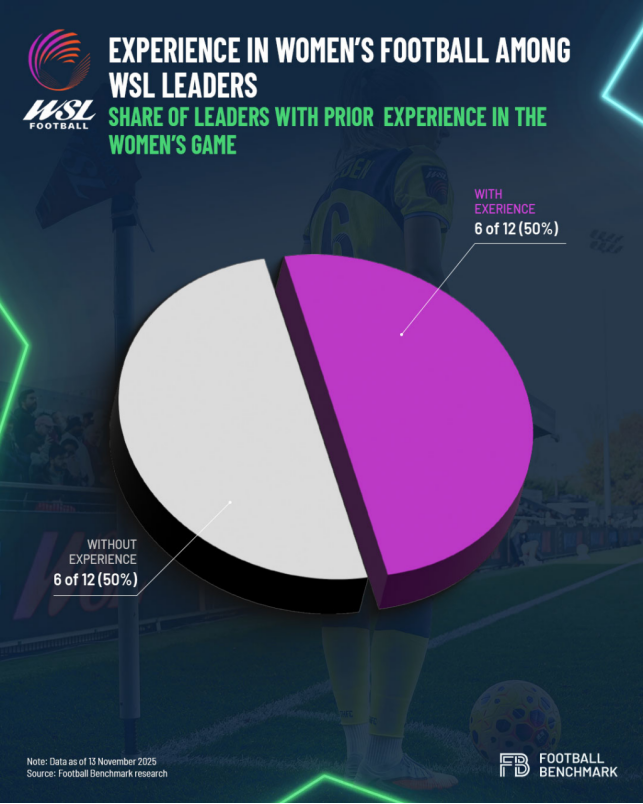
Half of the WSL’s senior leaders have previous experience working directly in the women’s game, while the other half come from broader football or business backgrounds. Among those with women’s football experience are leaders at Arsenal, Aston Villa, and Brighton, who have developed through varied roles within the game. At the same time, many senior figures come from wider pathways. Aki Mandhar at Chelsea and Hannah Forshaw at Everton each have taken on the roles from management positions within the football industry, but not specifically within the women’s side.
In Spain’s Liga F, of the 16 senior figures overseeing women’s football, 14 (88%) have prior experience in the women’s game and only 2 (13%) do not. However, a direct comparison with WSL profiles would be misleading, as most Liga F clubs still lack dedicated management structures for their women’s football sections. Consequently, many of these figures primarily oversee football operations and therefore tend to have predominantly technical backgrounds.
In Spain, only independent clubs currently have dedicated CEOs or General Managers for women’s football. Even at FC Barcelona, the women’s team does not operate under a standalone corporate structure, with resources and decision-making integrated within the wider organisation.
Former players in leadership roles
The presence of former players in senior roles offers another perspective on how the women’s game is shaping its leadership identity.
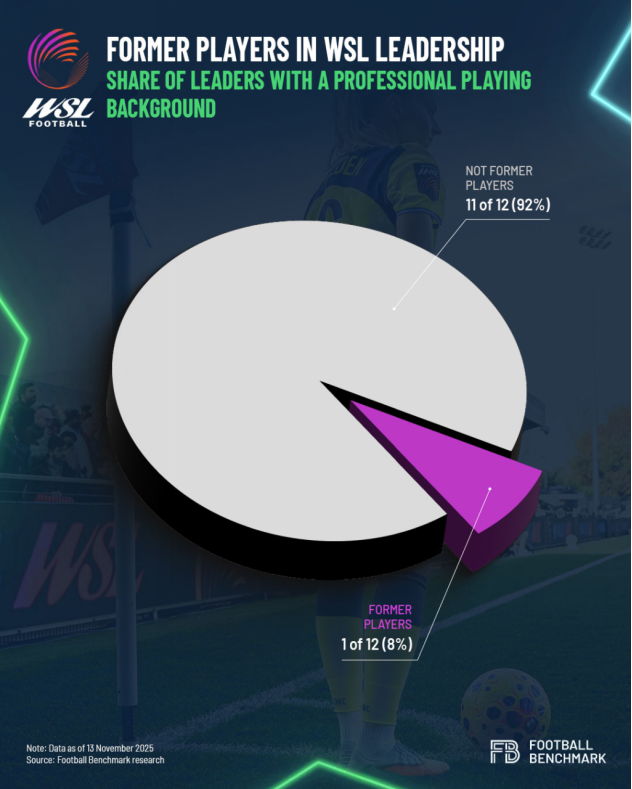
Only 1 of the 12 WSL leaders has a professional playing background. Clare Wheatley at Arsenal is a former player who has transitioned into senior management and, after many years within the club, has contributed to the club’s stability and continuity.
In Spain’s Liga F, 7 of the 16 senior leaders (44%) have a playing background. While this represents a higher share than in England, most of these individuals hold technical or sporting positions rather than business or executive roles. The pattern highlights two distinct approaches to leadership: Spain’s model remains rooted in football knowledge and sporting development, while the WSL is evolving through a more corporate and management-led structure.
Together, these dynamics show how both leagues and the women’s football industry more broadly are moving toward balance: combining the professional expertise needed to manage growing organisations with the lived football experience that adds authenticity and insight to leadership.
Evolving leadership for a sustainable future
The creation of defined leadership roles represents a significant step in the professionalisation of the game. In England, the WSL combines a clear majority of women in senior positions with a growing number of executives who bring specific experience in the women’s game. The move toward structured governance reflects an ambition to manage women’s football with the same rigour and accountability as the wider industry.
Spain’s Liga F is progressing along a similar path, encouraging clubs to move toward greater independence, although leadership structures remain largely integrated within broader club frameworks. Development continues, but at a different stage of maturity.
Across both leagues, the leadership profiles reflect a sector in transition, professionalising rapidly, attracting experienced operators from across football and beyond, and opening clearer career pathways for those building their expertise within the women’s game.
Football Benchmark works with clubs and investors to assess and design organisational structures, ensuring governance and leadership are aligned with market context and long-term ambitions, helping translate structural progress into sustainable success.
By Football Benchmark
The rise of women’s football executives: Inside the WSL’s evolving leadership structures
Article written by Football Benchmark Growing professionalisation in women’s football is increasingly visible off the pitch, as clubs establish dedicated leadership structures to support the game’s long-term development. Among Europe’s leading leagues, England’s WSL has become a clear example of how this transformation is taking shape. Most clubs now feature dedicated leadership roles for their women’s sides, with Managing Directors and CEOs responsible for overall structures. Chelsea appointed its first Women’s Football CEO in 2024, Brighton in 2023, while others have formalised
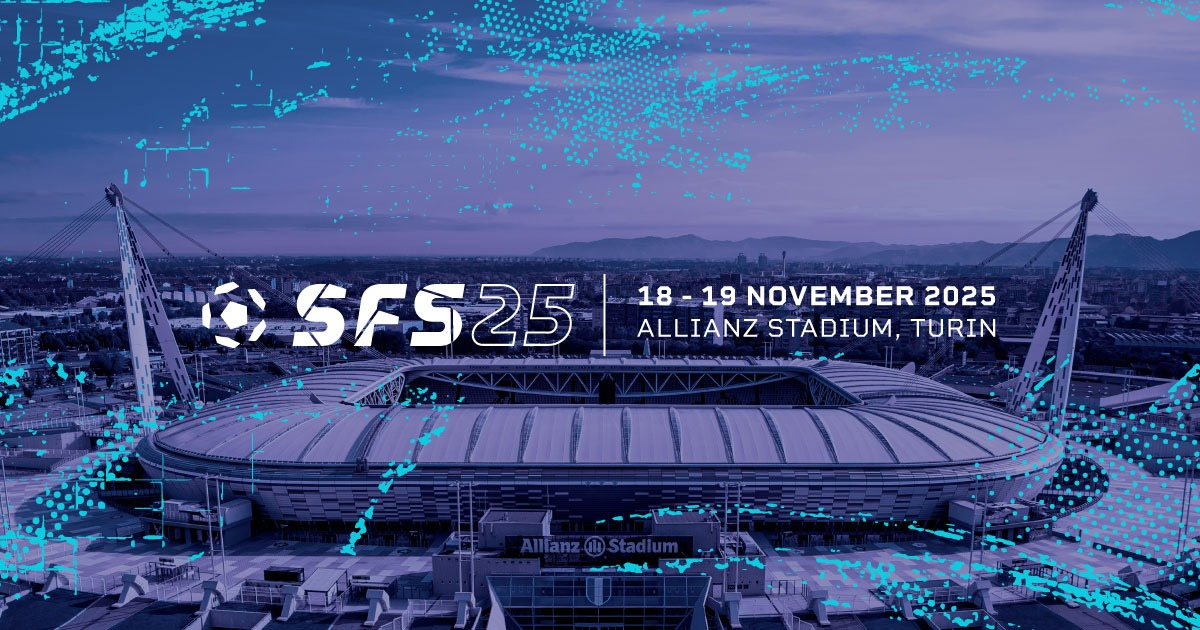
SFS25: Chiellini, Tare, Mancini, Gai, Uva, Buonfiglio and De Siervo among the key speakers shaping the future of football through AI, infrastructure and sustainability
On 18–19 November, the Allianz Stadium in Turin will host the eighth edition of the Social Football Summit, bringing together top executives, clubs and institutions to discuss Football Economy, AI, infrastructure and new value models. Turin, 13 November 2025 – The countdown is on for the eighth edition of the Social Football Summit (SFS25), Italy’s only internationally recognised event dedicated to the football industry, which for the first time will take place in Turin, inside the iconic Allianz Stadium, on 18 and 19 November. The 2025 edition

Stefano Maneri, ESGeo: “Italian Football is chasing, but sustainability can be the lever that wins the championship!”
In view of SFS 25, we interviewed Stefano Maneri, Senior ESG Advisor at ESGEO (Avvale Group), a key player in sustainability consulting and digital governance. In this exclusive interview, Maneri clarifies how the ESG approach must move beyond the logic of a mere “constraint” to become a driver of business and innovation for sports clubs. He analyzes the challenges facing Italian football, the regulatory and cultural gap compared to leagues like the Premier League, and the strategic importance of having
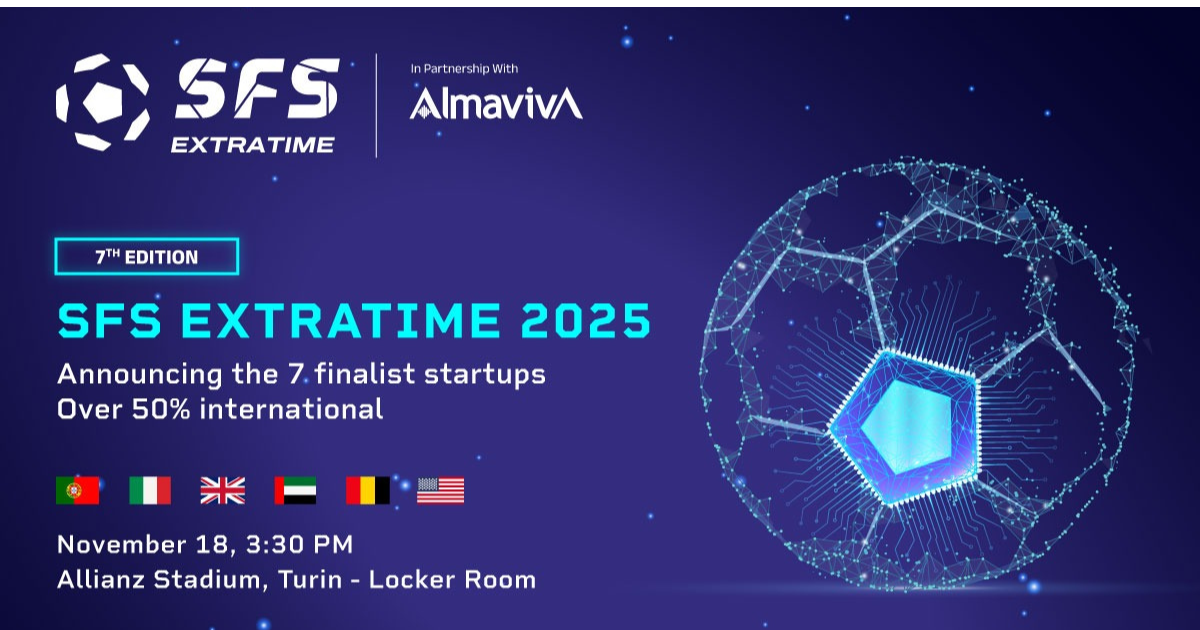
SFS ExtraTime ALMAVIVA 2025: 7 realities are ready to compete in Turin!
The SFS 25 is an essential showcase for the future of football, successfully uniting sport with new technologies. At the heart of this forward-looking vision is SFS ExtraTime, realized in partnership with ALMAVIVA, the competition that annually shines a spotlight on the most promising entities in the football industry. This year, the scope of innovation is more international than ever. For the first time, the competition has registered massive participation from abroad, confirming SFS's role as a global reference point. The
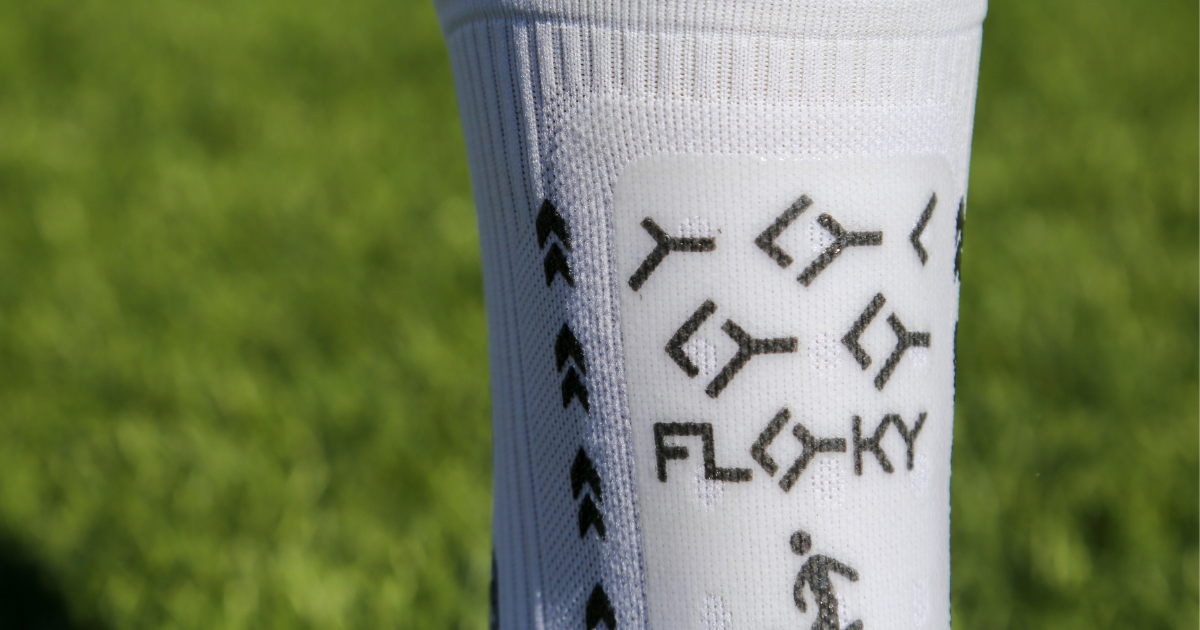
Floky at SFS 25: biomechanical science applied to the human body for limitless performance
SFS 25 confirms itself as the stage of excellence where the challenges of the sports business meet the most cutting-edge solutions. In an industry where every detail can make the difference between victory and injury, the focus on sustainable performance and athletic longevity has never been so crucial. It is in this context that we are thrilled to welcome Floky, an Italian start-up that is redefining the boundaries of technical apparel through the fusion of science, patented technology, and profound

The future of fan experience: creativity, data and AI at the service of football
Football is no longer just ninety minutes on the pitch: it’s an experience that lives every day, inside and outside the stadium. Fans expect personalised content, instant interactions and new ways to express their passion. In this scenario, Adobe positions itself as a strategic partner for clubs, leagues and federations, offering solutions that turn fan relationships into immersive and engaging digital journeys. Data becomes the heart of the Fan Experience. Every interaction – from the official website to mobile apps, from

ADVANT: AI and data serving the football ecosystem, between innovation and sustainability
SFS 25 is the platform of choice for those who believe that the future of the football industry is built through innovation, social responsibility and sustainability. It is with this vision that we are proud to present ADVANT, Main Partner of the upcoming edition, a leading ICT consultancy specializing in turning data into strategic knowledge. The partnership between SFS25 and ADVANT is a strategic alliance that fits right into the pillars of the event, particularly those related to innovation & technology,

TikTok and SFS 25: how a shot in digital life can become a goal in real life
The partnership that redefines fan engagement, transforming the digital community into an engine of inclusion and awareness for the sports system SFS 25 is not just an event, it is a hub where innovation meets responsibility. The announcement of the partnership with TikTok, a celebrated entertainment platform, enshrines the centrality of digital in the future of sports and explores the breaking of the boundary between digital and real. With this collaboration, TikTok tells the SFS audience how creativity, a defining characteristic of
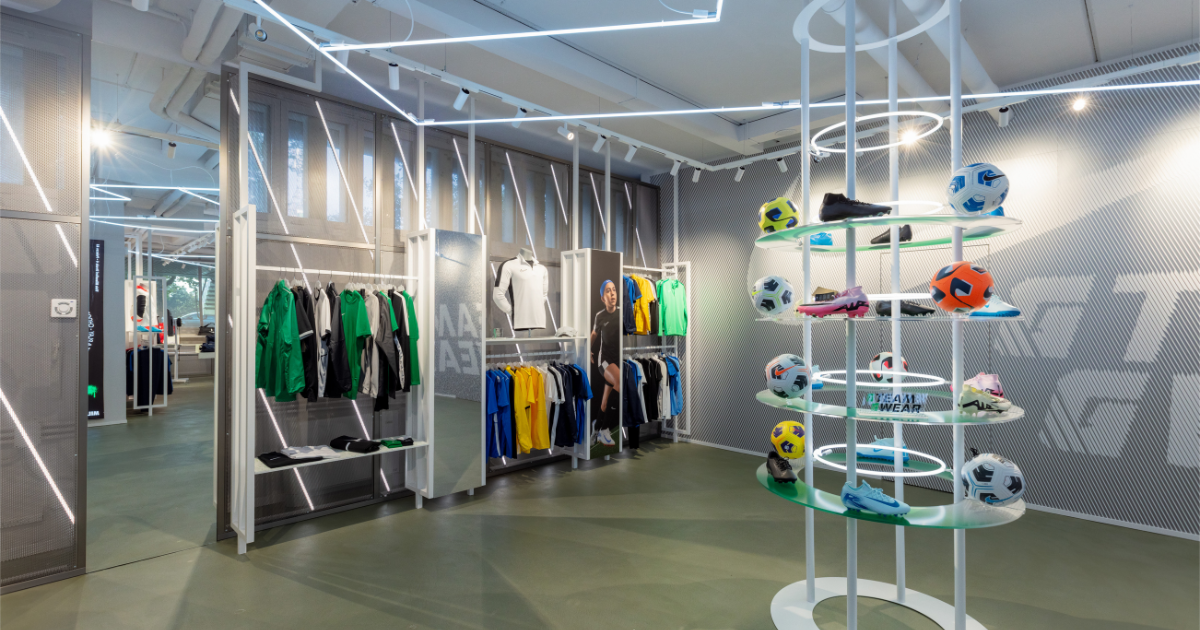
GG TEAMWEAR at SFS 25: sustainable sportswear supplies, strategic quality, and social commitment
GG TEAMWEAR, operational since 1998 and specializing in technical-sportswear supplies for clubs, teams, and academies, presents itself at SFS 25 as a reference point for sustainable innovation in the teamwear supply chain. The company, which boasts the exclusive representation in Italy and Europe of top global brands in the segment, including Nike, Adidas, Joma, Puma, and Kappa, brings its vision to Turin: to support every club, from youth sectors to professionalism, treating every sporting reality as a true "Pro Club."
SFS25 programme: two days at Allianz Stadium between innovation, sustainability and the future of football
On 18–19 November 2025, the Allianz Stadium in Turin will host the 8th edition of the Social Football Summit (SFS25) – Italy’s leading international event dedicated to the football industry. Two full days of debate, networking and innovation, with a programme exploring the key issues shaping the future of the game. A programme full of insights and opportunities The official SFS25 programme features panels, interviews, workshops and training sessions focused on media, fan engagement, technology, sustainability, infrastructure and governance. Highlights include: • AI & Football Intelligence – how data and AI are redefining performance