




The last SFS25 meeting of the Global Stage opened a dialogue on data awareness with the help of Francesco di Biase Italy Chief Representative of PLATINIUM GROUP, Paolo Magri CEO of EICMA and Mattia Gamberoni Head of Italy and Spain at STRIPE.
In the world of sports and entertainment events, truly knowing your audience means making smarter decisions, building better experiences, and generating value. The problem? Many clubs and organizations don’t know their data. They don’t “read” their fans and end up building strategies based on intuition rather than real information. The question then becomes inevitable: are we really getting to know our audience, or are we chasing an illusion?
The example of EICMA shows how much reality can change when data is put at the center. For years, the event had no real knowledge of visitor behavior; today, it has one of the most advanced data control structures in the industry. This means not only knowing who the customer is, but understanding them, analyzing their movements, anticipating their needs, and building the experience based on what they really want. With over 600,000 attendees and peaks of 100,000 visitors on Saturdays, EICMA began to study individual provinces rather than entire regions, in order to recognize flows and optimize services. This led to the strategic decision to purchase 15,000 parking spaces to be offered free of charge through ATM: an operation that led to a significant increase in attendance and an immediate improvement in public satisfaction.
The power of data also allows for rapid tactical interventions: when a subway strike threatened to block thousands of visitors, the organization was able to target only those people who were actually affected, making them aware of the situation and facilitating their participation. The result was clear: over 13,000 parking spaces occupied, a flow managed without chaos, and an event that remains close to its users because it truly understands them.
The same approach led to the success of the event organized at the Misano racetrack: less than a month of preparation and a total sell-out, thanks to the ability to read and activate real demand.
Payment management is another crucial front. 60% of users who purchase from mobile devices use Apple Pay or Google Pay. Ignoring this means losing sales: 80% of people abandon their purchase if they cannot find the method they usually use. Facilitating checkout, streamlining payment, and introducing solutions such as “buy now, pay later,” now widespread among the younger generation, can increase turnover by between 10% and 40%. Amazon demonstrates this every day with impulse purchases: one click from content to shopping cart, without friction. It’s not a technical detail, it’s pure economics.
Today, there is also discussion about the possibility of integrating payment directly into artificial intelligence. No one has a definitive answer yet, but the direction is clear: simplify, accelerate, and reduce user effort. It is no coincidence that in Europe, checkout takes an average of three minutes, but by the second minute, there is already a 66% drop. Every second lost is a customer lost.
All of this goes into the income statement. Every club, every event, every company should ask itself whether there is really an awareness of the value of data. In Italian football, for example, this maturity is still a long way off: there is a lack of technical expertise and strategic vision, despite the fact that data management is now as important as the game played on the field. Progress means having a deep understanding of one’s economic and social environment.
And for those with little data? There are two ways forward: exploit data from other ecosystems, as is the case with payment platforms or digital infrastructures, or rely on artificial intelligence, which allows you to intercept and guide users at the very moment they are looking for information. If AI knows what EICMA is, where it is, and how it works, the next step is natural: allow the user to purchase directly through that channel.
Ultimately, everything converges on a simple principle: we cannot lose the customer. If the customer runs away, the market runs away too, and the risk of failure becomes real. Admitting that we are behind in Italy is an act of honesty. But it is also a starting point: we can, and must, do much better. And data is the key to doing so.
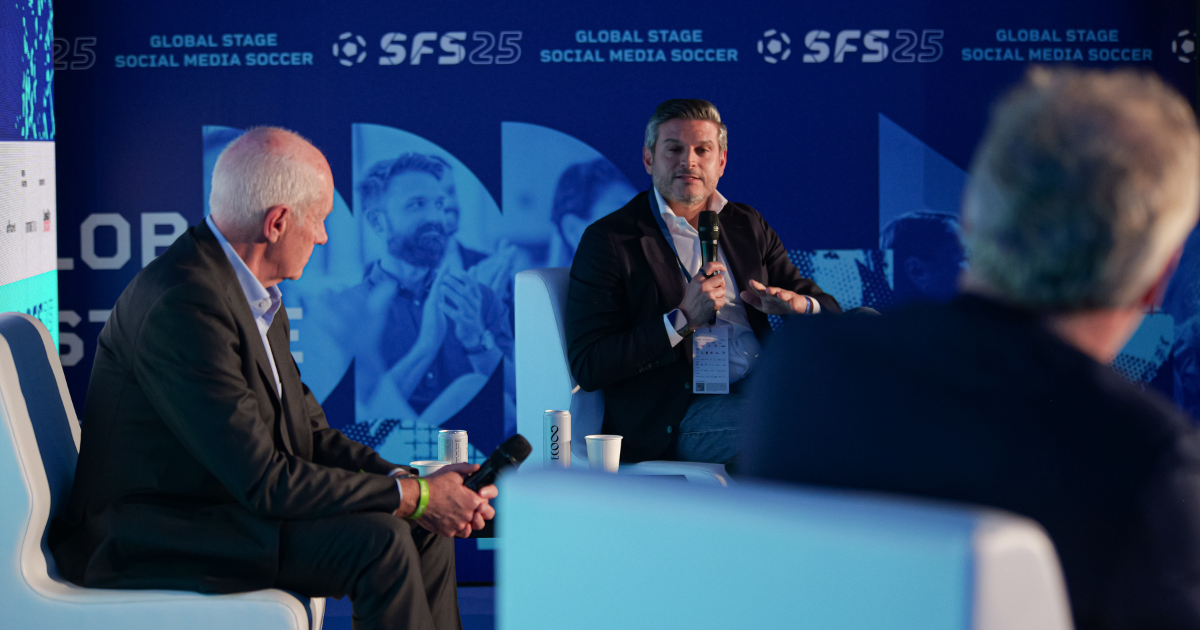
Knowing the data to know your customers
The last SFS25 meeting of the Global Stage opened a dialogue on data awareness with the help of Francesco di Biase Italy Chief Representative of PLATINIUM GROUP, Paolo Magri CEO of EICMA and Mattia Gamberoni Head of Italy and Spain at STRIPE. In the world of sports and entertainment events, truly knowing your audience means making smarter decisions, building better experiences, and generating value. The problem? Many clubs and organizations don't know their data. They don't “read” their fans and end up building
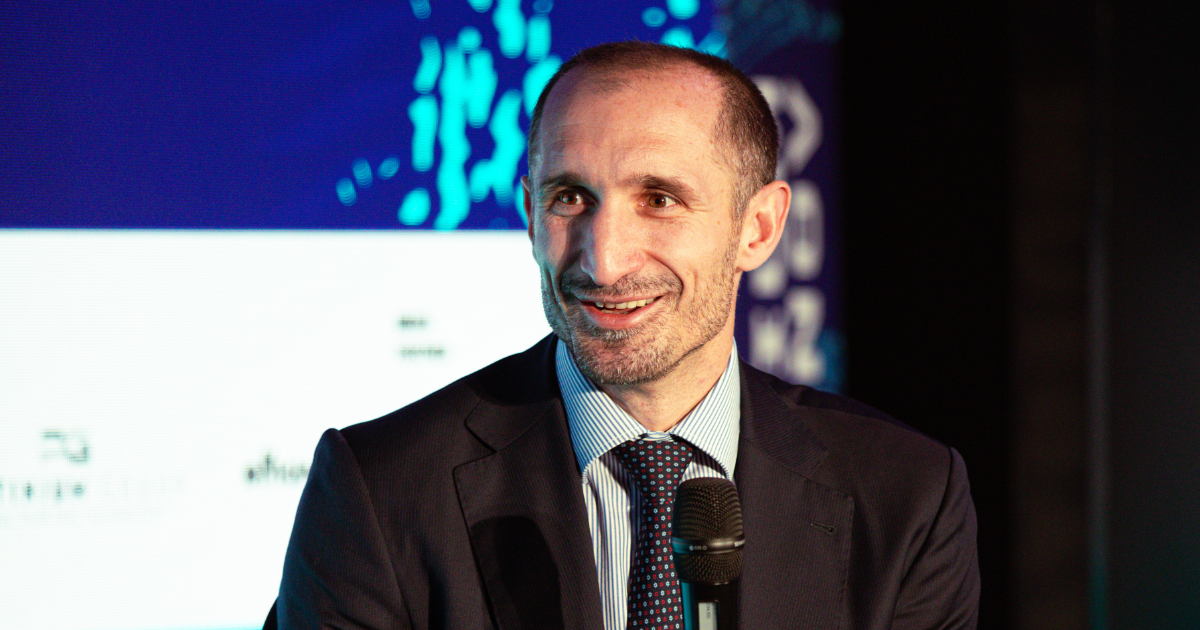
Life lesson with Giorgio Chiellini
When you are not fully aware of the direction to take, it can be useful to be guided by the words of Juventus' new Director of Football Strategy, Giorgio Chiellini, who spoke during the sixth panel of the day at the Football Stage during an interview conducted by Giulia Mizzoni. Choosing goals: this is the first step. Without a specific goal, it is difficult to know how and where to move. They are needed to turn on the light, such as
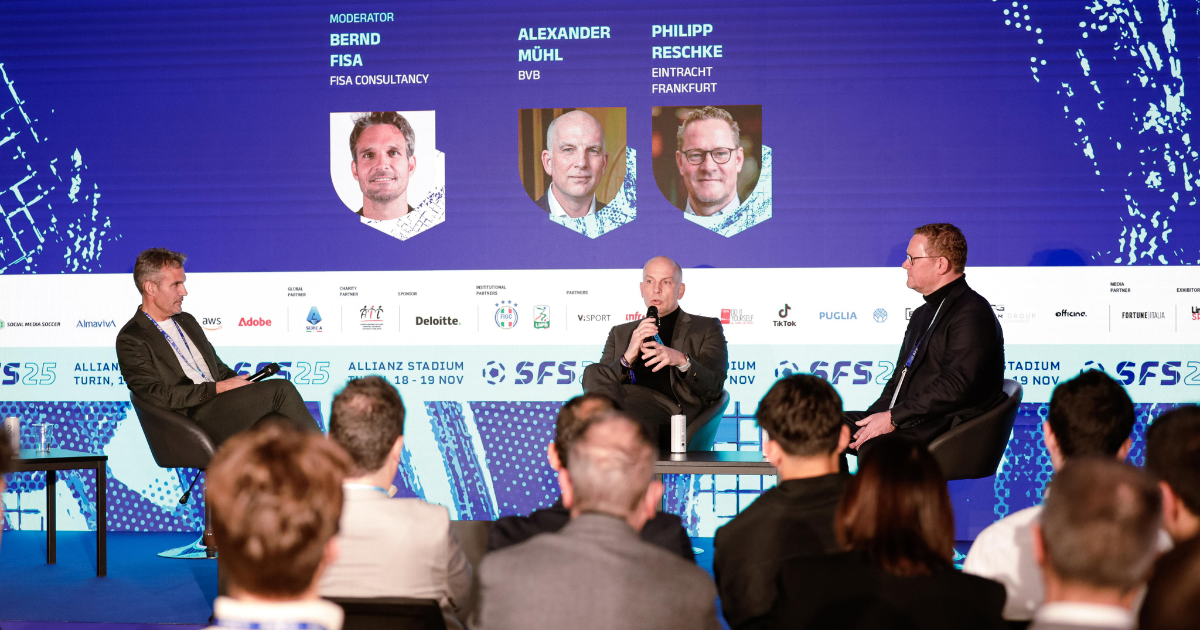
The Bundesliga Model Fills Stadiums and Fan Stories
The second panel of Day 2 Football Stage focused on the German identity, centered around the 50+1 rule, and featured Alexander Mühle, Director Marketing & Digitalisation at Borussia Dortmund, Bernd Fisa, Founder of Fisa Consultancy, and Philipp Reschke, Board Member of Eintracht Frankfurt Football AG. To understand the scale of the Bundesliga phenomenon, one only needs to look at the data: clubs like Bayern Munich surpass 300,000 registered members. Not only the German 'Panzer' (tank) boasts staggering numbers, but also Borussia
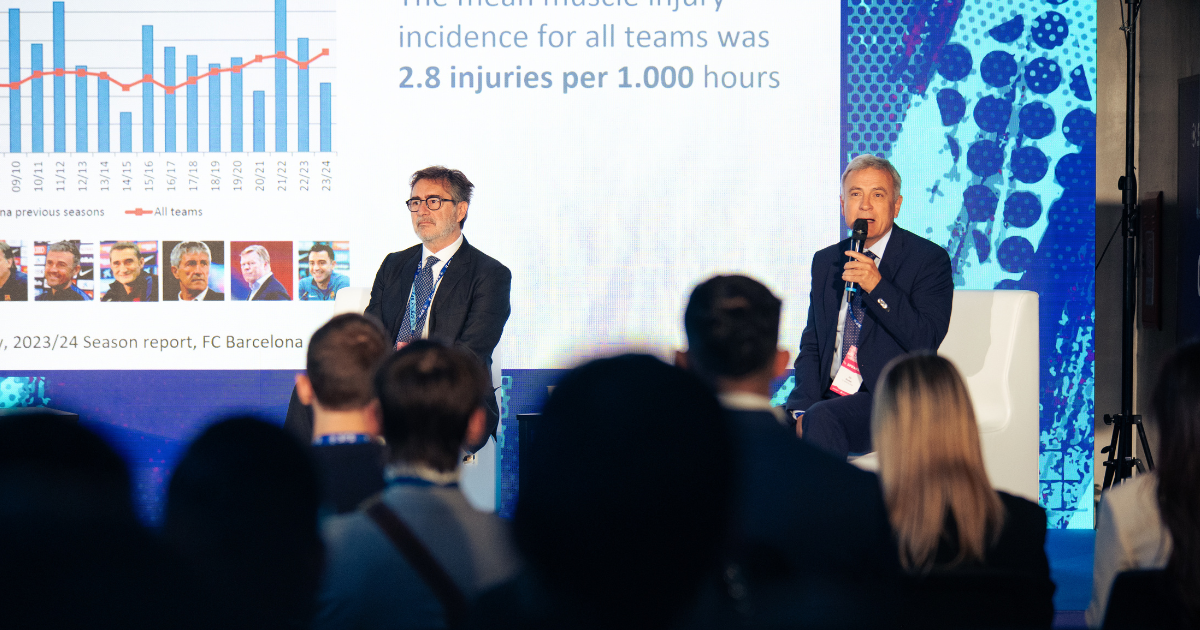
Injury Prevention in Sports: Isokinetic and FC Barcelona Share Insights at SFS 25
Sports medicine opened Day 2 on the Global Stage at SFS 25 with a high-level panel featuring Fabrizio Tencone, Sports Medicine Physician at the Isokinetic Medical Group, and Gil Rodas, MD, PhD, Head of Sport Medicine and the Medical Area at FC Barcelona, moderated by Carolina Tha. Injuries remain one of the biggest and most persistent challenges in sports. Tencone presented a long-term study carried out by Isokinetic: “Eight years ago, we expected injuries to increase significantly. Today’s data shows that

FIFA, Gai: “The upcoming World Cup? The greatest event ever organized on earth”
The SFS 25 Football Stage GoProject hosted the meeting “SFS 25 interview: A. Alciato interviews Romy Gai,” an interview conducted by Prime Video journalist Alessandro Alciato with Romy Gai, Chief Business Officer of FIFA, who began the meeting by talking about the FIFA Club World Cup and the agreement with DAZN, the sole broadcaster of the competition. The idea arose from the need to give the World Cup the visibility necessary to be recognized as an “elite” event. The aim
Impact Sport Lab is Born: The Laboratory That Measures and Multiplies the Impact of Sport
The Impact Sport Lab debuts at SFS 25. It is the new project by Ecoevents – a benefit corporation and Legambiente partner – created to concretely integrate sustainability into sport and offer clubs, leagues, federations, and sponsoring companies professional tools to generate social, environmental, and cultural value. Sport holds an extraordinary power: it speaks to millions of people, influences behaviors, and builds communities. Impact Sport Lab is born to transform this force into real impact, making sustainability a measurable, daily
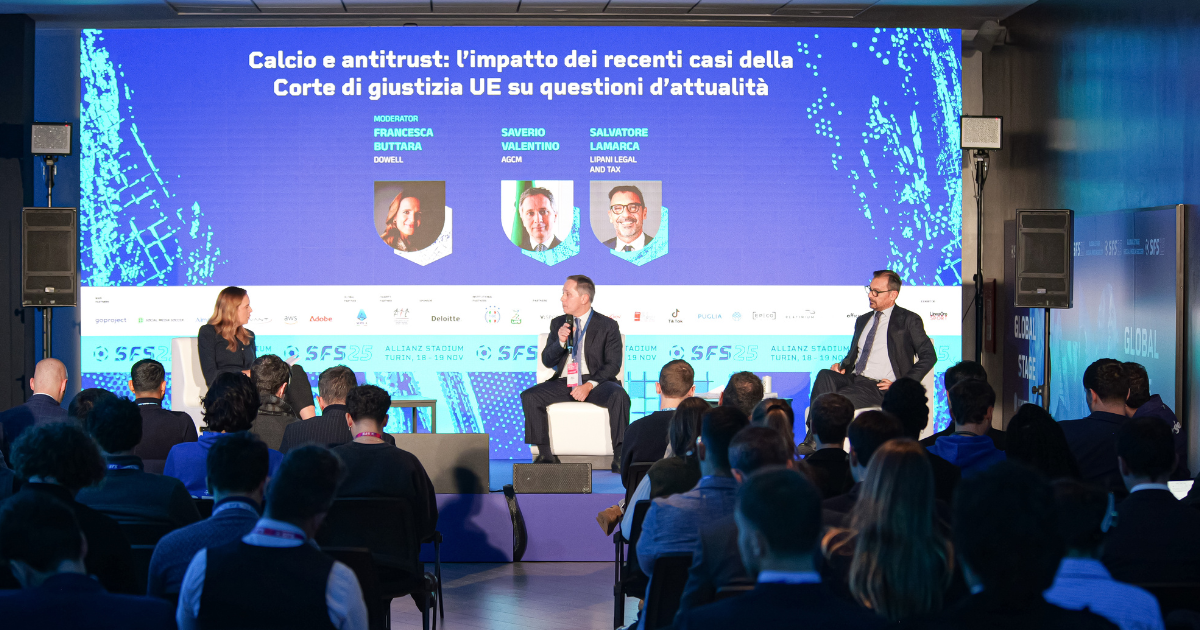
Football and Antitrust: “No more monopoly of FIFA and UEFA on the organization of competitions”
The Global Stage Social Media Soccer hosted the meeting “Football and Antitrust: The impact of recent EU Court of Justice cases on current issues.” The protagonists were Saverio Valentino (Member of the Board AGCM) and Salvatore Lamarca (Antitrust Lawyer and Author of the book “Sport and European Law”), moderated by Francesca Buttara (Founder DOWELL). We are facing a profound transition, a new era following the rulings of the European Court that place football within the market, a sector that must comply with principles
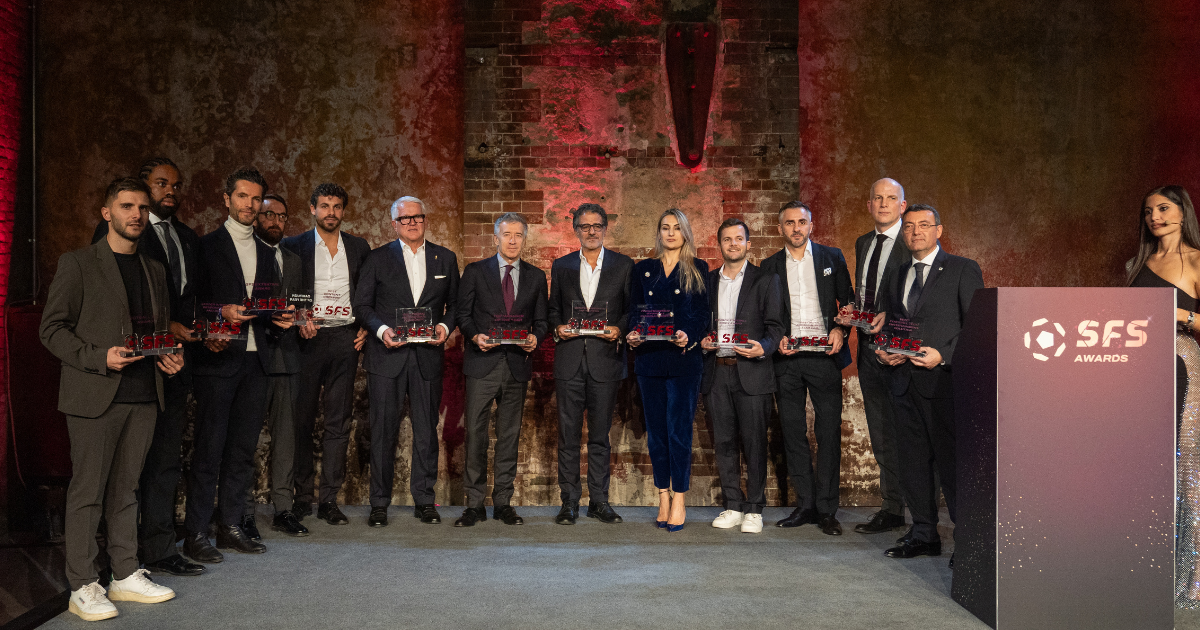
SFS AWARDS 2025: THE TRIUMPH OF EXCELLENCE AT THE OGR IN TURIN FOR ANINDUSTRY IN CONSTANTEVOLUTION
The 2025 edition of the SFS Awards concluded at the OGR in Turin, an event that celebrated excellence in the football industry. The evening, hosted by Anna Maria Baccaro, was enhanced by the presence of SFS partners. The setting of the OGR made the occasion even more memorable, and the event represented a unique opportunity to highlight the winning synergy between sport, innovation, social impact, and business. One of the most emotional moments of the Awards was the tribute dedicated to the memory

Mattia Perin’s Mental Investment Redefines Talent in Football
The panel "Is Football Really Prioritizing Players’ Mental Health?", moderated by Riccardo Nasuti (Digital Manager SFS 25), focused on the crucial topic of athlete mental health. The conversation between Juventus goalkeeper Mattia Perin and his personal psychologist, Nicoletta Romanazzi, offered a frank perspective on the internal work required for high performance, highlighting how cultural resistance is finally beginning to fade. The personal story and freedom from external judgments Mattia Perin shared his experience, revealing that he had wanted to quit playing after
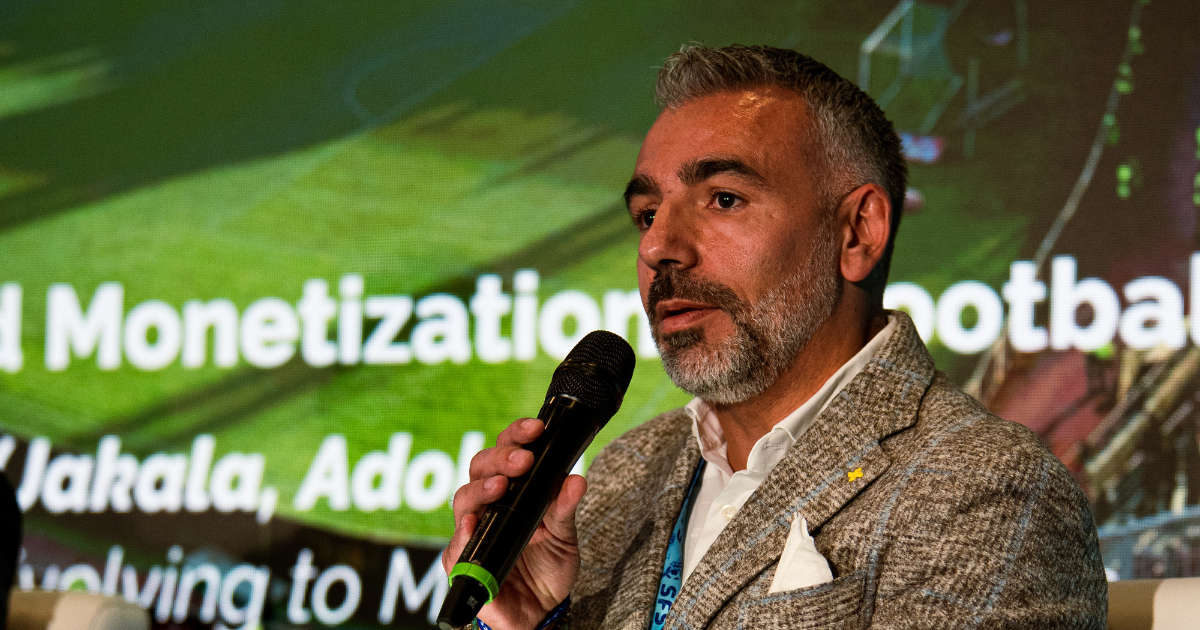
Data Wars in Football: How Data, Ethics and Personalization Are Shaping the Future of Fan Engagement
The panel “Data Wars: Ownership, Ethics and Monetization in Football” brought together some of the leading figures in digital innovation within the football industry. Speakers included Pierdamiano Tomagra, Head of Digital at Serie A, Raffaele Cerchiaro, Managing Director at Jakala, Andrea Peron, Sales Leader at Adobe Experience Cloud, and Claudia Di Renzi, Head of Accounting, CRM & Loyalty at FIGC. The session was moderated by journalist Giulia Piscina. In modern football, the decisive match is increasingly played off the pitch —