




In modern football, building the right squad is the single most critical factor for a club’s success. However, transfer decisions remain a complex challenge, where intuition must be carefully balanced against rising costs and financial risks. For today’s decision-makers, the main issue is no longer a lack of data, but an overload of information: hundreds of “interesting” KPIs that often create noise rather than clarity.
Enter SquadAssist, the startup bringing a concrete, predictive, data-driven approach to scouting dynamics and financial squad management.
From Intuition to Scientific Precision: Sportive ROI vs Financial ROI
SquadAssist has developed an analytical platform that goes beyond traditional statistical reports, predicting the actual added value a specific player would bring to a specific club.
The technology allows sports organizations to evaluate two key performance metrics:
- Sportive ROI (On-Field Value): Projected performance and technical contribution on the pitch.
- Financial ROI (Future Transfer Fee): Estimated future resale value of the player to ensure long-term financial sustainability.
This clear cost-benefit analysis enables sporting directors and executive management to weigh on-field benefits directly against the total financial commitment of a deal, drastically reducing investment risk and streamlining decision-making.
From SFS ExtraTime to Operational Partnerships
SquadAssist’s growth trajectory highlights how the Social Football Summit network serves as a key accelerator for emerging sports tech companies.
Following its participation in SFS ExtraTime 2025, the startup saw a significant boost in visibility across major innovation-focused industry contexts. This momentum reached its natural milestone in 2026, as the platform moved from preliminary testing to permanent adoption by several industry players, establishing long-term operational partnerships.
Setting a New Standard for Football Governance
SquadAssist goes beyond delivering raw data—it supports clubs with a background rooted in top-tier management consulting to turn complexity into successful strategic decisions.
Watching innovative companies like SquadAssist grow and consolidate within the industry reinforces the core mission of the SFS network: providing a space where technological innovation meets the business of sport to shape the future of football together.
SquadAssist: How Data and AI Are Redefining Transfer Market Strategies
In modern football, building the right squad is the single most critical factor for a club’s success. However, transfer decisions remain a complex challenge, where intuition must be carefully balanced against rising costs and financial risks. For today’s decision-makers, the main issue is no longer a lack of data, but an overload of information: hundreds of "interesting" KPIs that often create noise rather than clarity. Enter SquadAssist, the startup bringing a concrete, predictive, data-driven approach to scouting dynamics and financial squad

SFS Snack arrives in Milan: ESG, brand value, and new competitive strategies for sports
SFS Snack arrives in Milan with a new and exclusive event dedicated to the strategic role of ESG criteria in the football and sports industry. Created in collaboration with ESGeo and RISE, the event will mark the first of three touchpoints for the new season, officially kicking off the Road to SFS26. The Snack will take place on September 30, 2026, from 10:00 AM to 1:00 PM, at the Avvale Group headquarters in Milan. Through two thematic sessions, interactive discussions,
From Hospitality to the stadium: how POPUP is revolutionizing the Phygital matchday experience
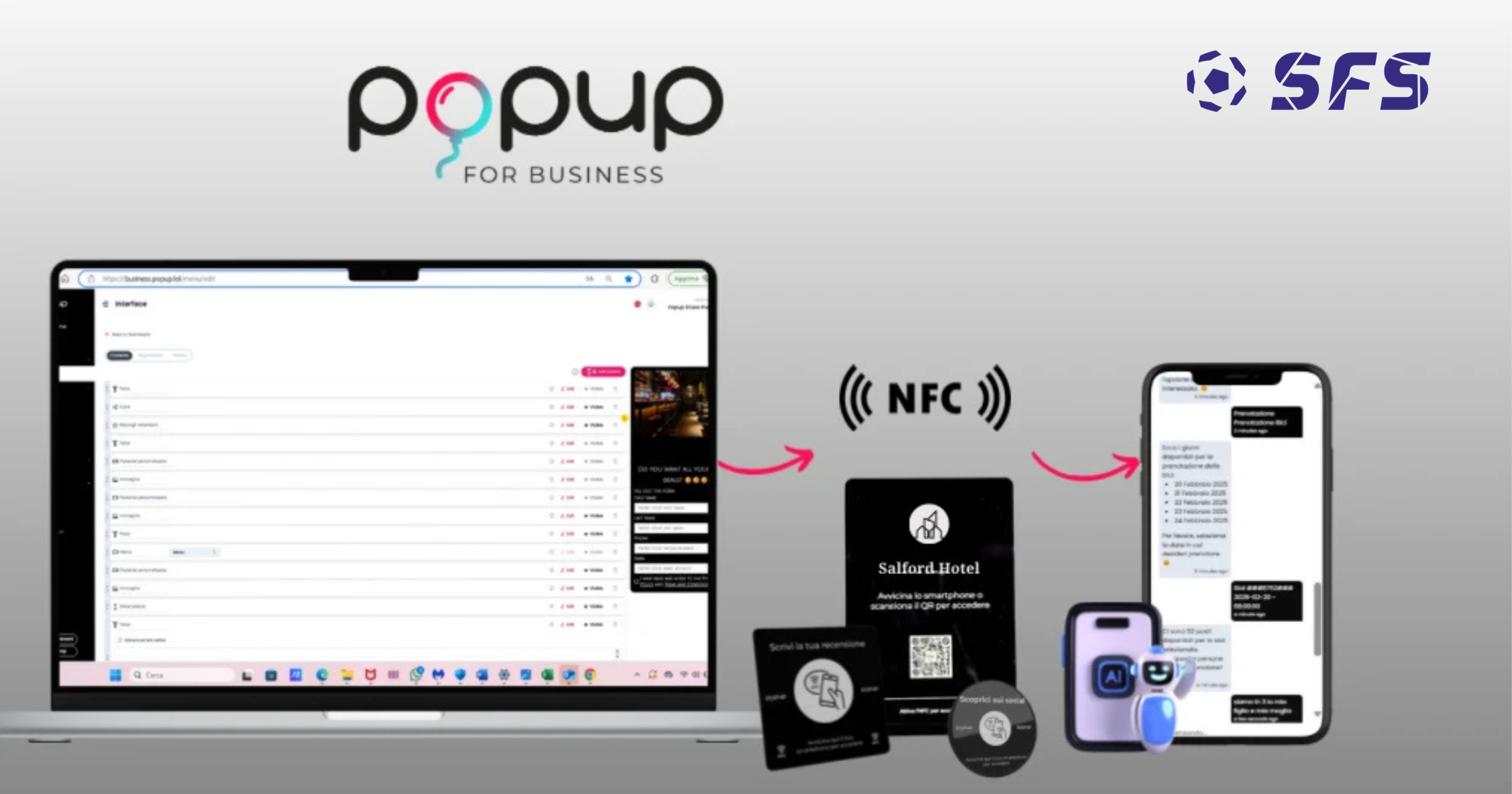
Agility, continuous development, and a clear technological vision enabled POPUP to make a strategic pivot, adapting its digital solutions from the tourism and hospitality sectors directly to the core of the sports industry. Originally created to streamline customer interactions via QR codes and NFC tags, the startup evolved while preserving user simplicity at its core. This growth trajectory was further propelled by its showcase at SFS ExtraTime, the Social Football Summit initiative dedicated to highlighting the startups and technologies reshaping
Salesforce Joins the SFS Ecosystem as Main Partner
It is with great enthusiasm that the SFS (Social Football Summit) team announces that Salesforce is officially joining the SFS 26 ecosystem as a Main Partner. This strategic collaboration for innovation in the football industry will support this new edition of the summit, consolidating the event as the international B2B benchmark for digital transformation, business, and technological evolution applied to the world of football. Salesforce, the world’s number one agentic CRM platform, helps companies of any size reinvent their business with AI.
Authentica: The Winner of SFS ExtraTime 2025
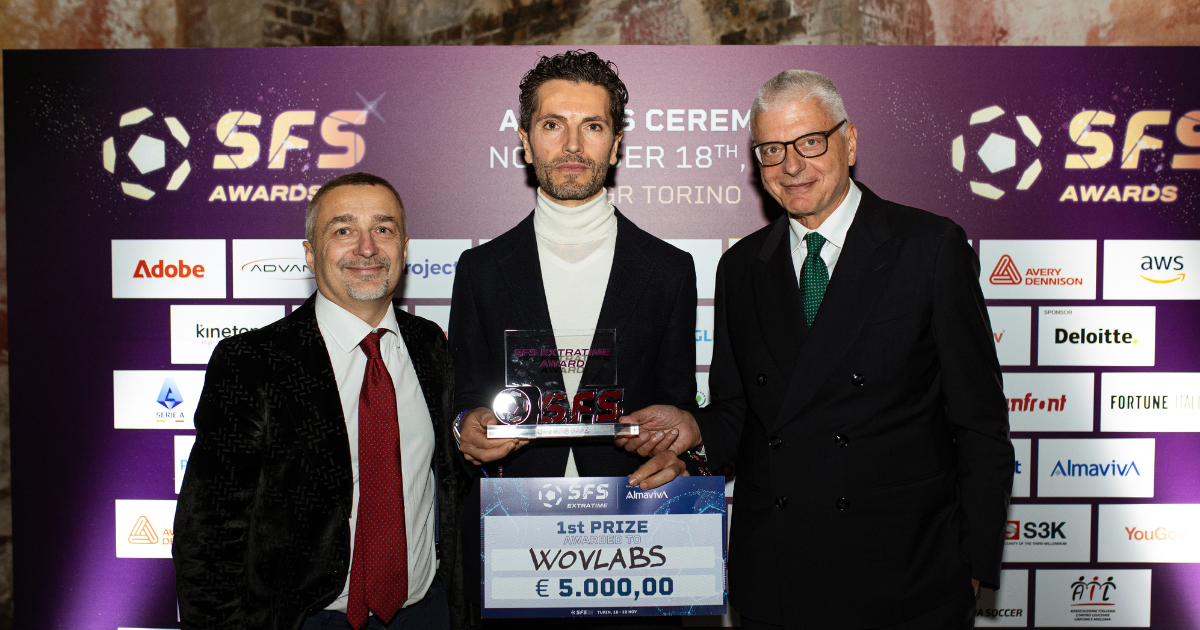
Ahead of SFS 26 and the new ExtraTime start-up competition, the spotlight turns back onto the finalists of the Social Football Summit 2025: companies with different ideas and perspectives, but all united by the same drive to grow and innovate within their industry. A year after the last edition, each start-up has successfully consolidated its market positioning or enhanced its product offering, confirming a shared trajectory—the ability to evolve, stay agile, and effectively respond to the industry’s emerging needs. A standout

Smart Stadiums: LG Transforms Dallas’ AT&T Stadium with Next-Gen Displays
The Dallas Cowboys’ tech infrastructure reaches the next level with over 2,000 digital screens and Micro LED solutions, delivering an unprecedented visual experience. The evolution of major sports arenas into "smart venues" is moving forward at full speed. For modern sports and soccer venues, the goal is no longer just hosting an event—it is about completely redefining live entertainment. Every corner of the facility is being converted into a high-value digital touchpoint. Extraordinary visual coverage for the fan experience The ambitious tech

Spain vs Argentina: the numbers behind the FIFA World Cup 2026 Final
Article written by Football Benchmark The first-ever 48-team FIFA World Cup is down to two nations competing for football's most coveted prize. Spain and Argentina will meet in the FIFA World Cup 2026 Final on 19 July. European champions Spain are aiming to become world champions for the second time, while Argentina are looking to become four-time winners and to defend the title they won in Qatar four years ago. This analysis compares the two finalists across a range of indicators, from squad

Social Football Summit stands with UNICEF to support the future of children around the world
The Social Football Summit (SFS) team is proud and honoured to announce a new three-year charity partnership with UNICEF Italy. This partnership is based on the shared core values of SFS and UNICEF, such as sport, solidarity and respect for others, and a commitment to protecting the rights of children and adolescents worldwide. The Social Football Summit (SFS) is Italy’s leading international event for the football industry. Since its foundation in 2018, it has brought together clubs, federations, brands, start-ups, institutions
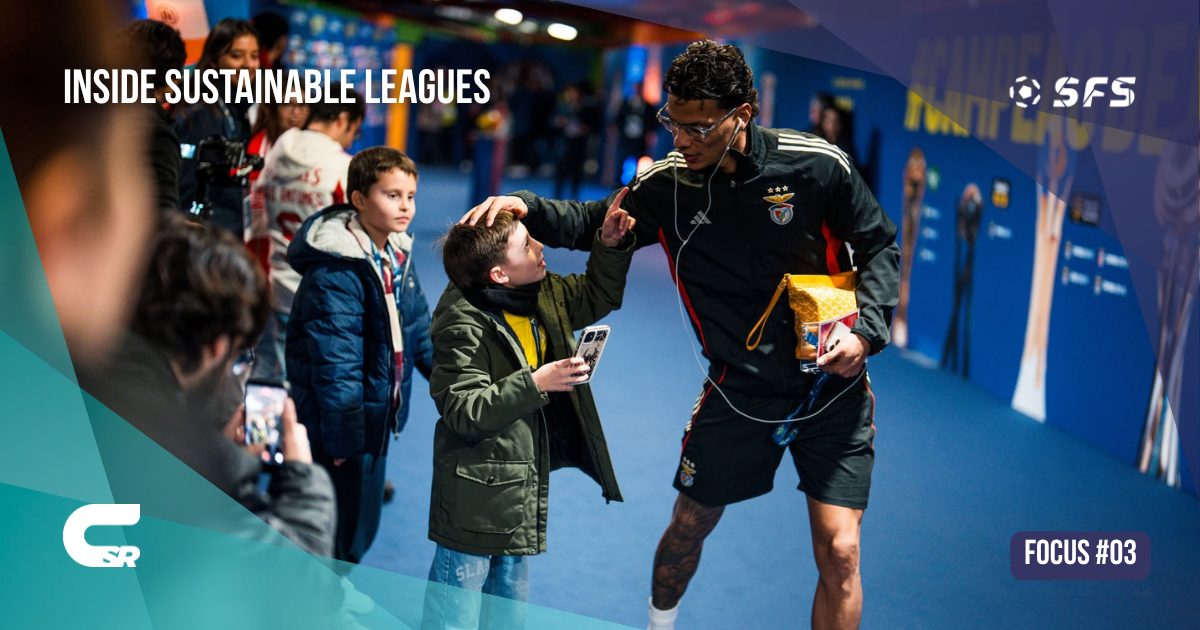
INSIDE SUSTAINABLE LEAGUES
“Inside Sustainable Leagues” is an editorial series exploring how some of the world’s leading football leagues are structuring sustainability through different models, initiatives and tools. The third chapter focuses on how these commitments are translated into initiatives, campaigns and moments of engagement. If governance explains how sustainability becomes part of a league’s structure, and dedicated organisations - such as foundations - help sustain this commitment over time, what makes these efforts visible and tangible across the wider ecosystem? This third article

Svexa: analysis, performance, and athletic growth
The Zone7 platform, developed by Svexa, enables the deep monitoring, understanding, and knowledge of the human body. Through the predictive analysis of biological signals, the system can anticipate critical issues and effectively mitigate injury risks for athletes. Guided by the strategic use of Artificial Intelligence, this perfect symbiosis between data and science proves fundamental in optimizing workloads and transforming athletic performance into actionable insight. Throughout 2025, the start-up exponentially accelerated its growth, consolidating its global market position. Driven by these results,