




The panel “Is Football Really Prioritizing Players’ Mental Health?”, moderated by Riccardo Nasuti (Digital Manager SFS 25), focused on the crucial topic of athlete mental health. The conversation between Juventus goalkeeper Mattia Perin and his personal psychologist, Nicoletta Romanazzi, offered a frank perspective on the internal work required for high performance, highlighting how cultural resistance is finally beginning to fade.
The personal story and freedom from external judgments
Mattia Perin shared his experience, revealing that he had wanted to quit playing after numerous injuries, a period when he had lost his passion for the game. The turning point was “gaining a different perspective and better understanding oneself, which is fundamental and useful for rediscovering the balance that allows one to be performant in sport and in life.” All emotions, even negative ones, can make a difference, provided one is capable of accepting the mistake and finding a solution.
Romanazzi confirmed that cultural resistance is the main enemy. “There is still the old mentality, because people think that being mentally challenged means being weak. In reality, that’s a contradiction: problems must be solved by experts.”
Coaching work has no set timeline but depends on the individual and their goals. The ultimate aim is to learn to enter a state of flow or competitive trance, a level of maximum concentration which, as Marcel Jacobs’ example demonstrates, is the result of continuous work. Perin testified to his evolution: “Before, after a good match, I would post on social media, and after a bad match, I wouldn’t. Now, after coaching work, I have understood that comments no longer influence me. Today, I am free from external conditions and judgments.”
The corporate challenge and injury prevention
Today, it is easier for individual players to seek a mental coach, while there is “still a long way to go” from the clubs’ side. Romanazzi pointed out that mental coaching not only prevents problems and the injury itself (which often has a mental root) but also helps “better manage communication with oneself and with teammates.” Friction between people, arguments, and distance create social and relational discomfort.
Perin feels supported by his club: “Juventus provides Beppe Vercelli, the club psychologist, who is excellent, and psychologists also follow the youth sectors.” He stressed the importance of support in the youth ranks, where many former teammates have experienced enormous difficulties: “We are all born with talent, but character realizes it.”
Romanazzi’s final advice to young people is to learn to keep their personal power to themselves, without externalizing it. Perin concluded that the difference can be made by being hungry for knowledge, culture, curiosity, and always having a different perspective.
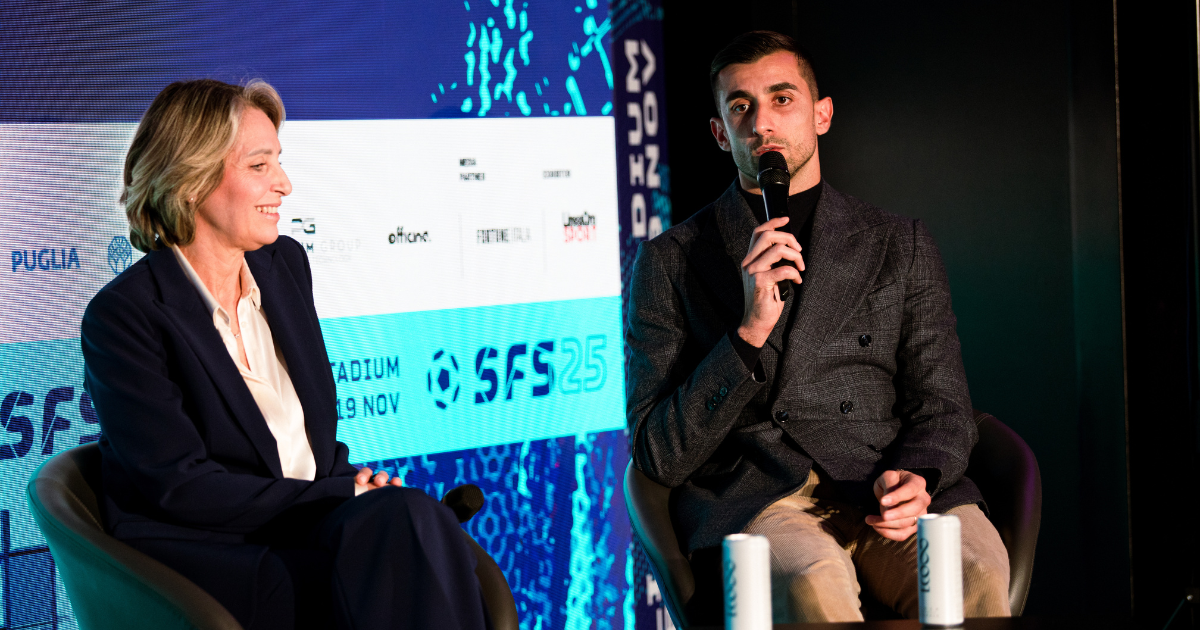
Mattia Perin’s Mental Investment Redefines Talent in Football
The panel "Is Football Really Prioritizing Players’ Mental Health?", moderated by Riccardo Nasuti (Digital Manager SFS 25), focused on the crucial topic of athlete mental health. The conversation between Juventus goalkeeper Mattia Perin and his personal psychologist, Nicoletta Romanazzi, offered a frank perspective on the internal work required for high performance, highlighting how cultural resistance is finally beginning to fade. The personal story and freedom from external judgments Mattia Perin shared his experience, revealing that he had wanted to quit playing after
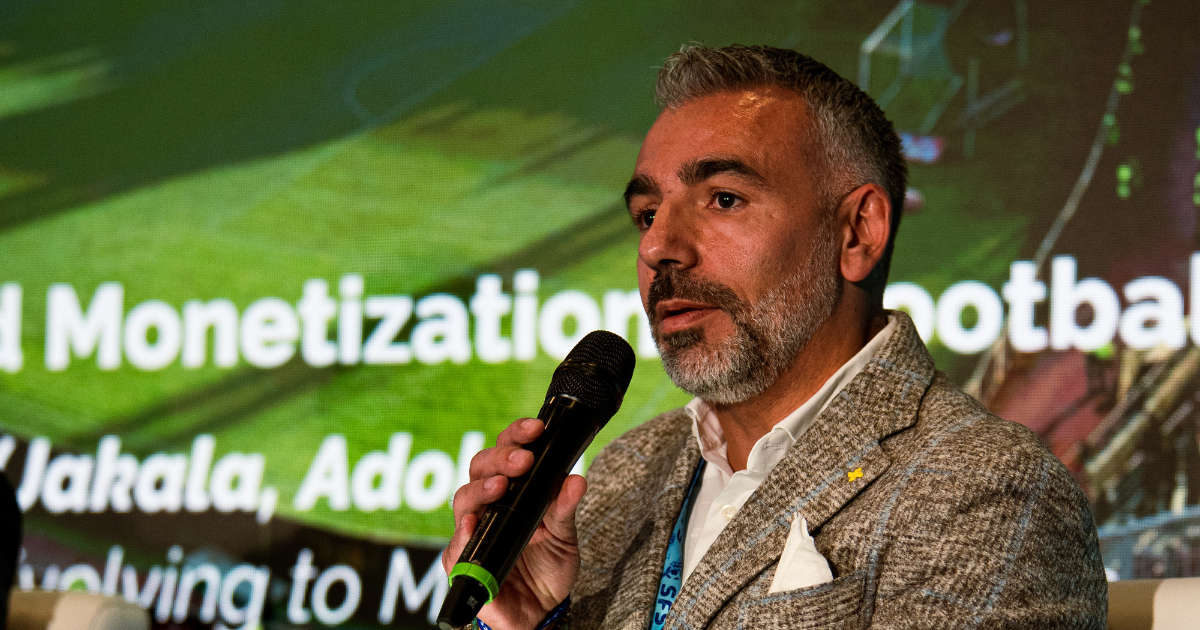
Data Wars in Football: How Data, Ethics and Personalization Are Shaping the Future of Fan Engagement
The panel “Data Wars: Ownership, Ethics and Monetization in Football” brought together some of the leading figures in digital innovation within the football industry. Speakers included Pierdamiano Tomagra, Head of Digital at Serie A, Raffaele Cerchiaro, Managing Director at Jakala, Andrea Peron, Sales Leader at Adobe Experience Cloud, and Claudia Di Renzi, Head of Accounting, CRM & Loyalty at FIGC. The session was moderated by journalist Giulia Piscina. In modern football, the decisive match is increasingly played off the pitch —
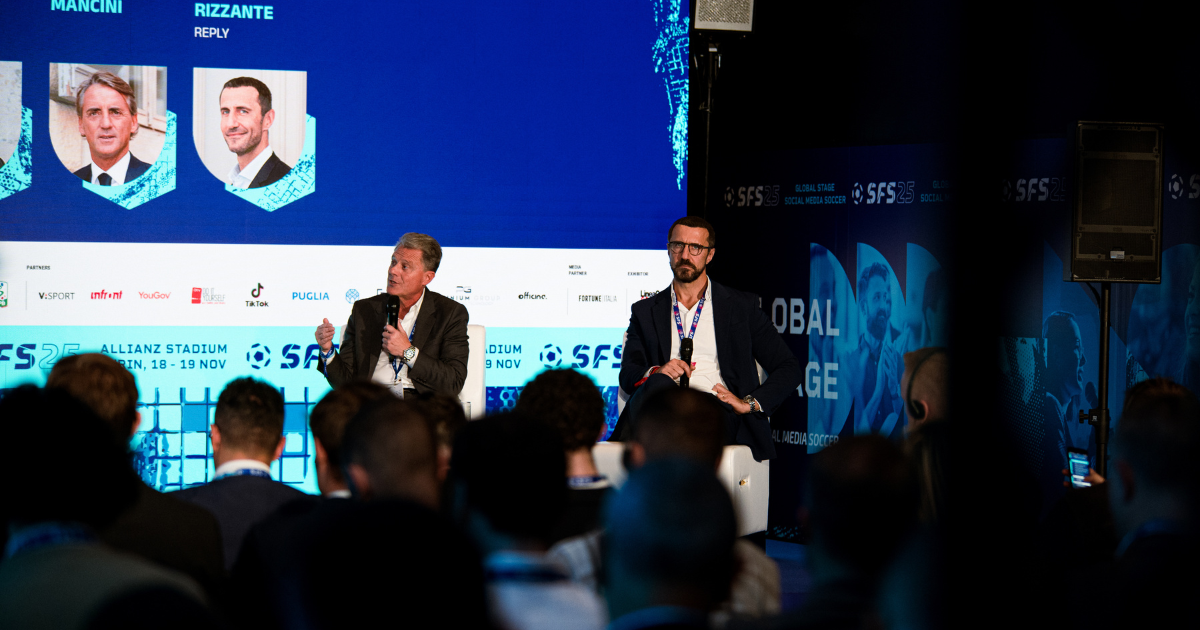
AI in Sport: Artificial Intelligence Amplifies Human Instinct and Revolutionizes the Game
The panel "AI in Sport," moderated by Ivan Ortenzi, shone a spotlight on the dual relationship between technology and the human component in football. On stage, Filippo Rizzante (Reply) and Sergio Gianotti (AWS) dialogued, with a brief online contribution from Mister Mancini, who immediately expressed a clear stance: "AI is very useful, but I still trust my intuition (laughs, Ed.)." The new geography of technology Rizzante framed the technological scenario, noting how leadership, once "US centric" over the last 20 years, is
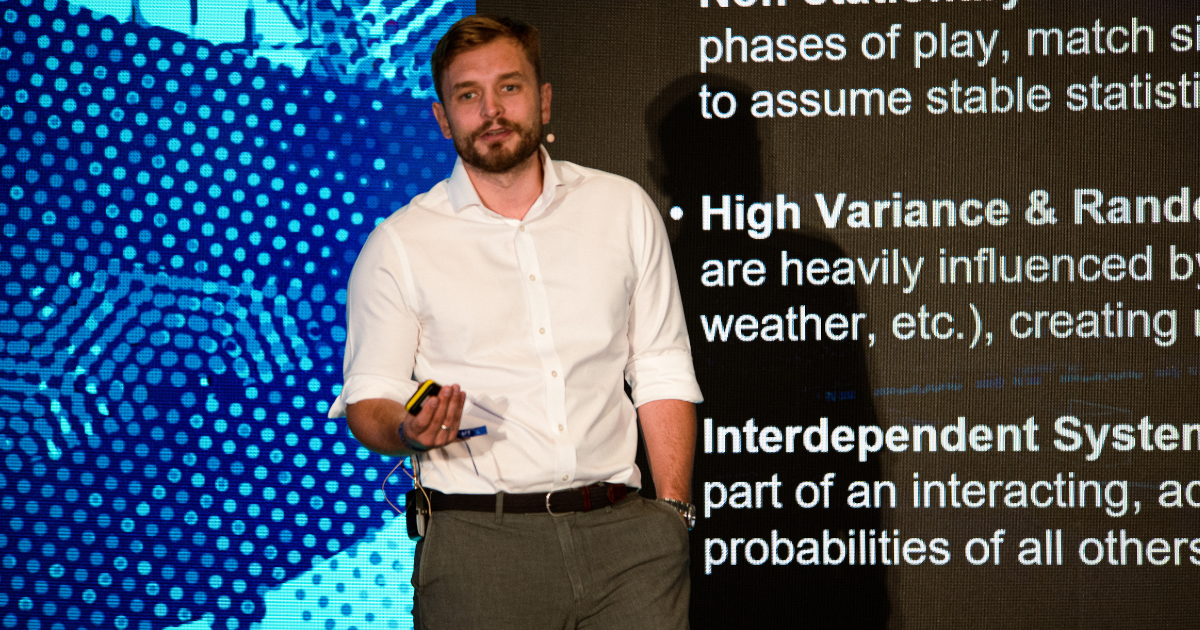
Saudi Pro League, a Data Revolution: Madsen Presents QIMA, the Platform Transforming Football
Not only Italian football: at SFS 25 the focus broadened to the international stage with a session dedicated to the Saudi Pro League, led by Jes Buster Madsen, Director of Football and Data Science for the league. For the past year, Madsen has overseen an ambitious project: building a unified platform capable of collecting and integrating all league data, making it accessible to clubs to better manage their season, performance and strategic planning. “We have the opportunity to create a centralized system,
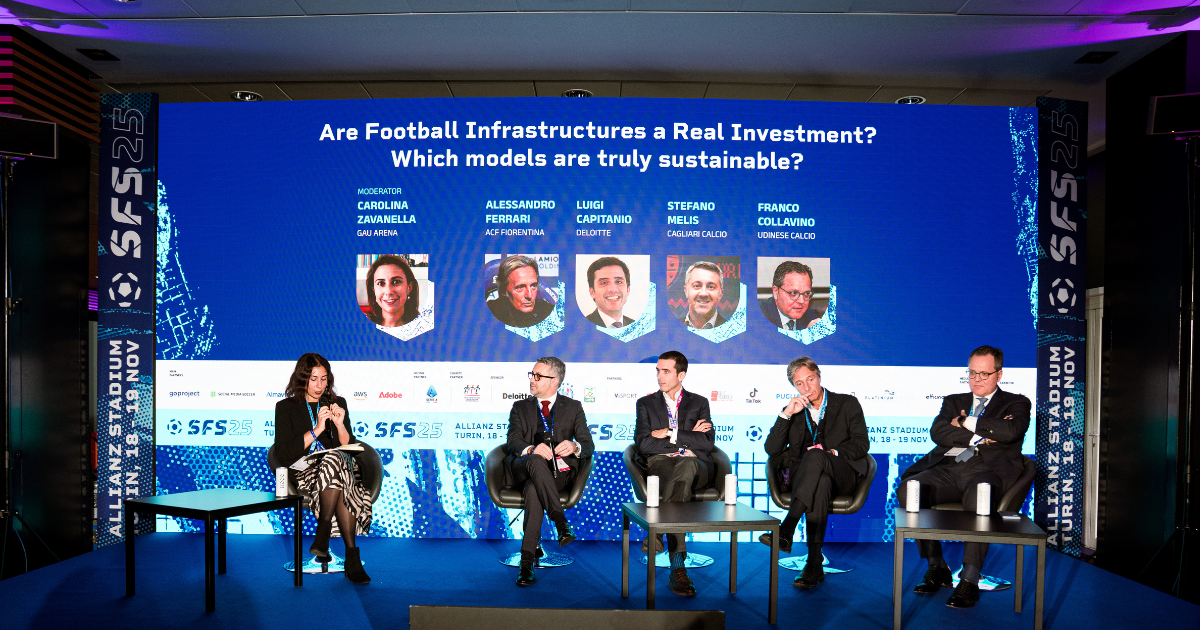
Are Football Infrastructures a Real Investment? Stadiums and Sports Centers: The Shift from Cost to Asset
The panel "Are football infrastructures a real investment?" addressed a crucial question for the future of Italian football: do investments in stadiums and sports centers truly generate value? The answer, which emerged from the discussion among experts from Deloitte and representatives of virtuous clubs like Fiorentina, Cagliari, and Udinese, was unanimous: yes, but only if integrated into a 360-degree business model. Present on stage were: Alessandro Ferrari (Fiorentina), Stefano Melis (Cagliari), Luigi Capitanio (Deloitte), Franco Collavino (Udinese), and the panel
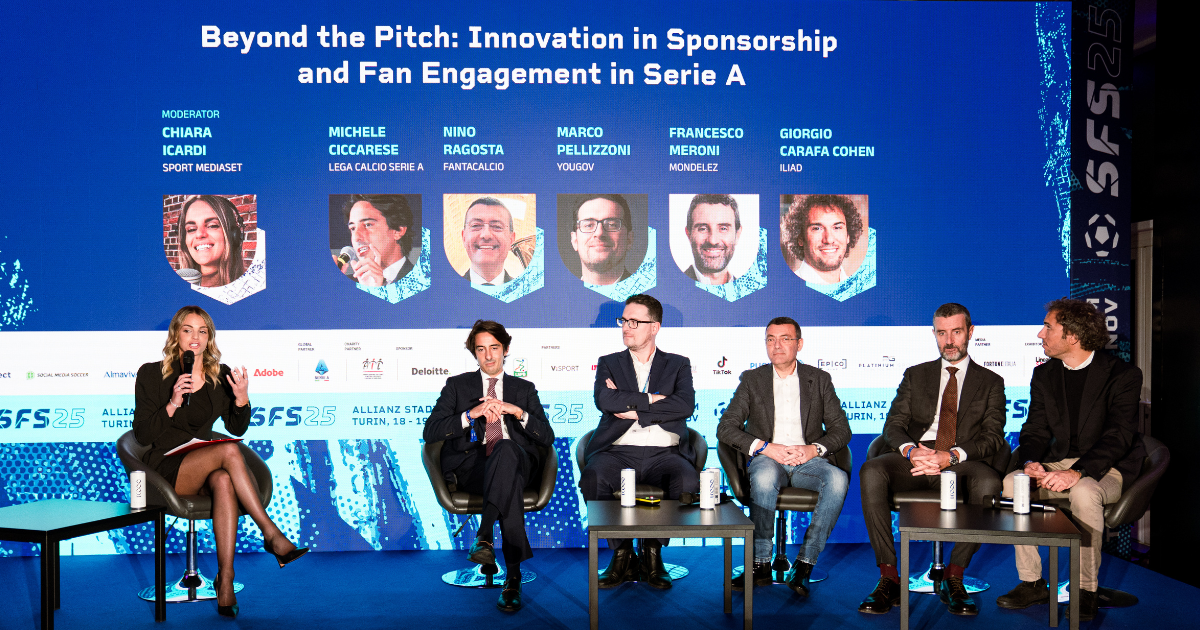
Beyond the Pitch: Serie A is a Total Communication Platform. The Value Between Emotion and Data
Innovation, engagement, and ROI measurement. These were the keywords of the panel “Beyond the Pitch: Innovation in Sponsorship,” moderated by Chiara Icardi (Sport Mediaset), which brought together industry experts to discuss how football sponsorship is evolving from a mere presence to a genuine communication strategy. On stage were: Michele Ciccarese (Lega Serie A), Nino Ragosta (Fantacalcio), Marco Pellizzoni (YouGov), Francesco Meroni (Mondelez), and Giorgio Cohen Carafa (Iliad). Serie A: from sporting event to digital platform Michele Ciccarese began by clearly defining the
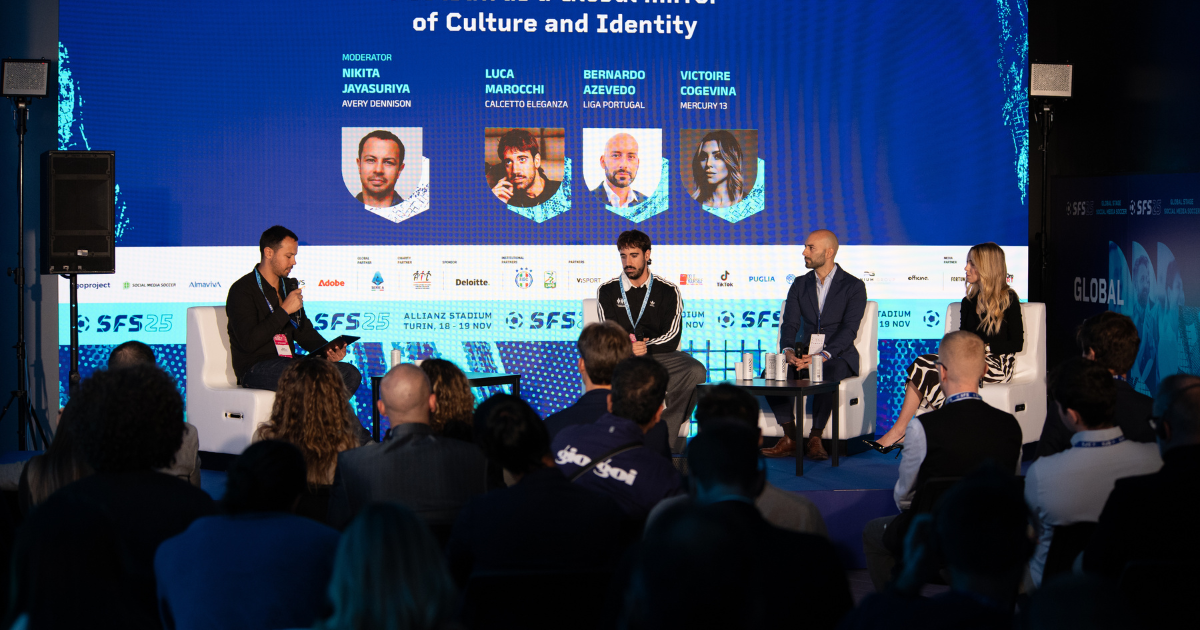
Football, Identity and Brand Revolution: The Future Runs Through Personalisation and Storytelling
The third panel of the day on the Global Stage focused on the relationship between football, identity and culture, featuring Luca Marocchi, Victoire Cogevina and Bernardo Azevedo, General Manager of Liga Portugal, moderated by Nikita Jayasuriya. The discussion explored the role of football as a builder of identity, both in the men's and women’s game. According to Victoire Cogevina, the social potential of the sport is still evolving: “Only time will tell, but I believe football is a platform for social
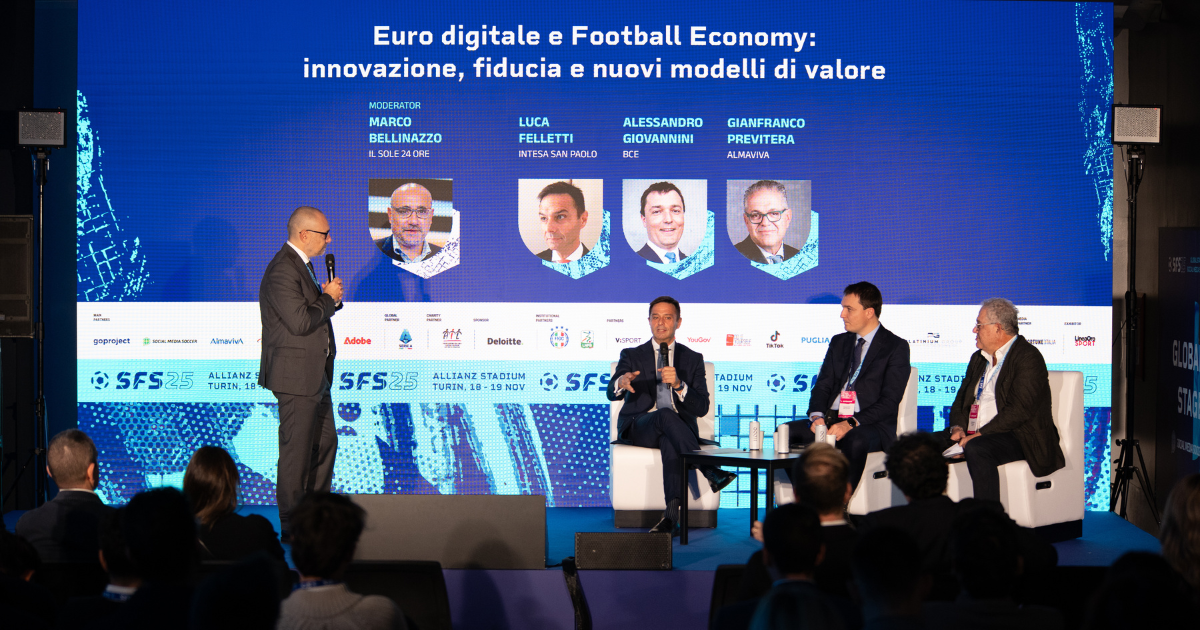
Digital Euro, Data and Fans: Italy Leads Europe’s Payment Revolution
SFS 25 hosted a panel focused on the relationship between the Digital Euro and the Football Economy, featuring Luca Felletti, Sales & Marketing Director at Intesa Sanpaolo, Alessandro Giovannini, Digital Euro Project Leader at the ECB, and Gianfranco Previtera, Commercial Director at Almaviva, moderated by Marco Bellinazzo from Il Sole 24 Ore. Giovannini opened the discussion by clearly explaining what the Digital Euro is and why it represents an inevitable transformation in a world where cash usage continues to decline. “The Digital Euro
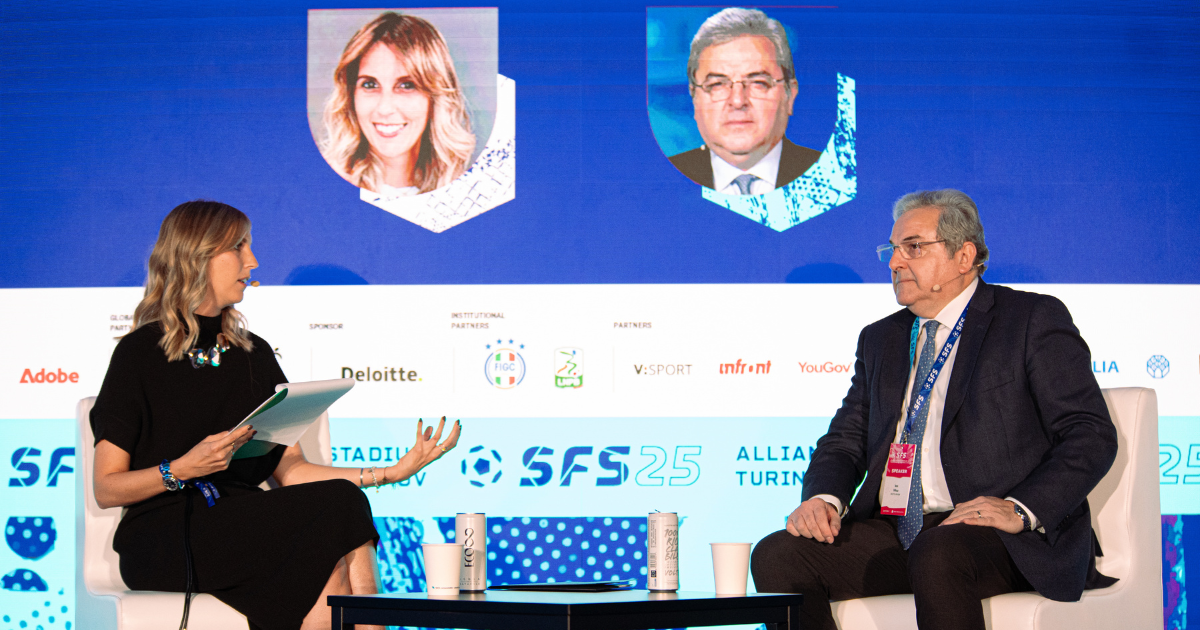
UN TOURISM AT SFS25: THE IMPORTANCE OF SPORTS TOURISM BETWEEN INNOVATION AND SUSTAINABILITY
The panel that opened the Global Stage of the eighth edition of the Social Football Summit featured Ion Vilcu, Director of the Affiliate Members and Public-Private Collaboration Department at UN Tourism, interviewed by Sports Business Growth Advisor Carolina Tha. In his opening remarks, Vilcu explained the reasons behind UN Tourism’s presence at SFS25, starting from a key figure illustrating the growth of sports tourism. “We’re talking about more than 600 million dollars, accounting for 10% of global tourism, with expected growth
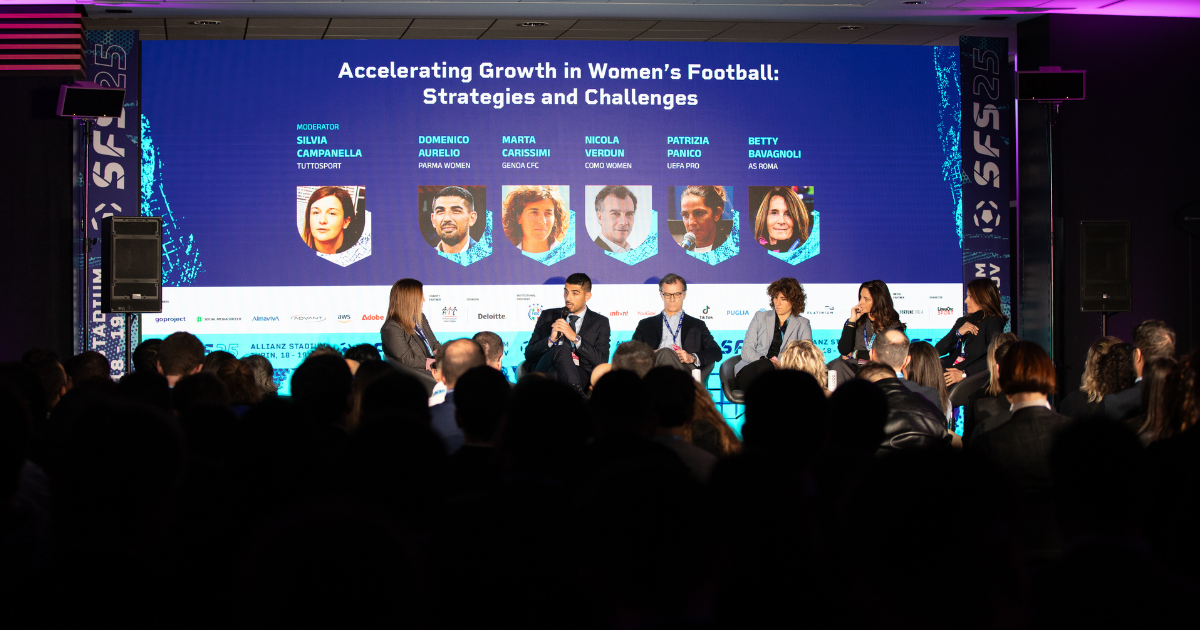
Women’s Empowerment and Professionalism: The Future of Football in Italy
Moderated by Silvia Campanella (TuttoSport), an exceptional panel composed of Domenico Aurelio (Parma Women), Marta Carissimi (Genoa CFC), Nicola Verdun (Como Women), Patrizia Panico (UEFA Pro), and Betty Bavagnoli (AS Roma) discussed the sporting, political, and social impact of women's football in Italy, contextualized to the current historical moment. The path towards evolution The panelists retraced the concrete steps that have led to the current development of the movement. Betty Bavagnoli, building on her experience as a former player and coach, emphasized