




“Inside Sustainable Leagues” is an editorial series exploring how some of the world’s leading football leagues are structuring sustainability through different models, initiatives and tools. This second chapter focuses on foundations
After looking at how leagues are embedding sustainability at governance level, this second article focuses on the operational structures through which these themes are activated, coordinated and developed over time.
Alongside the creation of strategies and shared frameworks, many leagues have chosen to structure their social commitment through dedicated foundations. With different roles and levels of integration, these organisations help coordinate initiatives, support clubs and develop long-term activities connected to the relationship between football and communities.
Far from being simple project containers, these structures are becoming increasingly central within the ecosystem of several leagues. They not only promote continuity in social engagement, but also help create connections, share expertise, support education and build common models across very different realities.
Once again, there is no single approach. The role of these organisations, their relationship with clubs and the way leagues choose to organise and develop social impact all vary considerably. Yet, when compared, these experiences reveal some of the main directions currently shaping the international football landscape.
Spain: Fundación LaLiga as an operational platform
Our journey begins in Spain, where Fundación LaLiga offers an interesting example of how a league can build an autonomous operational structure to coordinate, develop and promote its social commitment, both nationally and internationally.
The foundation operates as a platform with its own identity and a clearly defined operational direction, integrated into the broader vision of the league while still able to develop programmes, partnerships and activities with continuity.
On one side, Fundación LaLiga works within the Spanish context through educational and social initiatives involving clubs, foundations and local communities. In some cases, clubs appear mainly as beneficiaries or participants, while in others they become part of a wider movement coordinated by LaLiga itself, with the foundation acting as a connector between shared experiences, methodologies and projects.
Looking at its official channels, there is also a strong international dimension. Activities developed in countries such as Ghana, Morocco and Cameroon, as well as in refugee camps in Jordan, show how Fundación LaLiga accompanies the league’s global presence through socio-educational and sporting programmes, helping build an international footprint that also passes through social impact.
Alongside its operational work, the foundation has also developed programmes such as “Fair Play Social” and “Environmental Fair Play”, aimed at spreading knowledge and shared practices among clubs. This strengthens the idea of the foundation not only as a delivery tool, but also as a cultural and methodological support structure for the entire football system, fully aligned with its wider mission.
Portugal: Fundação do Futebol as a central charitable arm
In Portugal, Fundação do Futebol – Liga Portugal represents a more centralised and operational model compared to its Spanish counterpart.
While it shares with Fundación LaLiga a strong institutional identity and a broad range of clearly communicated focus areas, its role appears more directly connected to leading and delivering the league’s social and community activities.
The foundation develops a wide range of projects covering social inclusion, health promotion, education, community engagement and environmental awareness, addressing sustainability from multiple perspectives. One distinctive aspect is its strong communication presence and its ability to activate its own initiatives, often linked to symbolic moments throughout the football season, helping keep these themes visible within the wider football ecosystem.
At the same time, the relationship with clubs appears less focused on co-design and more based on participation and support for centrally led initiatives. Clubs are actively involved — and their social efforts are regularly recognised through a monthly award initiative — but mainly in a role of participation and representation.
Overall, the foundation operates as a true charitable and operational arm of the league: a structure capable of ensuring continuity, public visibility and direct action on social and environmental themes through a highly coordinated national approach.
England: is the Premier League Foundation the benchmark?
Within the landscape of sustainability structures in football, the Premier League Foundation is probably the most developed and established example.
The recent transition from the Premier League Charitable Fund to the new Foundation reflects more than a simple name change. It marks the consolidation of a system that has operated for over 15 years as the central infrastructure behind the social commitment of English football.
Unlike other models, the foundation is fully integrated into the league’s functioning, acting simultaneously as promoter, coordinator, funder and facilitator of large-scale programmes. Its role goes beyond supporting existing initiatives: it helps structure them, sustain them over time and connect them into a wider system through a combination of methodological support and financial investment.
Programmes such as Primary Stars, Kicks and Inspires represent the most tangible expression of a model built around daily presence within communities, driven above all by the relentless work of clubs and their own charitable foundations.
The impact is not linked to isolated campaigns, but to a network of continuous interventions involving children, young people, older adults and communities across the country.
Alongside programme delivery, the Foundation has also developed a communication approach focused on highlighting the work of clubs and shared initiatives, helping strengthen a common and recognisable identity.
In many ways, the Foundation acts as a connecting space between different levels of the football pyramid – from Premier League clubs to lower divisions, where similar social models are often adopted and supported through the league’s wider infrastructure.
Ultimately, the Premier League Foundation appears as both a cultural and structural engine of English football, directly connected to the long-standing “football in the community” tradition mentioned in the first article of this series – an approach that has become deeply embedded within the identity of the English game.
Italy (and beyond): different pathways, different system cultures
We close with the Italian case, which offers a different scenario compared to the models explored so far.
Serie A currently does not have a dedicated league foundation, a situation shared by other important European leagues such the Ligue 1, the Belgium Pro League and the Eredivisie. Rather than being an exception, this reflects the different pathways through which sustainability has developed across countries.
To understand this difference, it is useful to look again at the leagues that did choose to structure themselves through dedicated foundations. In many cases, these organisations are closely linked to specific cultural, historical and organisational contexts.
In England, for example, the model of club charities is rooted in a historically strong third-sector ecosystem. In Germany – while not explored in detail here, but still relevant through the experience of the DFL Stiftung – the deep territorial and associative roots of clubs have helped create stable and integrated social structures. In Spain, Fundación LaLiga seems more connected to a logic of strategic coordination and the creation of a shared platform able to support the increasingly international dimension of the league, journey that has been developing for more than 30 years.
In Italy, by contrast, the relationship between football and social impact has historically evolved through more distributed and less structured forms. Despite the strength of the country’s third sector, only a limited number of clubs currently have their own foundations, while sustainability tends to develop mainly through individual club initiatives or strategic direction from the league itself.
Ultimately, comparing these models suggests a broader reflection: sustainability does not take shape everywhere in the same way, but tends to evolve according to the characteristics of the system in which it develops. The central point, however, should always remain the same: building stable forms of coordination, continuity and collaboration over time, capable of making these themes an integrated part of the evolution of modern football.
Editorial series by Community Soccer Report, a platform that reports, analyses and activates sustainability in Italian football.
INSIDE SUSTAINABLE LEAGUES
“Inside Sustainable Leagues” is an editorial series exploring how some of the world’s leading football leagues are structuring sustainability through different models, initiatives and tools. This second chapter focuses on foundations After looking at how leagues are embedding sustainability at governance level, this second article focuses on the operational structures through which these themes are activated, coordinated and developed over time. Alongside the creation of strategies and shared frameworks, many leagues have chosen to structure their social commitment through dedicated foundations. With

With AI and the FIFA-Lenovo partnership, World Cup 2026 steps into the future: all the hi-tech innovations unveiled
From 3D player models to 500Hz smart connected balls. In less than two weeks, the tournament set to revolutionize the Football Industry kicks off The countdown is almost over. In less than two weeks, on June 11, the most futuristic and technologically advanced World Cup in history will kick off across Canada, the United States, and Mexico. FIFA has officially opened the doors to the third millennium of global football, introducing a suite of innovations designed to redefine not only on-pitch

The economics of the Champions League (through a different lens)
An overview of revenues and UEFA prize money for participating clubs – and some reflections Jacopo Carmassi – Numeri in Palla Column, Social Media Soccer / Social Football Summit, June 3, 2026 English version prepared by editorial team The Champions League final took place last Saturday, so in this new edition of Numeri in Palla, I couldn't miss the opportunity to focus on Europe's premier competition. However, I won't be talking about penalty shootouts, even though I am tempted to mention Marquinhos' beautiful

3rd edition of the Festival della Serie A in Parma: from fixture releases to key topics in Italian Football
From June 5th to 7th, an appointment with the hot topics of Serie A and beyond: three days packed with insights on the future, innovation, and inclusion in the world of football From June 5th to 7th, Parma will host the third edition of the Festival della Serie A. The three-day event will be structured around macro-themes, featuring panels that explore relevant topics in both national and international football. Discussions will span from the importance of young talent to inclusive dynamics, as
From Compliance to value creation: the new role of ESG factors in the Football Industry
Editorial contribution by FDC Consulting Digital ESG For years, sustainability in football was treated as a box-to-be-checked obligation. A chapter in the financial statements to be filled out, a foundation to keep active, a few solar panels to install just to say it was done. An expense, not an investment. A compliance duty, not a strategy. That era is over. Not because clubs changed their mindset overnight, but because the market changed the rules. Sponsors demand ESG credentials before signing. Institutional investors
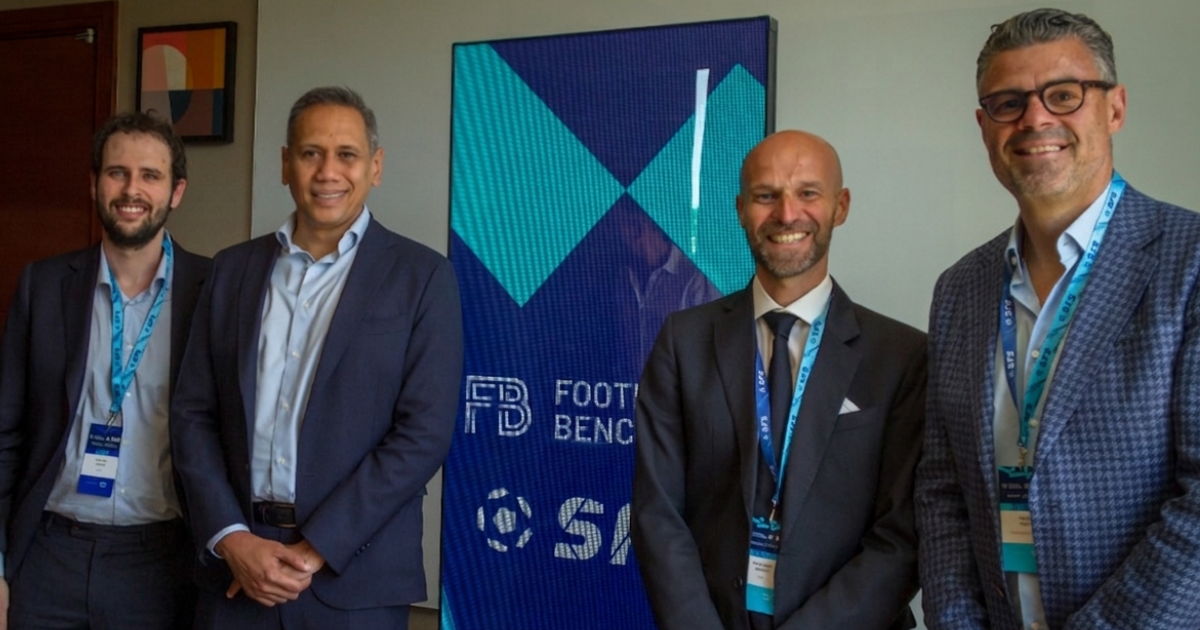
European Football Leaders Discuss Growth, Value Creation, and Sustainability in European Football
Football Benchmark and the Social Football Summit gathered some of the international football industry's leading stakeholders in Budapest on May 29th for “The Business of European Football: Growth, Value, and Sustainability,” an event held on the eve of the UEFA Champions League final. The Budapest gathering also marked a new international milestone in the build-up journey toward the Social Football Summit 2026, scheduled for November 10th and 11th at the Allianz Stadium in Turin. Following the SFS Snack events organized in
Building a sustainable football club: tools, metrics, and strategic plans
Talking about sustainability has become easy. Actually building it is a completely different story. The difference between a club with a genuine ESG journey and one that merely uses ESG as a communication tool lies entirely here: in the method, the tools, and the numbers. Not in the intentions. In this context, it is essential to understand the concrete steps required to build an effective ESG framework—one that delivers measurable results and stands up to scrutiny from UEFA, sponsors, and institutional

The Next Football Transfer May Be a Business: The Unexplored Potential of the E-2 Visa
By Giulia Pezzano, Senior Immigration Analyst, Arce Immigration Law (Miami) In football, the opportunity to relocate to the United States does not always arise from a player transfer. Sometimes it begins with an academy, a training center, a scouting platform, a sports-tech company, or a former player ready to turn reputation into ownership. For Italian football entrepreneurs looking at the U.S. market, the E-2 visa may be one of the most underused and commercially powerful immigration strategies available. As the United States
Human Capital as a Sustainability Lever: Lega B’s Data and Strategies at the Coverciano SFS Snack
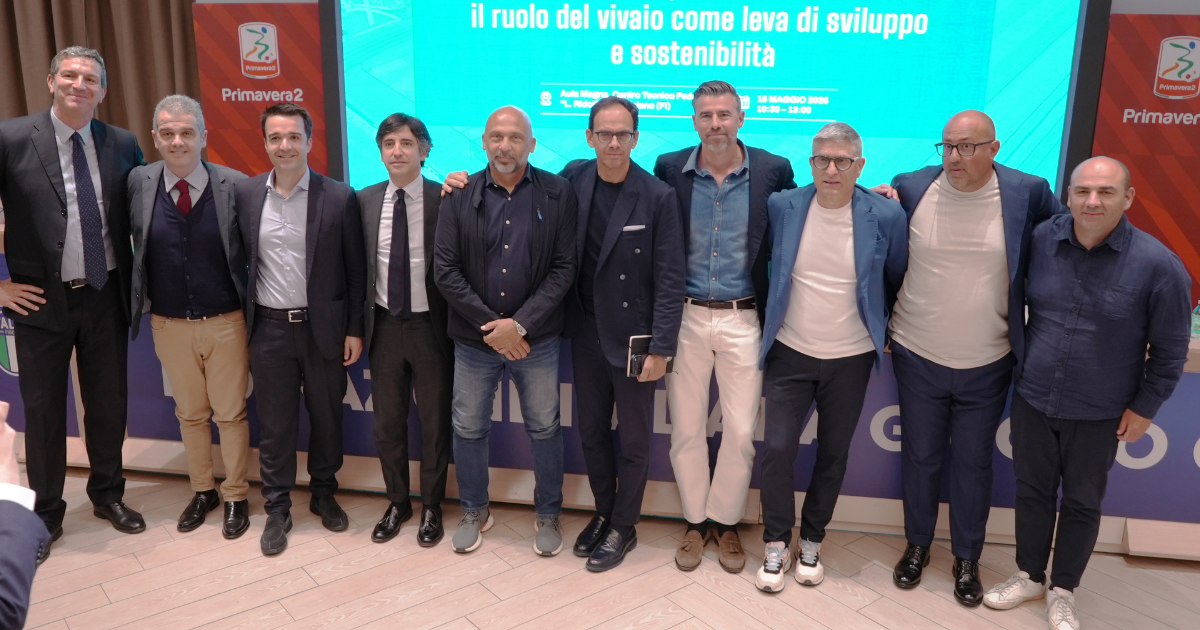
The future of Italian football inevitably runs through the feet, minds, and value of its young players. This strategic pillar took center stage at Coverciano, the "home" of Italian football, where Lega Serie B—in collaboration with the Social Football Summit—organized a high-level conference titled: ‘The Importance of Human Capital in Football: The Role of Youth Academies as a Lever for Development and Sustainability’. The day was entirely dedicated to Academy systems and youth sector professionals, structured into three panel discussions featuring
AIL and Social Football Summit: When the Sports Experience Economy Becomes Social Value
The shared vision uniting AIL and SFS: how football and digital innovation transform fan passion into tangible support for scientific research In the landscape of the modern football industry, the concept of "fan engagement" is evolving towards an increasingly ethical and responsible dimension. It is no longer just about selling a ticket or a jersey, but about creating deep connections that can generate a real, tangible impact on society. The "Donare Esperienze" initiative, promoted by AIL (Italian Association against Leukemia, Lymphoma, and